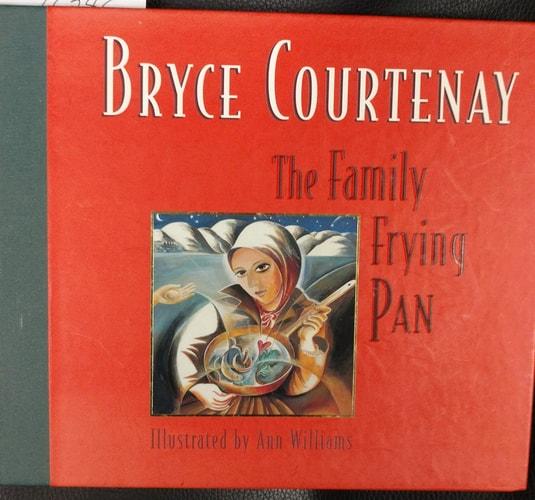
**The Family Frying Pan** by Bryce Courtenay explores themes of **survival, persecution, and storytelling**, drawing connections to broader narratives of **refugee experiences and cultural heritage**.

Key themes and topics include:

*   **Persecution and Escape:** The book centers on Mrs. Moses, a woman of Russian heritage who flees her homeland during a period of persecution, specifically mentioning Cossack raids and the early communist movement 【1】【2】. This theme connects to broader stories of individuals and groups escaping violence and seeking safety.
*   **Resilience and Survival:** The narrative highlights the courage and resourcefulness of those fleeing, with the titular frying pan serving as a symbol of sustenance and survival 【3】【5】. This can be linked to other books that focus on human endurance in the face of adversity.
*   **Storytelling and Legacy:** The book is structured as a collection of tales told by fellow travelers around a campfire, with each story offering a glimpse into their lives 【1】【3】. This emphasizes the importance of oral tradition and how stories preserve history and cultural identity. Recipes are also presented at the end of chapters, blending narrative with culinary tradition 【2】.
*   **Cultural Heritage:** The Russian heritage of Mrs. Moses and the other characters provides a specific cultural backdrop, rich with history and tradition 【4】. This allows for connections to books that explore specific ethnic or national experiences.
*   **The Human Condition:** Despite the hardships, the book also contains elements of heartbreak, violence, and death, alongside moments of connection and shared experience 【1】. This reflects a realistic portrayal of the human condition in challenging circumstances.

The book's unique structure as a "fixup novel" 【3】 and Courtenay's skill as a storyteller 【6】【7】 make it a compelling read that can resonate with readers interested in historical fiction, personal narratives of hardship, and the power of stories to connect people across time and experience.