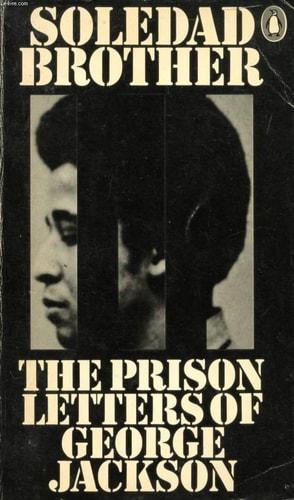
"Soledad Brother: The Prison Letters of George Jackson" explores several significant themes and topics that can help you draw connections to other books in a library:

*   **Injustice and Systemic Racism in the Penal System**: A central theme is the profound injustice and systemic racism faced by African Americans within the American prison system. Jackson's letters detail his personal struggles and highlight the harsh realities of prison life for Black men 【1】【6】.
*   **Critique of Capitalism and American Society**: The book offers a strong condemnation of racism and capitalism in the United States 【7】【11】. Jackson provides a critical appraisal of the American prison system and society at large 【8】【10】.
*   **Revolutionary Fervor and Black Power Movement**: The letters reflect the intense feelings of anger and rebellion prevalent among Black men in prisons during the 1960s 【5】【8】. Jackson became a leading theoretician of the prison movement and a significant figure in the Black Power movement 【4】【9】.
*   **Personal Struggle and Resilience**: While detailing his experiences, Jackson's writings also convey his personal struggles, hopes, and resilience in the face of dehumanizing prison conditions, including extended periods in solitary confinement 【1】【4】.
*   **The Prison Experience as a Universal Experience**: Jackson's brilliance lies in his ability to make his personal experiences universal, offering insights into the broader human condition within oppressive systems 【2】.
*   **Political Prisoner Narrative**: The "Soledad Brothers" case, involving George Jackson, Fleeta Drumgo, and John Clutchette, became a cause célèbre, with the men publicized as political prisoners 【3】.

These themes connect to broader discussions on **criminal justice reform, civil rights, the Black Power movement, critiques of American social and economic systems, and the literature of protest and resistance**. You could draw parallels with works by other authors who address racial inequality, the prison industrial complex, and revolutionary thought.