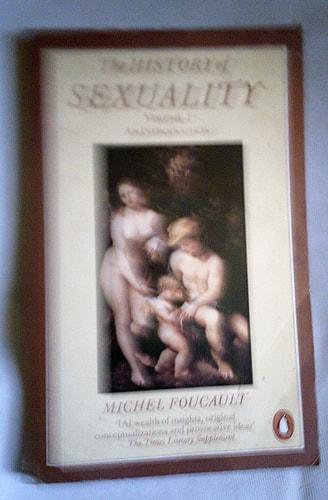
Michel Foucault's *The History of Sexuality, Volume 1: An Introduction* explores the historical and political formation of sexuality as a concept in Western society 【1】【4】. The book challenges the common understanding of the Victorian era as a period of sexual repression, arguing instead that it was a time of **increased discourse and categorization of sexualities** 【3】.
Key themes and topics in the book include:
* **The Repressive Hypothesis**: Foucault critiques the idea that sexuality has been suppressed since the 18th century 【5】.
* **Incitement to Discourse**: He posits that rather than being silenced, there has been an "incitement to discourse" about sex 【2】.
* **Power and Sexuality**: The book examines how power relations are intertwined with the discourse and control of sexuality, suggesting the term "control" offers a more complex view than "repression" 【2】【6】.
* **The Emergence of Sexual Identity**: Foucault investigates how the notion of sexual identity became commonplace and how sexual desire became linked to identity 【1】【7】.
* **Discursive Object of Sexuality**: The work analyzes how "sexuality" became a distinct area of knowledge and social concern 【1】.
These themes can help you draw connections to other books that discuss:
* **The history of social norms and taboos**
* **The relationship between power, knowledge, and social control**
* **The construction of identity and subjectivity**
* **Discourse analysis and the role of language in shaping reality**
* **The sociology and philosophy of the body**
* **Feminist theory and queer theory**, which often engage with Foucault's ideas on power and sexuality.