1. **The Holocaust & Nazi Persecution of Jewish Children**
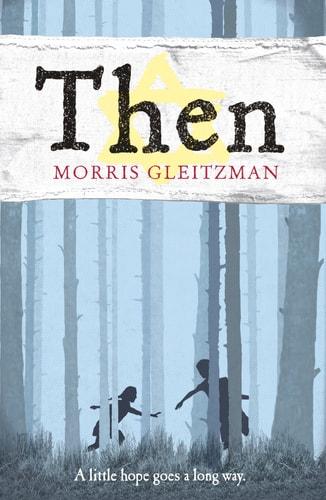
   *Then* is set during the Nazi occupation of Poland in World War II, following Felix — a Jewish boy — as he struggles to survive genocide and antisemitic violence. The novel gives voice to the experience of children who were historically silenced, serving as a proxy for the hundreds of thousands of Jewish children murdered in the Holocaust.

   The book's central tension is: how does a child navigate a world intent on destroying them simply because of who they are?

   Connect to books about: the Holocaust, World War II, Nazi Germany, antisemitism, genocide, Jewish history.

---

2. **Childhood Innocence vs. the Reality of War**
   Felix approaches the horrors around him through a lens of naivety and optimism, failing at first to fully comprehend the violence and brutality of his situation. As he travels through occupied Poland, he is confronted again and again with Nazi atrocities, forcing him to mature and move from childish denial to acceptance.

   The book's central tension is: how long can innocence survive in a world defined by organised cruelty?

   Connect to books about: coming-of-age in wartime, loss of innocence, children in conflict, war narrative.

---

3. **Chosen Family & Loyalty**
   Felix's primary motivation throughout the novel is protecting Zelda — a girl with Nazi parents who has renounced her origins — the two regarding each other as the only family they have left. The bond between them is not biological but forged through shared trauma and mutual dependence.

   The book's central question is: what makes a family, and how far would you go to protect the one you've chosen?

   Connect to books about: found family, surrogate siblings, loyalty under pressure, orphanhood.

---

4. **Survival, Risk & Moral Courage**
   Felix and Zelda depend on the kindness of those willing to risk their own lives to shelter them — people like Genia, the Polish farmer who hides them despite the lethal consequences of being caught. The novel repeatedly asks whether helping others is worth the mortal danger it invites.

   The book's central tension is: when survival itself requires others to risk everything, what is the moral weight of being saved?

   Connect to books about: wartime resistance, moral courage, sacrifice, rescuers and bystanders.

---

5. **Identity, Hiding & Persecution**
   Felix must conceal his Jewish identity in a deeply antisemitic environment, navigating a world where simply being who he is marks him for death. The novel explores what it costs — psychologically and practically — to mask your identity in order to survive.

   The book's central question is: what happens to a sense of self when survival demands you become someone else?

   Connect to books about: hidden identity, passing, persecution, religious and ethnic minority experience, displacement.

---

6. **Storytelling as Survival & Empathy**
   Throughout the novel, storytelling is a recurring motif. Felix — the child of booksellers, shaped by a love of books — uses narrative to make sense of a world that defies comprehension. Imagination and creativity become tools of empathy and resistance against a fascist worldview.

   The book's central idea is: stories are not escapism — they are the means by which we stay human under inhuman conditions.

   Connect to books about: the power of storytelling, narrative and trauma, literature as resistance, books within books.

---

7. **Children in War Zones & Civilian Experience of Conflict**
   The novel depicts the experience of children caught in a war in which they are not combatants but are among its primary victims — facing violence, displacement, starvation, and the constant threat of death. It strips war of heroism and presents it as a sustained catastrophe for the most vulnerable.

   The book's central question is: what does war actually look like when seen through the eyes of those with no power to stop it?

   Connect to books about: civilian war experience, refugee children, child soldiers, displacement, humanitarian crisis.

---

8. **Historical Fiction as Moral Education**
   *Then* is written for young readers but does not sanitise the realities of genocide. It uses a child narrator to make historical atrocity accessible and emotionally immediate, positioning historical fiction as a vehicle for moral and ethical understanding across generations.

   The book's central purpose is: to ensure that the experiences of those lost to history are not forgotten, and that young readers develop the empathy to understand why that matters.

   Connect to books about: Holocaust literature for young adults, historical fiction,