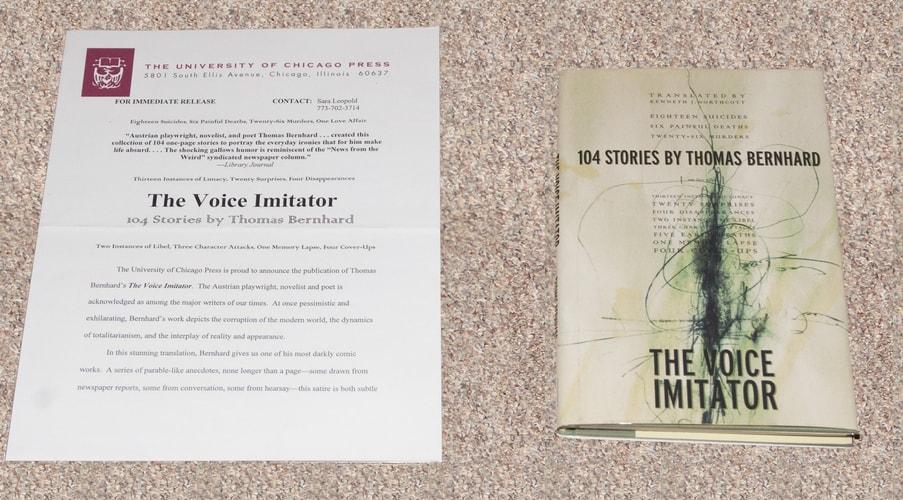
"The Voice Imitator" by Thomas Bernhard explores themes of **political corruption, madness, murder, and the limitations of language** 【1】. The book is a collection of short, parable-like anecdotes, some drawn from news reports, conversations, or hearsay, which serve as a satire on the **sterility and callousness of modern life** 【4】【7】. Bernhard's work often depicts the **corruption of the modern world, the dynamics of totalitarianism, and the interplay of reality and appearance** 【2】.
Key topics and themes that can help draw connections to other books include:
* **Absurdity and Disaster:** The book portrays an ordinary world careening into absurdity and disaster 【6】.
* **Critique of Society:** Bernhard offers a dark and cynical view of the human condition, indicting the modern world 【5】【8】. He expresses a particular hatred for Austria, his native land, viewing it as a "common hell" where intellect is defamed and art and science are destroyed 【1】.
* **The Nature of Imitation and Identity:** The title piece itself touches on the idea of a voice imitator who cannot imitate his own voice, hinting at themes of self-perception and authenticity 【3】.
* **Pessimism and Dark Humor:** While deeply pessimistic, Bernhard's work is also described as exhilarating and darkly comic 【2】【5】.
* **The Role of Language:** The collection highlights the inability of language to fully capture or alleviate the absurdity of life 【1】.
Given these themes, you might connect "The Voice Imitator" to other works that deal with:
* **Existentialism and Absurdism:** Books exploring the meaninglessness of existence and the human struggle against an indifferent universe.
* **Social Satire:** Works that critique societal norms, political systems, and human behavior through humor and irony.
* **Dark or Black Comedy:** Literature that finds humor in grim or morbid subjects.
* **Critiques of Modernity:** Novels or collections that examine the alienation, corruption, or spiritual emptiness of contemporary society.
* **Works by Austrian Authors:** Exploring shared cultural or philosophical concerns within Austrian literature.