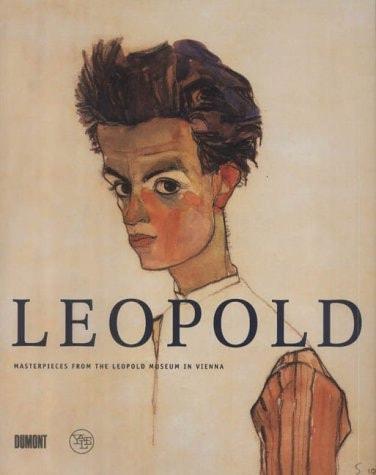
1. **Austrian Expressionism & the Birth of Modernism**
The collection centers on the explosive artistic transformation of Vienna around 1900, tracing the arc from academic 19th-century painting through Impressionism, the Vienna Secession, and into raw Expressionism. Artists like Egon Schiele and Oskar Kokoschka broke with ornamental tradition to foreground psychological intensity and bodily rawness.

The book documents a pivotal moment when beauty and nihilism, tradition and rupture, coexisted in a single city — making Vienna ground zero for European Modernism.

Connect to books about: European Modernism, Expressionism, the Vienna Secession, fin-de-siècle culture, early 20th-century art history.

---

2. **The Self, the Body & Psychological Portraiture**
Egon Schiele's work — the dominant presence in the collection — is defined by an obsessive interrogation of the self through self-portraits, nudes, and figures rendered with angular distortion and raw emotional exposure. His work fused physicality, sexuality, and existential inquiry.

The human figure becomes a site of psychological conflict, vulnerability, and identity — anticipating themes later explored by psychoanalysis and existentialist philosophy.

Connect to books about: portraiture, the nude in art, psychology of the self, body and identity, Freudian theory and visual culture.

---

3. **Vienna 1900: Cultural & Intellectual Ferment**
The book is anchored in the world of "Vienna 1900," a moment when innovations in painting and graphic art were tightly interwoven with developments in music, literature, architecture, science, psychology, and philosophy — all in a city marked by stark social contrasts.

Vienna was simultaneously a place of imperial splendor and social wretchedness, producing an unparalleled concentration of artistic and intellectual achievement in a very short span of time.

Connect to books about: intellectual history of Vienna, fin-de-siècle Europe, Carl Schorske's *Fin-de-Siècle Vienna*, Freud, Wittgenstein, Mahler, Klimt.

---

4. **Art Collecting, Connoisseurship & the Private Museum**
Rudolf Leopold's story is one of visionary, sometimes controversial, collecting — acquiring works by Schiele and Klimt when they were considered taboo or even degenerate, guided entirely by aesthetic instinct rather than market consensus. A private passion became a national institution.

The book explores what it means to "see" value in art before the world does, and how individual obsession can reshape cultural history.

Connect to books about: art collecting, museum history, the sociology of taste, patronage, the art market, private foundations.

---

5. **The Gesamtkunstwerk: Art, Design & Craft as a Unified Vision**
The Leopold collection extends well beyond painting to include furniture, ceramics, glass, jewelry, textiles, and metalwork from the Wiener Werkstätte and Jugendstil movements — all united by the concept of the *Gesamtkunstwerk*, or total work of art.

This reflects a belief that fine art and applied craft are inseparable, and that the designed environment is itself an artistic and philosophical statement.

Connect to books about: the Arts and Crafts movement, Art Nouveau/Jugendstil, Bauhaus, decorative arts, design history, the Wiener Werkstätte.

---

6. **Art, Death & Mortality**
Death is a persistent theme across the collection — from Klimt's monumental *Death and Life* to Schiele's stark confrontations with the body's fragility, to Richard Gerstl's psychologically raw self-portraits painted before his suicide at 25. The era itself was shadowed by the collapse of empire and the carnage of World War I.

The art of Vienna 1900 is haunted by a sense of impermanence — of civilization, of the body, of meaning itself.

Connect to books about: mortality in art, memento mori, Symbolism, World War I and culture, the decline of empire.

---

7. **Nazi Looting, Restitution & the Ethics of Collecting**
The Leopold Museum has been at the center of major legal controversies over artworks stolen from Jewish owners during the Nazi era — most famously Schiele's *Portrait of Wally*. These disputes raise profound questions about cultural property, institutional responsibility, and historical justice.

The book exists within a broader story