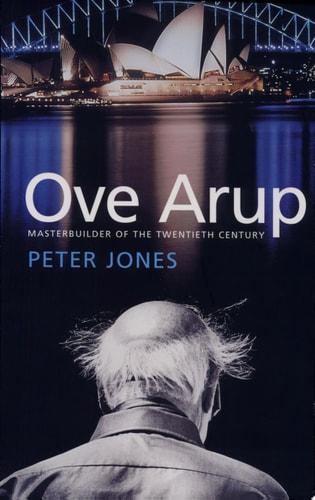
The book "Ove Arup: Masterbuilder of the Twentieth Century" by Peter Jones explores the life and work of **Ove Arup**, a prominent engineer of the 20th century. The book delves into his **social, aesthetic, and environmental concerns**, as well as his **practical contributions** during a period of significant political and technological change 【1】【2】.

Key themes and topics that can help draw connections to other books include:

*   **Engineering and Architecture:** The book highlights Arup's role in iconic structures such as the **Sydney Opera House**, **Coventry Cathedral**, the **Olympic Village in Beijing**, the **Millennium Bridge** in London, the **Beaubourg Centre** in Paris, and the **Channel Tunnel Rail Link** 【5】【7】. This connects to books on architectural history, structural engineering, and the design of famous landmarks.
*   **The History of Engineering Firms:** It details the founding and development of **Arup & Partners**, a multinational firm known for its design, engineering, and consulting services in the built environment 【4】【6】. This theme is relevant for books on business history, the evolution of professional services, and the impact of engineering consultancies.
*   **20th-Century Technological and Political Upheaval:** The book situates Arup's work within a context of significant global changes, emphasizing his contributions during a period of **political and technological upheaval** 【1】【2】. This allows for connections to books on 20th-century history, the impact of technology on society, and the interplay between engineering and societal progress.
*   **"Total Design" Philosophy:** Arup was associated with the philosophy of "total design," which likely encompasses a holistic approach to projects 【4】. This theme can link to books on design theory, project management, and integrated approaches to problem-solving.
*   **Biography of Influential Figures:** As a biography, the book offers insights into the **extraordinary life** of Ove Arup 【1】【8】. This makes it connectable to other biographies of influential scientists, engineers, and innovators.
*   **Globalization and the Built Environment:** One review mentions a conference that used Arup's work to discuss **globalization and architecture**, shifting focus to the social, economic, and political processes shaping the built environment 【3】. This theme can connect to books on urban planning, globalization studies, and the socio-economic aspects of construction.