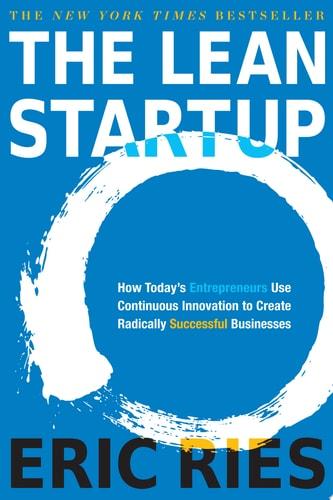
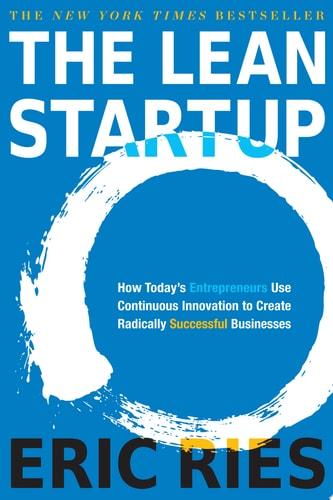
"The Lean Startup" by Eric Ries focuses on a **scientific approach to creating and managing startups** and bringing products to market faster. It draws inspiration from **lean manufacturing principles**, particularly the Toyota Production System, adapting them to the context of entrepreneurship and innovation 【2】【3】.

Key themes and topics that can help you draw connections to other books include:

*   **Build-Measure-Learn Feedback Loop:** This is a fundamental concept, emphasizing rapid experimentation and continuous iteration to learn how customers respond and decide how to move forward 【7】【10】.
*   **Minimum Viable Product (MVP):** The book advocates for testing scientific hypotheses with an MVP to validate ideas and minimize risk 【1】【9】.
*   **Validated Learning:** This concept focuses on demonstrating progress through empirically testing assumptions about a startup's strategy 【1】.
*   **Customer Development:** Understanding and engaging with target customers early and often is a cornerstone, helping to avoid mistakes and identify market opportunities 【4】.
*   **Pivot or Persevere:** This refers to the decision-making process of either changing direction (pivot) or continuing on the current path (persevere) based on validated learning 【1】【2】.
*   **Innovative Accounting:** This involves developing new metrics that are tailored to startups and their unique challenges, moving beyond traditional accounting methods 【1】.
*   **Continuous Innovation:** The book highlights how entrepreneurs can use continuous innovation to create successful businesses 【6】.
*   **Scaling and Sustainable Growth:** The methodology provides a proven approach to scaling innovative businesses and achieving sustainable growth through data-driven strategies 【8】【11】.

The book is a valuable resource for anyone involved in **new product development**, **entrepreneurship**, **innovation**, and **business strategy**, particularly in environments with high uncertainty 【5】【12】.