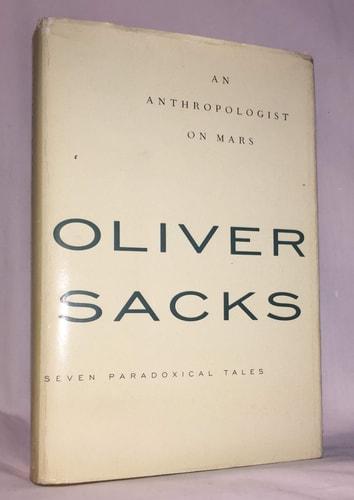
Oliver Sacks's *An Anthropologist on Mars: Seven Paradoxical Tales* explores themes and topics related to **neurological conditions**, **human adaptation**, and the **redefinition of health and disease** 【1】【4】. The book presents case histories of individuals with conditions such as **autism** and **Tourette syndrome**, challenging conventional notions of normalcy 【3】【8】.

Key themes and topics that can help draw connections to other books include:

*   **Neurological Diversity:** The book delves into the unique experiences of individuals with conditions like autism, amnesia, and Tourette's syndrome 【3】【4】. This connects to literature that explores different ways of perceiving the world and the human mind.
*   **Identity and Self-Perception:** Sacks examines how neurological conditions shape an individual's sense of self and their place in the world 【1】【7】. This theme can be linked to books that explore personal identity, consciousness, and the subjective experience of reality.
*   **The Nature of Health and Disease:** Sacks aims to "redefine the very concepts of 'health' and 'disease'" 【1】. This invites comparisons with medical narratives, philosophical discussions on well-being, and stories that question societal definitions of "normal."
*   **Human Resilience and Adaptation:** The collection highlights how individuals adapt to and integrate their neurological conditions into their lives, often finding unique strengths and perspectives 【2】. This connects to narratives of overcoming adversity and the human capacity for resilience.
*   **The Art of Storytelling and Writing:** Sacks's writing style itself is a significant aspect of the book. He weaves together scientific observations, personal anecdotes, and historical context, often using "thick description" to capture the density of reality 【5】【6】. His approach to writing, which he saw as integral to his thinking process, can be compared to other authors who blend scientific inquiry with narrative 【9】【10】.

By focusing on these themes, you can connect *An Anthropologist on Mars* to books in various genres, including:

*   **Medical memoirs and case studies:** Other works by Oliver Sacks, or books by neurologists and psychologists.
*   **Autism and neurodiversity literature:** Books that explore the experiences of individuals on the autism spectrum.
*   **Psychology and philosophy of mind:** Texts that discuss consciousness, perception, and the nature of the self.
*   **Biographies and memoirs:** Stories of individuals who have navigated significant life challenges or unique experiences.
*   **Narrative non-fiction:** Works that blend factual reporting with compelling storytelling.