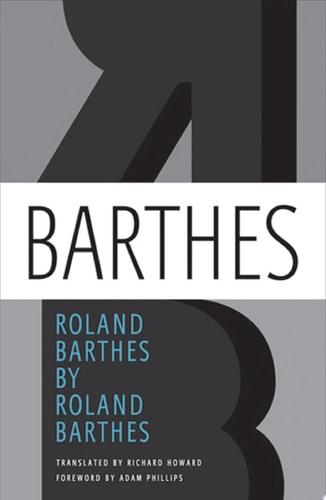
The book "Roland Barthes by Roland Barthes" is a unique autobiographical work by the renowned French literary theorist and semiotician, Roland Barthes 【2】【6】. Instead of a conventional autobiography, Barthes uses himself as a text to be analyzed, exploring his tastes, childhood, education, passions, and regrets 【1】【6】.

Key themes and topics within this book, and Barthes's broader work, that can help draw connections to other books include:

*   **Semiotics and the Analysis of Signs:** Barthes was a pioneer in semiotics, the study of signs and symbols and their interpretation. He explored how everyday objects, images, and cultural phenomena function as signs, carrying deeper meanings and ideologies 【2】【5】. This connects to books analyzing visual culture, advertising, fashion, and language.
*   **Mythology and Ideology:** In works like "Mythologies," Barthes deconstructed the myths of modern society, exposing the hidden ideologies within common cultural practices and values 【9】【10】. This theme links to books on sociology, cultural studies, and critical theory that examine societal structures and power dynamics.
*   **The "Death of the Author" and Reader-Response Theory:** Barthes challenged the traditional focus on authorial intent, emphasizing the reader's role in creating meaning from a text 【4】. This concept is crucial for understanding books that explore literary interpretation, the nature of authorship, and the subjective experience of reading.
*   **Narrative Codes:** Barthes proposed five narrative codes that structure stories, influencing how meaning is constructed and conveyed 【7】. This is relevant for books on literary theory, narratology, and the analysis of storytelling across different media.
*   **Textuality and "Writerly" vs. "Readerly" Texts:** He distinguished between texts that are easily consumed ("readerly") and those that require active participation from the reader to create meaning ("writerly") 【3】. This connects to books discussing experimental literature, reader engagement, and the nature of the text itself.
*   **Photography and Memory:** Barthes also explored the relationship between photography, memory, and representation, particularly in "Camera Lucida" 【1】. This theme is relevant for books on art criticism, media studies, and the philosophy of photography.

"Roland Barthes by Roland Barthes" itself is characterized by its playful and theoretical style, blending personal reflection with critical analysis 【1】【6】. It offers insights into Barthes's intellectual journey and his unique approach to understanding culture and meaning 【8】.