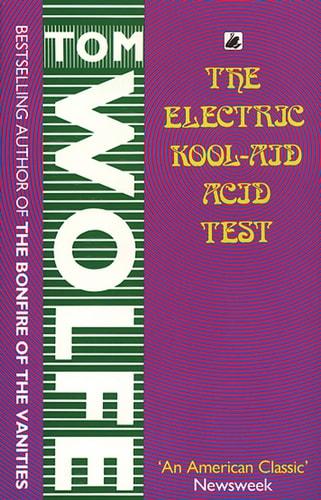
"The Electric Kool-Aid Acid Test" by Tom Wolfe explores several key themes and topics that can help you draw connections to other books:

*   **Counterculture and Psychedelia:** The book is a seminal work documenting the **1960s counterculture movement**, particularly its embrace of **psychedelic drugs** like LSD. It details the experiences of Ken Kesey and his Merry Pranksters, their cross-country bus trip, and their famous "Acid Tests" parties, which were central to the psychedelic scene 【2】【4】.
*   **New Journalism:** Tom Wolfe's distinctive writing style in this book is a prime example of **New Journalism**, a literary movement that incorporated journalistic techniques with literary styles to create more immersive and subjective narratives 【3】【5】.
*   **Intersubjectivity and Consciousness:** A significant theme is the exploration of **intersubjective consciousness**, a state where individuals share a common perception of reality. This quest often involved a blurring of individuality within the group 【1】.
*   **Religion and Spirituality:** The "Acid Tests" are described as having characteristics of **religious gatherings**, serving as events to spread the Pranksters' message, highlighting a spiritual or quasi-religious dimension to their experiences 【3】.
*   **Individuality vs. Group Identity:** The book delves into the dynamics of a group striving for a shared consciousness, which sometimes led to a **loss of individuality** 【1】. It also touches on the challenges of maintaining leadership and cohesion within the group, especially when Kesey faced legal troubles 【6】【7】.
*   **Authority and Rebellion:** The narrative includes Kesey's increasing paranoia and his pursuit by authorities like the police and the FBI, illustrating a theme of **rebellion against societal norms and legal systems** 【2】.

By focusing on these themes, you can connect "The Electric Kool-Aid Acid Test" to books that explore:

*   The **1960s and its social movements**.
*   The **history and impact of psychedelic drugs**.
*   Works that utilize **experimental or New Journalism techniques**.
*   Narratives about **communal living, alternative lifestyles, and consciousness exploration**.
*   Stories that examine the **tension between individual identity and group dynamics**.
*   Books dealing with **countercultural figures and their clashes with authority**.