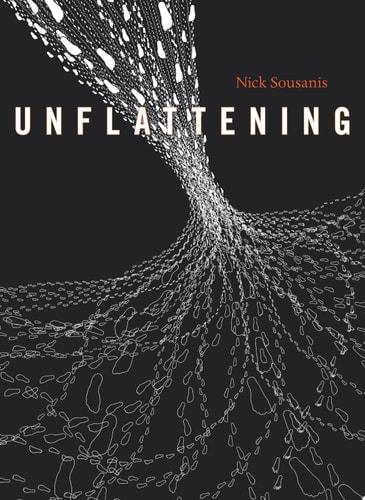
"Unflattening" by Nick Sousanis explores themes of **visual thinking**, **perception**, and the **limitations of traditional knowledge systems** 【7】【8】. The book argues against the "flattening" of our understanding, which Sousanis suggests is a result of ingrained habits and societal structures that prioritize words over images and predetermined paths over individual exploration 【1】【6】.

Key topics and themes that can help draw connections to other books include:

*   **Epistemology and Knowledge Construction**: The book delves into how we acquire knowledge and challenges the hierarchy of words over images in Western thought 【3】【4】. This connects to works discussing the philosophy of knowledge, cognitive science, and the nature of learning.
*   **Visual Culture and Art Theory**: As a graphic novel and the first dissertation in comic form from Columbia University, "Unflattening" is a significant work in visual thinking and graphic scholarship 【5】【10】. It can be linked to books on art history, visual literacy, and the role of comics in academic discourse.
*   **Critique of Education Systems**: Sousanis critiques the "compulsory education" paths that can limit imagination and enforce narrow perspectives 【2】【8】. This theme connects to books on educational reform, alternative learning methods, and critiques of standardized schooling.
*   **Interdisciplinarity**: The book itself is an interdisciplinary work, blending art, philosophy, and education 【3】. This makes it relevant for discussions on interdisciplinary studies and the breakdown of traditional academic silos.
*   **Perception and Consciousness**: Sousanis examines how we perceive the world and how repeated actions can create "ruts" in our thinking 【1】【9】. This theme can be connected to books on psychology, phenomenology, and the philosophy of mind.
*   **Societal Structures and Individualism**: The book touches upon how societal systems can influence individual thought and limit creativity 【1】【2】. This links to works in sociology, cultural studies, and critical theory.