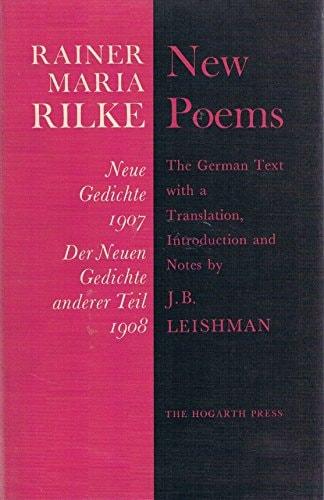
Rainer Maria Rilke's "New Poems" delves into a variety of themes and topics that can help you draw connections to other literary works. The collection is known for its exploration of **human emotions and relationships**, including **love, sorrow, and solitude** 【1】. Rilke's poetry often reflects an **introspective journey** through poignant life moments and the **human condition** 【1】.
Key themes and topics present in "New Poems" include:
* **Nature and Human Experience**: The poems offer intimate reflections on nature and how it intertwines with human experience 【8】.
* **Objects and Art**: A central theme is Rilke's acute focus on objects and art, transforming everyday things into subjects of contemplation through intricate attention to detail and sensitivity to the physical world 【2】. This is influenced by his association with sculptor Auguste Rodin 【10】.
* **Mythology, Love, Nature, Time, and Death**: These broader themes are explored, with Rilke often connecting poems between his collections 【7】.
* **Subjective Experience and Disbelief**: Rilke's work is recognized for its undertones of mysticism, exploring subjective experiences and disbelief 【6】.
* **The Ineffable**: His haunting images focus on the difficulty of communion with the ineffable in an age of disbelief, solitude, and anxiety 【3】.
* **Dualism**: The collection offers perspectives on how poetry can address the philosophical problem of dualism 【9】.
* **Physical Description and Mythological Storytelling**: There is an emphasis on the "physical mind" of description and mythological storytelling, as opposed to purely emotional matters 【4】.
Rilke is considered a transitional figure between traditional and modernist poets, known for his idiosyncratic and expressive style, and his efforts to expand the realm of poetry through new uses of syntax and imagery 【3】【5】.