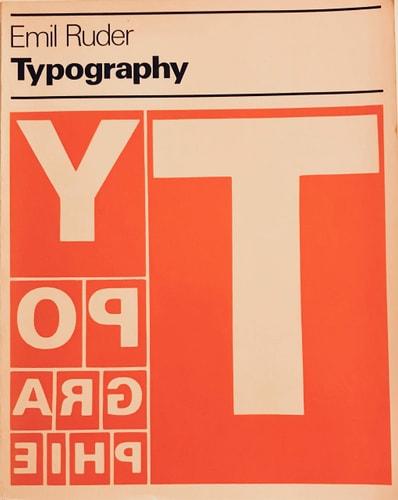
Emil Ruder's "Typography: A Manual of Design" is a foundational text in graphic design and typography, particularly known for its association with the **Swiss Style** (also known as the International Typographic Style) 【1】【5】.
Key themes and topics covered in the book include:
* **Swiss Style Principles**: The book is a legacy of Emil Ruder, a pioneer of Swiss Style, which is characterized by **asymmetric layouts, grid systems, sans-serif typefaces, and flush left, ragged right text** 【1】【5】.
* **Holistic Approach to Typography**: Ruder's work emphasizes a comprehensive understanding of typography, covering various aspects such as **color, weight, texture, legibility, and spacing** 【4】.
* **Design Techniques and Theories**: The book delves into **typographic techniques, theories, diagrams, philosophy, and practical examples** 【3】. It explores the power of **white space and grid-based layouts** 【2】.
* **Modern Typography**: Ruder is recognized for abandoning conventional rules of traditional typography and establishing new principles that met the demands of a new, contemporary form of expression 【6】【7】.
* **Fundamentals of Design**: It serves as a textbook for learning the fundamentals of typography and design, introducing concepts like **grid-based layouts, consistent spacing, and asymmetrical compositions** 【6】【8】.
* **Legibility and Reproducibility**: A core emphasis is placed on the rules of typography that stress **legibility and reproducibility** 【2】.
While some technical aspects related to printing techniques may be outdated due to technological advancements 【9】, the book's core principles and philosophy remain highly relevant for designers and students studying typography 【3】【10】.