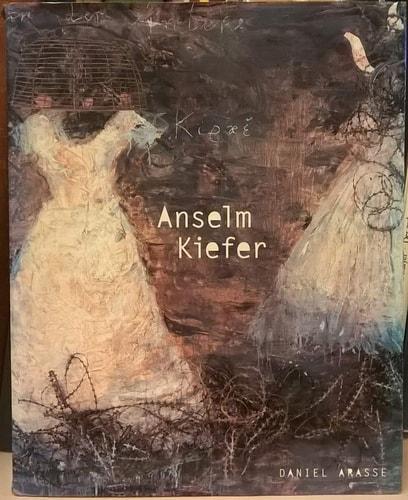
The book "Anselm Kiefer" by Daniel Arasse explores several key themes and topics related to the artist's work, which can help in drawing connections to other books in a library. These include:

*   **German History and Memory:** A central theme is Kiefer's engagement with Germany's past, particularly its **National Socialist era, the Holocaust, and the complexities of German identity after fascism** 【6】【7】. The book examines how Kiefer confronts and interprets this history through his art.
*   **Mythology and Symbolism:** Kiefer's work draws heavily on **mythology, both German and Jewish (Kabbalah)** 【4】【8】. The book delves into his use of symbols and metaphors, such as **lead, straw, books, and railroad tracks** 【1】.
*   **The Role of the Artist:** Arasse discusses Kiefer's perspective on the artist's role in confronting difficult historical truths and the meaning of life 【1】【2】.
*   **Literary and Philosophical Influences:** The book highlights Kiefer's connections to **writers and philosophers**, including Nietzsche and Paul Celan 【1】【5】. Poetry, in particular, is noted as a significant source of inspiration 【9】.
*   **Artistic Practice and Materials:** Arasse illuminates Kiefer's diverse mediums, such as **painting, photography, artist's books, installations, and sculpture**, and his transformative use of materials like **lead, ash, straw, and clay** 【3】【4】.
*   **Transience, Rebirth, and Human Existence:** Kiefer's art also addresses broader **philosophical concerns** such as transience, rebirth, memory, and the human search for meaning 【2】【10】.

By focusing on these themes, you can connect "Anselm Kiefer" by Daniel Arasse to books on:

*   **Post-war German literature and history:** Works that grapple with the legacy of Nazism and the Holocaust.
*   **Jewish mysticism and Kabbalah:** Texts that explore the symbolism Kiefer incorporates.
*   **Philosophy of art and aesthetics:** Books discussing the artist's role in society and the interpretation of historical trauma.
*   **Studies of other artists who engage with history and memory:** Artists whose work similarly confronts national narratives or personal experiences of conflict.
*   **Books on specific materials in art or artistic techniques:** Works that detail the use of materials like lead, straw, or ash in art.
*   **Poetry and literary criticism:** Particularly works by or about poets like Paul Celan.