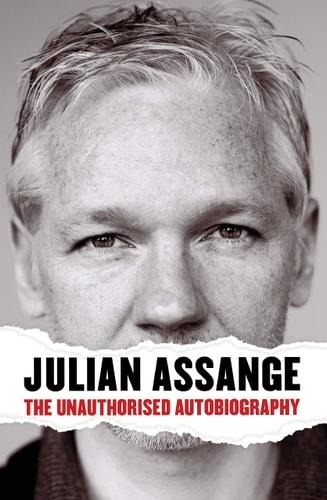
1. **Radical Transparency & Whistleblowing**
The book chronicles Assange's founding philosophy behind WikiLeaks — that governments and powerful institutions must be held accountable through the radical disclosure of classified information. WikiLeaks achieved what Assange describes as the largest disclosure of classified information in modern history, driven by his conviction that secrecy enables abuse.

The book's central thesis is that truth, made public, is a corrective force against the corruption of power.

Connect to books about: whistleblowing, government secrecy, investigative journalism, freedom of information.

---

2. **Surveillance, State Power & Digital Civil Liberties**
Assange's project was directly "assaulted by corporations, governments and the intelligence services," and the book engages deeply with how state and corporate power surveils, suppresses, and retaliates against those who challenge it.

The book frames the internet as both a tool of liberation and a mechanism of control — a tension central to Assange's worldview and his work with WikiLeaks.

Connect to books about: surveillance capitalism, NSA/GCHQ programmes, digital rights, state censorship.

---

3. **The Internet, Hacktivism & Information Activism**
Assange's identity as a hacker, software developer, and internet activist is woven throughout the narrative. The book explores how technical communities and early internet culture gave rise to a new kind of political actor — one who uses code and networks as instruments of dissent.

The book situates WikiLeaks within a broader tradition of "info-activism," where the free flow of information is treated as an ethical and political imperative.

Connect to books about: hacker culture, open-source movements, cyber-activism, the history of the internet.

---

4. **Journalism, Media Power & Press Freedom**
The book grapples with WikiLeaks's fraught relationship with mainstream media — newspapers fed off the leaks while simultaneously turning on Assange. It raises urgent questions about what journalism is, who gets to practise it, and who controls the flow of information to the public.

The tension between WikiLeaks as a journalistic model and the traditional press is a recurring fault line in the narrative.

Connect to books about: press freedom, media ethics, the future of journalism, political communication.

---

5. **Government Accountability & Democratic Transparency**
Assange frames his life's work as a "global struggle to force a new relationship between the people and their governments." The book is as much manifesto as memoir, arguing that citizens cannot hold power accountable without access to honest information about what their governments are doing.

Connect to books about: democracy and accountability, political corruption, freedom of information, civic activism.

---

6. **Exile, Persecution & the Law**
Written while Assange was under house arrest and facing legal threats on multiple fronts, the book is also a personal account of what it means to be hunted by powerful states. It examines the use — and misuse — of legal systems to silence dissent and punish those who expose inconvenient truths.

Connect to books about: political asylum, extradition law, civil liberties, dissident memoirs.

---

7. **Identity, Autobiography & the Ethics of Self-Disclosure**
The book's troubled genesis — Assange ultimately declared "all memoir is prostitution" and tried to cancel publication — makes it a fascinating meta-text about the nature of autobiography itself. It raises questions about authenticity, privacy, self-representation, and the contradictions of a transparency activist resisting transparency about himself.

Connect to books about: memoir theory, life writing, authorship and identity, the ethics of biography.

---

8. **Counter-Culture, Outsiderdom & Moral Courage**
The narrative traces Assange's moral and intellectual development from an unconventional Australian childhood through a life lived largely outside established institutions. The book portrays him as someone whose intellectual gifts and "carelessness of his own physical safety" place him in a long tradition of counter-cultural disrupters willing to pay a personal price for their convictions.

Connect to books about: political radicalism, civil disobedience, maverick thinkers, outsider narratives.