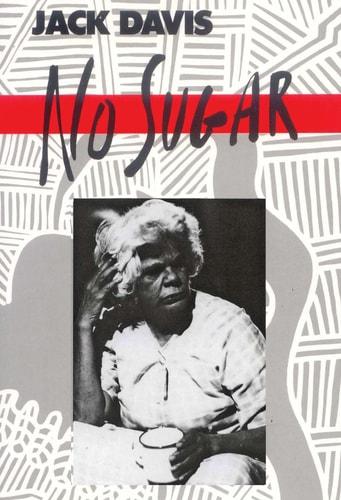
The book "No Sugar" by Jack Davis explores several significant themes and topics that can help in drawing connections to other literary works. These include:

*   **Racism, Discrimination, and Colonial Violence**: The play vividly portrays the marginalization and mistreatment of Aboriginal Australians during the 1920s and 1930s under a white government's jurisdiction 【4】【5】. This theme connects to other works that address systemic oppression and the impact of colonialism on indigenous populations.
*   **Government, Civilization, and Religion**: The play critiques the justifications used by white civil servants to assert authority over Aboriginal lives, often under the guise of bringing them into the "twentieth century" 【3】. This theme can be linked to books that examine the role of government in social control and the imposition of cultural norms.
*   **The Aboriginal Family Unit**: "No Sugar" focuses on the struggles of the Millimurra family, an Australian Aboriginal family, highlighting their attempts at survival and maintaining dignity 【2】【4】. Connections can be made to other narratives that explore family dynamics, resilience, and the impact of societal pressures on familial bonds.
*   **Cultural Identity and Assimilation**: The play touches upon the experiences of Aboriginal people navigating a society that often sought to assimilate them, as well as the efforts to maintain their ancestral languages and traditions 【1】. This theme resonates with literature that deals with cultural clashes, identity formation, and the preservation of heritage.

"No Sugar" is part of Jack Davis's "First Born Trilogy," which depicts the lives of Aboriginal families throughout the 20th century. The other plays in this series are "The Dreamers" and "Barungin (Smell the Wind)" 【1】. The play's exploration of activism and social justice during the Australian depression of the 1930s has been compared to works like John Steinbeck's "The Grapes of Wrath" and Upton Sinclair's "The Jungle" 【2】.