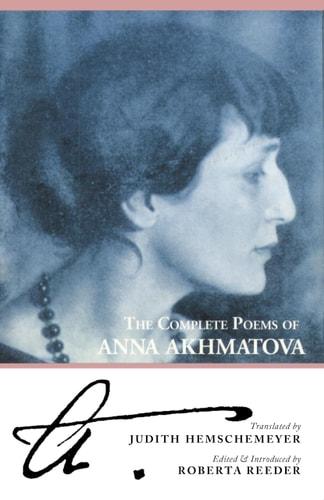
The complete poems of Anna Akhmatova explore a range of profound themes and topics, making her work a rich resource for drawing connections to other literary pieces. Her poetry delves into:
* **Love and Relationships:** Akhmatova's verses frequently examine the complexities of love, including themes of **betrayal, loss, remorse, and rejection** 【4】. Her poems often capture intimate moments and the nuances of human connection, as seen in works like "He loved three things, alive" 【6】.
* **Personal and National Identity:** Akhmatova's work is deeply intertwined with her experiences in **Soviet Russia** 【1】 and her identity as a Russian aristocrat 【3】. Her poetry reflects the **suffering of her generation** 【8】 and the impact of historical events on individual lives.
* **Suffering and Resilience:** Her poems powerfully convey the **horrors of war, loneliness, and exile** 【3】, particularly in the context of political repression and Stalin's purges 【8】. Despite these challenges, her work is also characterized by **courage** 【9】 and perseverance.
* **Historical and Social Context:** Akhmatova's poetry is a significant reflection of the **tumultuous 20th century** 【7】, capturing the essence of life during periods of revolution and terror 【1】【3】. Her work serves as a testament to her literary prowess and her ability to articulate the collective experience of her time 【1】.
* **Nature and the Human Condition:** Beyond personal and political themes, Akhmatova's poetry also expresses a great feeling for **nature** 【2】 and explores universal aspects of the human experience 【10】.
Her poetry is noted for its **emotional depth, lyrical beauty, and simplicity of form** 【2】, often compared to the works of Pushkin 【2】. Akhmatova's ability to transform intimate details into relatable parables allows her work to resonate with readers across different contexts 【5】.