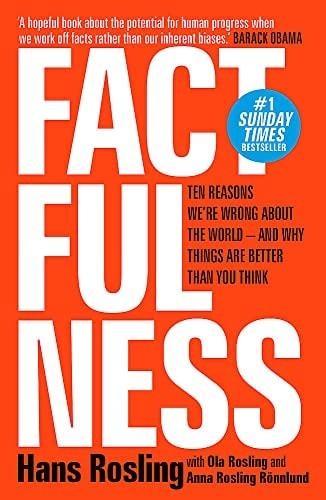
"Factfulness: Ten Reasons We're Wrong About the World – and Why Things Are Better Than You Think" by Hans Rosling, Ola Rosling, and Anna Rosling Rönnlund, explores themes related to **global perspectives, critical thinking, and understanding the world based on data rather than emotion** 【1】【3】.
Key themes and topics that can help draw connections to other books include:
* **Combating Misconceptions and Ignorance:** The book identifies and debunks ten common human instincts that lead to a distorted, often negative, view of the world 【1】【6】. This theme connects to books that discuss cognitive biases, critical thinking, and the spread of misinformation.
* **Data-Driven Worldview:** A central idea is the importance of using facts and data to understand global progress and challenges, rather than relying on emotional responses or preconceived notions 【1】【2】. This links to books on statistics, data visualization, economics, and social science research.
* **Optimism and Progress:** The book argues that, despite its problems, the world is generally in a better state than many people perceive 【2】【4】. This theme can be connected to books on positive psychology, progress studies, and historical analyses that highlight societal advancements.
* **Developing a "Factful" Mindset:** "Factfulness" is presented not just as a book, but as an attitude or mindset that encourages a more accurate and hopeful perspective 【5】【7】. This relates to books on personal development, philosophy, and educational approaches that foster critical thinking skills.
The book's approach is characterized by its use of **insightful data analysis and narratives** to present a more factual understanding of global conditions 【2】. It emphasizes the need to recognize and control dramatic instincts that can misinterpret information 【8】【9】.