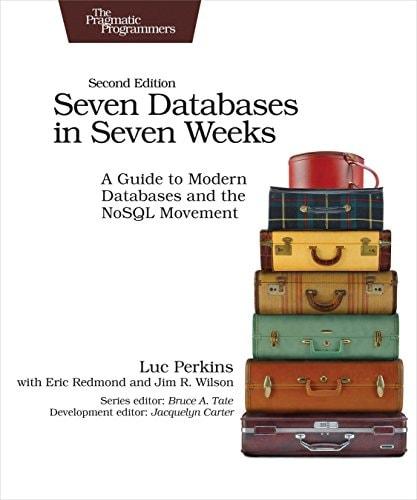
The book "Seven Databases in Seven Weeks: A Guide to Modern Databases and the NoSQL Movement" by Eric Redmond and Jim R. Wilson explores various database technologies, focusing on both traditional relational databases (RDBMS) and NoSQL systems. The core theme is to help developers understand the diverse landscape of data management solutions and make informed decisions about which database best suits their needs 【1】【2】.

Key themes and topics covered in the book include:

*   **Introduction to Modern Databases**: The book provides an overview of contemporary database systems, acknowledging the increasing complexity and volume of data that developers need to manage 【2】【4】.
*   **RDBMS vs. NoSQL**: It delves into the differences and applications of both relational database management systems and NoSQL databases 【2】【5】.
*   **Diverse Data Models**: The book explores various data models, including relational, key/value, columnar, and graph-based models 【3】.
*   **Specific Database Technologies**: It offers practical and conceptual introductions to several prominent open-source databases. While specific lists vary slightly across editions and summaries, common examples include:
    *   **Relational Databases**: PostgreSQL, SQLite, DuckDB 【6】
    *   **NoSQL Databases**: Redis, Neo4j, CouchDB, MongoDB, HBase, Riak, DynamoDB 【3】【5】
*   **Decision-Making for Database Selection**: A central question addressed is how to choose the most appropriate database or combination of databases for a given problem or application 【1】.
*   **Application vs. Database Logic**: The book discusses the decision of where to place code logic – within the application or within the database itself 【1】.

By covering these topics, the book aims to equip developers with the knowledge to navigate the evolving field of data management and select the right tools for their projects.