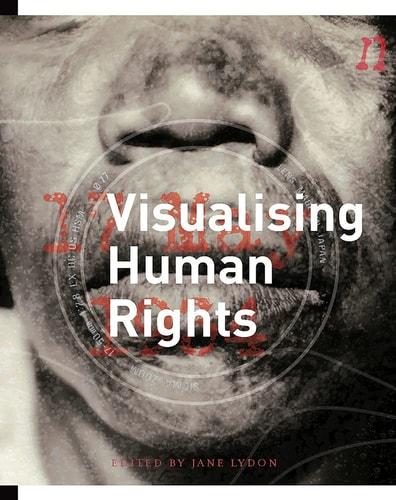
The book "Visualising Human Rights," edited by Jane Lydon, explores the multifaceted ways in which **visual imagery has been employed to define, contest, and advocate for human rights** 【1】【4】. It examines the cultural impact of human rights frameworks through the lens of visual culture, particularly in the context of the 70th anniversary of the Universal Declaration of Human Rights (UDHR) 【6】【8】.

Key themes and topics within the book include:

*   **The role of photography in human rights:** The book highlights how photography has been used as a "universal language" to communicate across cultures and races, and to serve as evidence of human rights violations 【5】【8】. It also delves into the historical portrayal of marginalized groups, such as Indigenous Australians, through colonial photography and the shift towards self-representation 【9】【10】.
*   **Visual culture and human rights discourse:** It investigates how visual practices shape and are shaped by human rights discussions globally 【1】【4】. This includes exploring the power of images to create a sense of shared humanity, but also their potential to reinforce hierarchies and justify oppression 【3】.
*   **Ethics of spectatorship:** The book considers the responsibilities of viewers in engaging with human rights imagery and the ethical implications of how we consume these visuals 【2】.
*   **Historical context of human rights:** It touches upon Australia's historical engagement with humanitarianism and human rights 【7】.

These themes can help you draw connections to other books in a library that deal with:

*   **Visual culture studies:** Books that analyze the impact and interpretation of images in society.
*   **Photography and social justice:** Works that explore how photography has been used as a tool for activism and advocacy.
*   **Humanitarianism and international relations:** Texts that discuss the history and practice of human rights and humanitarian efforts.
*   **Postcolonial studies and Indigenous representation:** Books examining the visual representation of Indigenous peoples and the legacies of colonialism.
*   **Media studies and communication:** Works that analyze how information and ideas are disseminated through various media.