1. **Street Art as Artistic Practice & Technique**
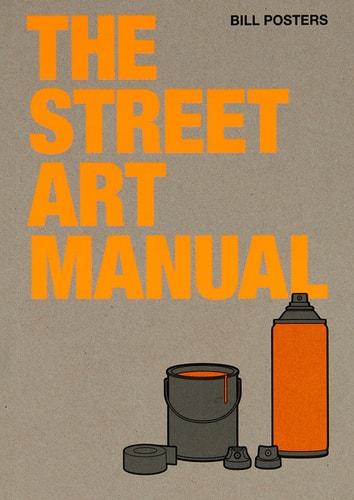
   The book is fundamentally a practical handbook covering 11 distinct forms of street art — graffiti, stencilling, large-scale murals, wheat pasting, urban projections, yarn bombing, guerrilla theatre, aerial art, banner drops, subvertising, and projectiles — each with step-by-step illustrated guidance.

   The breadth of techniques positions the book as both a craft guide and a survey of the medium's full creative vocabulary.

   Connect to books about: graffiti history and technique, mural painting, public art, graphic design, illustration.

2. **Art as Activism & Social Change**
   Running throughout the book is a conviction that street art is a vehicle for challenging injustice. The authors and their collaborators use subversive art as a tool for progressive social change, addressing social, economic, and racial inequalities through creative intervention in public space.

   The book frames artistic practice as inherently political — a means of "awakening consciousness" and giving voice to communities who are otherwise shut out of mainstream channels.

   Connect to books about: art activism, protest movements, community organising, political art, social justice.

3. **Reclaiming Public Space & Urban Life**
   The book is concerned with who owns and controls the urban environment. Street art here is a mode of reclaiming streets and public spaces from corporate and state interests, asserting that cities belong to their inhabitants rather than advertisers or authorities.

   Large-scale murals are examined both as tools of corporate gentrification and as instruments of neighbourhood enrichment — a tension the book navigates throughout.

   Connect to books about: urban geography, the right to the city, public space, gentrification, urban planning.

4. **Subvertising & Anti-Consumerism**
   A dedicated strand of the book deals with subvertising — the hijacking of advertising space to subvert commercial messages. The book details how billboard and bus-stop ad spaces can be accessed and repurposed to challenge consumer culture and corporate power.

   This reflects the authors' wider project (Brandalism) of using unlawful art interventions to critique advertising and capitalism.

   Connect to books about: culture jamming, ad-busting, consumerism, media criticism, corporate power, the attention economy.

5. **Freedom of Expression, Law & Civil Disobedience**
   The book engages directly with the legal dimensions of street art, covering Freedom of Expression, criminal damage, and trespassing law. It is candid that most street art is illegal in most jurisdictions, framing law-breaking as a considered political and creative choice.

   This situates the book within a long tradition of civil disobedience — the deliberate, principled violation of law in service of a larger moral or political goal.

   Connect to books about: civil disobedience, free speech law, protest rights, political philosophy, anarchism.

6. **History & Global Culture of Street Art**
   Beyond technique, the book traces each art form's historical roots — from ancient wheat-pasting traditions to the emergence of yarn bombing in Houston in 2005 — and features artists and collectives from across five continents.

   This global and historical sweep gives the book a strong art-historical dimension, situating contemporary practice within a much longer story of mark-making in public.

   Connect to books about: art history, counterculture, graffiti history, global contemporary art, subcultural studies.

7. **Guerrilla Communication & Media Tactics**
   Many of the book's techniques — projections, banner drops, guerrilla theatre, aerial art — are designed to infiltrate the public sphere and generate media attention. The book functions as a tactical communication manual as much as an art guide, describing how to mount campaigns that break through the noise of contemporary media.

   Author Bill Posters' own "Spectre" project, featuring a deepfake of Mark Zuckerberg, exemplifies this intersection of art, media manipulation, and political messaging.

   Connect to books about: media theory, propaganda, tactical media, performance art, communication strategy.

8. **Ecology, Community & Mural Art**
   The book treats large-scale mural art as a space for raising awareness of environmental and community issues — with examples such as murals symbolising hope in the face of ecological destruction. Murals are shown to have a dual nature: they can serve corporate or gentrifying interests, or they can celebrate local cultures and engage communities.

   Connect to books about: environmental art, eco-activism, community arts, public health muralism, place-making.