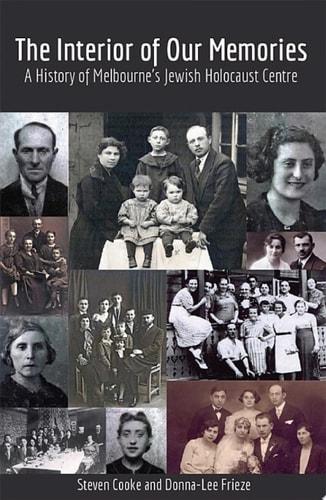
The book, "The Interior of Our Memories: A History of Melbourne's Jewish Holocaust Centre" by Steven Cooke and Donna-Lee Frieze, explores several key themes and topics that can help in drawing connections to other books:
* **Holocaust Memory and Memorialization:** The book details the development of the Melbourne Holocaust Centre within the broader context of global Holocaust memorial activities. It examines how survivors gathered documents and how the center transformed from a collection of artifacts into an organization focused on remembrance and education 【1】【2】. This theme connects to books discussing the impact of the Holocaust, survivor testimonies, and the establishment of Holocaust museums and research centers worldwide.
* **Survivor Experiences and Post-War Lives:** It highlights how many Holocaust survivors made new lives for themselves in Melbourne after the war 【1】【2】. This aspect can be linked to books that focus on immigration, diaspora communities, and the personal narratives of individuals who rebuilt their lives after experiencing immense trauma.
* **The Role of Museums and Research Centers:** The book provides a history of the Melbourne Holocaust Centre's early days and its evolution into an internationally recognized institution 【7】【8】. Connections can be made to books about museum studies, cultural heritage, the preservation of memory, and the specific challenges and methodologies of Holocaust education and research.
* **Global Holocaust Activity:** The development of the Melbourne center is analyzed in relation to global Holocaust memorial activity 【2】【6】. This allows for connections to books that compare and contrast Holocaust remembrance efforts in different countries and cultures.
* **Pre-war Jewish Life and the Holocaust:** The book's narrative begins during the Holocaust itself, with survivors gathering documents, and touches upon pre-war Jewish life 【1】【5】. This theme can link to books that explore the historical context of Jewish life in Europe before the war, the rise of Nazism, and the systematic persecution of Jews.
* **Artifacts and Personal Stories:** The Melbourne Holocaust Museum houses a collection of materials donated by survivors, including artifacts that serve as material evidence of their experiences 【3】. This connects to books that utilize personal objects, diaries, letters, and other primary sources to tell individual stories of survival and loss.
* **Holocaust Memory and Discourse:** The book's authors have also contributed to discussions on Holocaust memory and its connections to broader discourses, such as racism and human rights 【4】【9】. This opens avenues to connect with books that explore the ethical, social, and political implications of remembering the Holocaust and its relevance to contemporary issues.