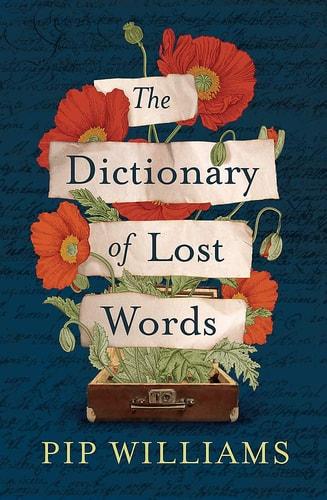
1. **Language, Power & Who Gets to Define the World**
The novel asks fundamental questions about who controls language and why it matters. The all-male editorial team of the OED worked under Victorian-era mores, and words relating to women's and working-class experiences were routinely overlooked or omitted. Esme's realisation that "all words are not equal" drives her life's work, and the novel poses searching questions: who owns language, does language reflect or create reality, and who chooses what is appropriate?

Connect to books about: linguistics, philosophy of language, semiotics, knowledge and power, canon formation.

---

2. **Gender, Feminism & the Erasure of Women's Voices**
At its core, the novel is about the systematic exclusion of women — as authors, as subjects, and as speakers — from the authoritative record of a language. Esme discovers that words meaningful to women and common folk simply do not make it into the dictionary, and she dedicates herself to recovering them. Williams has described her central question as whether the absence of women from the OED process meant it was biased in favour of male experience and sensibility.

Connect to books about: feminist theory, women's history, gender and language, patriarchy and institutions.

---

3. **Women's Suffrage & Political Activism**
The novel is set against the height of the suffrage movement, and Esme and the women around her are drawn into its politics. The fight over who gets to define words runs in direct parallel to the fight over who gets a political voice. The personal and the political are woven together throughout.

Connect to books about: the suffragette movement, women's rights history, civil disobedience, early 20th-century social reform.

---

4. **Class, Privilege & Whose Language Counts**
The OED's source quotations were disproportionately drawn from books by upper- and middle-class men. Esme — who moves between the world of scholars and that of servants — becomes acutely interested in the words used by working-class women in Oxford's Covered Market, words the dictionary men would never think to record. The novel asks whose vernacular deserves legitimacy.

Connect to books about: class and culture, social stratification, vernacular traditions, oral history.

---

5. **Historical Fiction & the Making of Knowledge**
The novel fictionalises the real, decades-long process of compiling the Oxford English Dictionary, blending documented history with invented characters to reveal what the official record leaves out. It interrogates how institutions construct authoritative knowledge, and what gets lost in that process.

Connect to books about: history of scholarship, institutional bias, archival research, historiography, biographical fiction.

---

6. **Loss, Memory & the Preservation of the Forgotten**
Loss operates on multiple levels — the loss of Esme's mother, the loss of words dropped from the table, the loss of entire ways of speaking and knowing. Williams connects the disappearance of people with the disappearance of words, suggesting that to name something is to preserve it, and that silence is a form of erasure.

Connect to books about: grief and memory, archiving and preservation, oral traditions, cultural loss.

---

7. **War, Trauma & the Limits of Language**
World War I casts a shadow over the novel's final act. A man who goes to fight in France finds he cannot find adequate words for the atrocities he witnesses, mirroring Esme's own experience of reaching for words that don't exist. The novel explores how extreme lived experience outstrips the language available to describe it.

Connect to books about: WWI literature, trauma and narrative, the unspeakable in war, shell shock and memory.

---

8. **Coming of Age & Female Self-Determination**
The novel follows Esme across her entire life, from curious child beneath the sorting table to the compiler of her own dictionary. Her journey is one of growing self-awareness, intellectual ambition, and resistance to the roles assigned to women of her era — all expressed through her relationship with words.

Connect to books about: bildungsroman, female identity and independence, intellectual coming-of-age, Victorian and Edwardian womanhood.