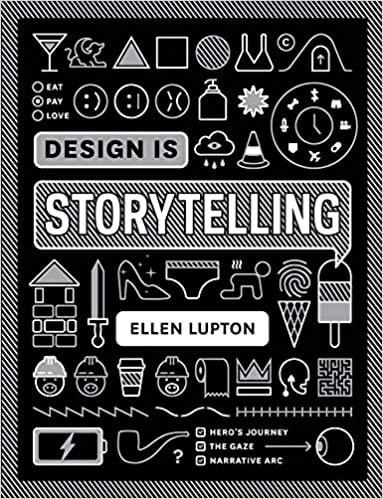
"Design is Storytelling" by Ellen Lupton explores how **storytelling techniques can be used to create compelling graphics, products, services, and experiences** 【3】【4】. The book delves into the **psychology of visual perception from a narrative perspective** 【9】 【4】【10】 and emphasizes that good design, much like good storytelling, **brings ideas to life** 【11】.
Key themes and topics in the book include:
* **Narrative in Design**: The core idea is that design is not solely about aesthetics or functionality, but about crafting narratives that resonate with people on a deeper level and create meaningful user experiences 【1】【7】.
* **Emotional Connection**: Design can evoke emotions and create lasting memories, fostering emotional bonds between the audience and the creation 【7】【8】.
* **Creative Thinking Playbook**: The book serves as a guide for designers, showing them how to use storytelling to enhance their work 【3】【4】.
* **User Experience**: Designers use elements like intriguing logos, page layouts, or retail spaces to guide users on dynamic journeys, inviting them to explore and engage 【4】【10】.
* **Interdisciplinary Insights**: Lupton draws from psychology, communication theory, and visual artistry to illustrate how storytelling shapes design 【1】【5】. Concepts from writing, design, psychology, and behavioral economics are covered 【2】.
* **Beyond Aesthetics**: The book encourages looking beyond the surface of design to its emotional and experiential core 【1】【5】.
Topics covered within these themes include experience design, user personas, co-creation techniques, and the use of color 【6】. The book is structured to highlight individual tools, principles, and ideas relevant to the psychology of design through the lens of storytelling 【2】.