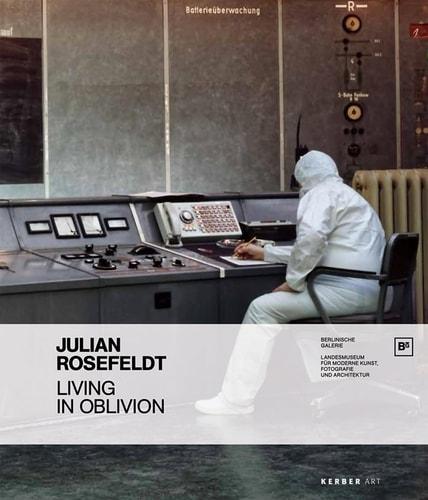
The book "Julian Rosefeldt: Living in Oblivion" explores themes and topics related to **modern life and work**, often presenting their **paradoxical and irrational aspects** through subtle comedy and irony 【2】【3】.
Key themes and topics that can help draw connections to other books include:
* **Film Installations and Visual Art:** Rosefeldt is known for his elaborate, visually opulent film and video installations, which combine political critique with high production values 【4】【7】. This connects to art history, film studies, and contemporary art practices.
* **Political Critique:** His work often incorporates political commentary 【4】. This could link to books on political science, social commentary, and activism.
* **Everyday Life and Modernity:** The installations portray the paradoxical and irrational aspects of everyday life 【2】【3】. This theme connects to sociology, philosophy, and cultural studies.
* **Artist Manifestos:** One of his notable works, "Manifesto," pays homage to the tradition and literary beauty of artist manifestos 【5】. This could connect to books on art theory, literary movements, and manifestos across various disciplines.
* **Architecture and Urbanism:** Rosefeldt studied architecture, and some of his earlier works, like "Hidden City," deal with urban spaces and their historical significance 【6】【9】. This links to books on architecture, urban planning, and the history of cities.
* **Immigration and Social Issues:** His work "Asylum" examines immigration, a sensitive global issue 【8】. This connects to books on migration studies, sociology, and current global affairs.
* **History and National Identity:** Works like "Detonation Deutschland" explore national history through the literal deconstruction of buildings, reflecting on the history of the German nation 【1】. This relates to books on history, national identity, and memory studies.