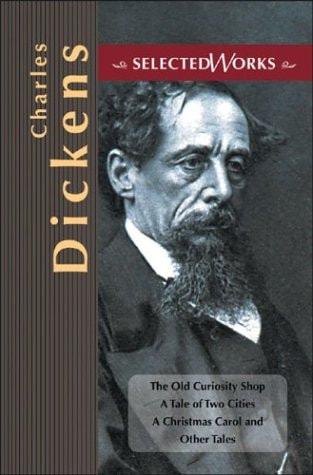
This book, containing Charles Dickens's "The Old Curiosity Shop" and "A Tale of Two Cities," explores several interconnected themes and topics that can help you draw connections to other books in a library.

**Themes and Topics in "The Old Curiosity Shop":**

*   **Poverty and Greed:** The novel starkly contrasts the struggles of the poor with the avarice of characters like Quilp, highlighting the societal pressures and moral compromises that arise from financial hardship 【1】【2】.
*   **Innocence and Corruption:** The character of Little Nell embodies innocence, often contrasted with the corrupting influences of the city and the characters she encounters 【1】【2】.
*   **The Importance of Storytelling:** Dickens emphasizes the power of narrative, both in how stories are passed down and how they shape understanding and memory 【8】.
*   **Urban vs. Rural Life:** The novel explores the stark differences between the "grimy and greedy center of London" and the peace found in the countryside, suggesting a critique of commercialized urban environments 【1】.
*   **Family and Responsibility:** The story delves into the complexities of family relationships, particularly the grandfather's poor choices and their impact on Nell 【7】.

**Themes and Topics in "A Tale of Two Cities":**

*   **Resurrection and Transformation:** A central theme is the possibility of rebirth and change, both on a personal and societal level, often linked to sacrifice 【9】【11】.
*   **Sacrifice:** The novel is replete with examples of personal and national sacrifice, where characters give up something significant for a greater cause or for others 【5】.
*   **Fate and History:** The intertwining of individual destinies with larger historical forces, particularly the French Revolution, is a key focus 【3】【10】.
*   **Tyranny and Revolution:** Dickens examines the oppressive nature of aristocracy and how it can fuel revolutionary fervor, while also showing how revolutions can lead to new forms of tyranny 【3】.
*   **Imprisonment:** The theme of imprisonment is explored both literally (e.g., the Bastille, La Force prison) and metaphorically, representing the abuse of power and the confinement of individuals 【4】.
*   **Secrecy and Surveillance:** Many characters harbor secrets, and the novel depicts a society under constant watch, reflecting the clandestine activities surrounding the Revolution 【6】.

By examining these themes, you can connect this book to others that explore social inequality, the impact of economic hardship, the loss of innocence, the nature of good versus evil, the consequences of political upheaval, and the enduring power of human connection and sacrifice.