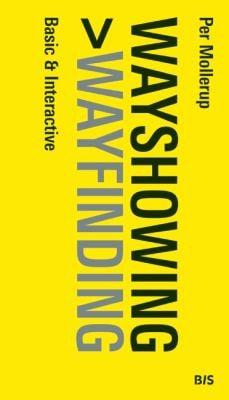
The book "Wayshowing: Basic & Interactive" by Per Mollerup explores the principles and practices of **wayfinding** and **information design** within environmental signage. It delves into how to create clear and effective systems that help people navigate unfamiliar spaces.

Key themes and topics covered in the book include:

*   **Basic Principles of Wayfinding**: This covers the fundamental concepts of how people orient themselves in an environment, even without explicit signs 【2】.
*   **Interactive Applications**: The book extends into how wayfinding can be made more dynamic and engaging, incorporating interactive elements 【1】【4】.
*   **Environmental Signage**: A significant focus is on the design and implementation of signage within various built environments, such as hospitals and airports 【3】【5】.
*   **Graphic Design Basics**: Mollerup revisits foundational graphic design principles as they apply to wayfinding 【1】.
*   **Planning Process**: The book guides readers through the planning stages involved in creating successful wayshowing systems 【1】.
*   **Communication Design**: Mollerup, a Professor of Communication Design, brings his expertise to the subject, emphasizing clear visual communication 【6】【7】.

By understanding these themes, you can connect "Wayshowing" to other books in areas such as:

*   **Graphic Design and Information Design**: Books focusing on visual communication, typography, and the clear presentation of information.
*   **Urban Planning and Architecture**: Works that discuss the design of public spaces, navigation within cities, and architectural wayfinding.
*   **Human-Computer Interaction (HCI)**: Especially those that touch upon user experience (UX) in physical environments and the integration of digital elements into navigation.
*   **Psychology of Perception**: Books that explore how humans perceive and interact with their surroundings.
*   **Branding and Identity**: Works that discuss how consistent visual systems, like signage, contribute to the identity of a place or organization.