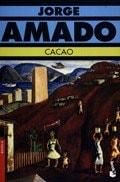
**Cacao** by Jorge Amado explores themes of **social realism**, **Brazilian life**, and the **communist ideology** of its time 【1】【2】. Written in 1933, it was Amado's second novel and part of his project to create a "Proletarian novel" that would convey communist ideas 【1】.

Key themes and topics that can help draw connections to other books include:

*   **Social Commentary and Politics:** The novel offers an accurate social commentary on the lives of people in Brazil during a politically fractured period 【2】. It delves into the lives of workers on **cacao plantations** in southern Bahia 【8】, reflecting Amado's upbringing in such an environment 【9】. This focus on the socio-political landscape and the lives of the working class can connect it to other works of social realism or novels that explore political ideologies.
*   **Brazilian Culture and Environment:** The book is set in the **cacao-growing regions of Bahia** 【3】, a setting that also features in other works by Amado, such as *The Violent Land* and *Gabriela, Clove and Cinnamon* 【3】【6】. The **cocoa boom** itself has created a rich tradition in Brazilian literature 【7】. This connection to a specific region and its economic activities can link it to regionalist literature.
*   **Early 20th-Century Modernism:** Amado was a modernist writer 【10】【11】, and *Cacao* is considered an early example of his work 【1】. This places it within the context of modernist literature and its exploration of contemporary social issues.
*   **Proletarian Literature:** As part of Amado's project for a "Proletarian novel," *Cacao* can be linked to other works that aim to represent and advocate for the working class and communicate political ideals 【1】.

*Cacao* was notable for its "shocking language and themes" for its time 【2】 and was the first of Amado's books to be translated into Spanish 【2】. Amado's work, in general, often focused on the **poor urban black and mulatto communities of Bahia** 【4】 and has been translated into numerous languages, with many of his books adapted into films and other media 【5】.