M:S3:15 4
Edit position
Edit position

Last set 1 day, 23 hours ago. Manual moves override automatic placement until the next shelfie/spine match.

The origins of monsters : image and cognition in the first age of mechanical reproduction
Diagnose this book
Open in Vernon Browser

The origins of monsters : image and cognition in the first age of mechanical reproduction

by David Wengrow

This study explores the origins of composite monsters in ancient art, tracing their rise alongside early cities and trade networks. Examining civilisations from Mesopotamia to China, it analyses how historical and cognitive factors have shaped the visual imagination.

Accession 11675 ISBN 9780691159041 Publisher Princeton University Press
Book Images
Reference and live side by side Hover to see live images

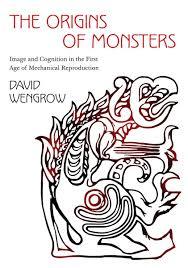
Reference
The origins of monsters : image and cognition in the first age of mechanical reproduction spine
The origins of monsters : image and cognition in the first age of mechanical reproduction cover
Live
The origins of monsters : image and cognition in the first age of mechanical reproduction live spine
No live
The origins of monsters : image and cognition in the first age of mechanical reproduction spine The origins of monsters : image and cognition in the first age of mechanical reproduction live spine
The origins of monsters : image and cognition in the first age of mechanical reproduction cover
No live
TAGS
Curated Derived
Art Culture Folklore Philosophy Psychology Religion Social Sciences
CONNECTIONS
No connections
State
on_shelf
True
position_updated_at
2026-06-04 14:45
orientation
vertical
Details

Physical

binding_type
Hard Back
dimensions
none captured
spine_text
none captured

Metadata

Book form
LOCATION HISTORY
M:S3:15 4 Current vertical
1 day, 23 hours ago
1 week ago
1 week, 1 day ago
Book Location
Updated 1 day, 23 hours ago
Vernon snapshot
View live

Frozen copy of Vernon's record from the last sync. Fields tagged flow back into the Pulse record.

Last synced 2026-05-28 11:30 (1 week, 2 days ago)

Identity

name→ title
The origins of monsters : image and cognition in the first age of mechanical reproduction
vernon_id
15952
accession_no→ accession_number
11675
vernon_slug
the-origins-of-monsters-image-and-cognition-in-the-first-age-of-mechanical-reproduction-david-wengrow

Drives Pulse state

curr_loc_status→ on_shelf
On Shelf
location_name
Zone S3/Level 2 (Mezzanine)/Phrontisterion/MONA
location_reason
On Shelf
isbn_issn→ isbn (when valid)
9780691159041

Descriptive

production_date
2014
object_type
Books/Document genres/Information forms/Visual and Verbal Communication
object_status
Accessioned
brief_description
It was with the rise of cities, elites, and cosmopolitan trade networks that "monsters" became widespread features of visual production in the ancient world. Showing how these fantastic images originated and how they were transmitted, David Wengrow identifies patterns in the records of human image-making and embarks on a search for connections between mind and culture. - Publisher's blurb.

Subjects & people

authors→ author (initial fill only)
David Wengrow
tags→ tags
Psychology, Religion, Civilisation, Mythology, Manners and customs, Symbolism, Supernatural, Cognition, Folklore, Evolutionary psychology, Perception, Monsters, Art, Prehistoric, Cognition and culture
subject_people
subject_objects

Cover image

vernon_cover_image_id→ cover_image
21370

Raw Vernon JSON

click to inspect

The source payload behind the snapshot above.

Use ⌘F to search once expanded.
{7 keys}
"slug": "the-origins-of-monsters-image-and-cognition-in-the-first-age-of-mechanical-reproduction-david-wengrow"
"opacObjectId": "15952"
"opacCollection": {1 keys}
"opacCollectionId": "1"
"imagesCollection": {2 keys}
"images": [1 items]
"[0]": {5 keys}
"imageId": "21370"
"cssColors": [5 items]
"[0]": {9 keys}
"hex": "f5f5f5"
"hue": 0
"rank": 1
"presence": 80.59
"colorName": "whitesmoke"
"lightness": 96
"colorGroup": "white"
"saturation": 0
"formattedColorName": "white smoke"
"[1]": {9 keys}
"hex": "000000"
"hue": 0
"rank": 2
"presence": 12.73
"colorName": "black"
"lightness": 0
"colorGroup": "gray"
"saturation": 0
"formattedColorName": "black"
"[2]": {9 keys}
"hex": "808080"
"hue": 0
"rank": 3
"presence": 1.25
"colorName": "gray"
"lightness": 50
"colorGroup": "gray"
"saturation": 0
"formattedColorName": "gray"
"[3]": {9 keys}
"hex": "a9a9a9"
"hue": 0
"rank": 4
"presence": 4.07
"colorName": "darkgray"
"lightness": 66
"colorGroup": "gray"
"saturation": 0
"formattedColorName": "dark gray"
"[4]": {9 keys}
"hex": "bc8f8f"
"hue": 0
"rank": 5
"presence": 1.32
"colorName": "rosybrown"
"lightness": 65
"colorGroup": "brown"
"saturation": 25
"formattedColorName": "rosy brown"
"rawColors": [7 items]
"[0]": {6 keys}
"hex": "f8f6f6"
"hue": 0
"rank": 1
"presence": 80.59
"lightness": 96
"saturation": 12
"[1]": {6 keys}
"hex": "302323"
"hue": 0
"rank": 2
"presence": 12.73
"lightness": 16
"saturation": 15
"[2]": {6 keys}
"hex": "8c6165"
"hue": 354
"rank": 3
"presence": 1.25
"lightness": 46
"saturation": 18
"[3]": {6 keys}
"hex": "9d9595"
"hue": 0
"rank": 4
"presence": 4.07
"lightness": 60
"saturation": 3
"[4]": {6 keys}
"hex": "caa5a8"
"hue": 355
"rank": 5
"presence": 1.32
"lightness": 71
"saturation": 25
"[5]": {6 keys}
"hex": "937d73"
"hue": 18
"rank": 6
"presence": 0.05
"lightness": 51
"saturation": 12
"[6]": {6 keys}
"hex": "747c74"
"hue": 120
"rank": 7
"presence": 0.01
"lightness": 47
"saturation": 3
"imageLabels": [10 items]
"[0]": {5 keys}
"count": 792
"score": 88.12
"status": "auto_verified"
"imageLabel": "Jaw"
"imageLabelId": 58
"[1]": {5 keys}
"count": 1169
"score": 85.26
"status": "auto_verified"
"imageLabel": "Gesture"
"imageLabelId": 151
"[2]": {5 keys}
"count": 19412
"score": 81.62
"status": "auto_verified"
"imageLabel": "Font"
"imageLabelId": 12
"[3]": {5 keys}
"count": 11007
"score": 79.51
"status": "auto_verified"
"imageLabel": "Art"
"imageLabelId": 4
"[4]": {5 keys}
"count": 1482
"score": 67.43
"status": "auto_verified"
"imageLabel": "Drawing"
"imageLabelId": 62
"[5]": {5 keys}
"count": 3378
"score": 65.53
"status": "auto_verified"
"imageLabel": "Visual arts"
"imageLabelId": 18
"[6]": {5 keys}
"count": 147
"score": 63.29
"status": "auto_verified"
"imageLabel": "Line art"
"imageLabelId": 496
"[7]": {5 keys}
"count": 509
"score": 60.72
"status": "auto_verified"
"imageLabel": "Eyelash"
"imageLabelId": 59
"[8]": {5 keys}
"count": 330
"score": 59.59
"status": "auto_verified"
"imageLabel": "Ink"
"imageLabelId": 670
"[9]": {5 keys}
"count": 5
"score": 59.52
"status": "auto_verified"
"imageLabel": "Coloring book"
"imageLabelId": 1065
"imageDerivatives": [6 items]
"[0]": {4 keys}
"url": "https://browser.mona.net.au/records/images/large/4710/963fd1562ec440c58b4c93609d2d3d6742425999.jpg"
"width": "188"
"height": "268"
"identifier": "LARGE"
"[1]": {4 keys}
"url": "https://browser.mona.net.au/records/images/medium/4710/963fd1562ec440c58b4c93609d2d3d6742425999.jpg"
"width": "188"
"height": "268"
"identifier": "MEDIUM"
"[2]": {4 keys}
"url": "https://browser.mona.net.au/records/images/nano/4710/963fd1562ec440c58b4c93609d2d3d6742425999.jpg"
"width": "25"
"height": "35"
"identifier": "NANO"
"[3]": {4 keys}
"url": "https://browser.mona.net.au/records/images/small/4710/963fd1562ec440c58b4c93609d2d3d6742425999.jpg"
"width": "105"
"height": "150"
"identifier": "SMALL"
"[4]": {4 keys}
"url": "https://browser.mona.net.au/records/images/tiny/4710/963fd1562ec440c58b4c93609d2d3d6742425999.jpg"
"width": "53"
"height": "75"
"identifier": "TINY"
"[5]": {4 keys}
"url": "https://browser.mona.net.au/records/images/xlarge/4710/963fd1562ec440c58b4c93609d2d3d6742425999.jpg"
"width": "188"
"height": "268"
"identifier": "XLARGE"
"totalImages": 1
"objectSearchScore": 1.3183545
"opacObjectFieldSets": [40 items]
"[0]": {2 keys}
"identifier": "accession_no"
"opacObjectFields": [1 items]
"[0]": {1 keys}
"value": "11675"
"[1]": {2 keys}
"identifier": "name"
"opacObjectFields": [1 items]
"[0]": {2 keys}
"value": "The origins of monsters : image and cognition in the first age of mechanical reproduction / David Wengrow"
"opacObjectFieldAttributes": [1 items]
"[0]": {2 keys}
"key": "title"
"value": "The origins of monsters : image and cognition in the first age of mechanical reproduction / David Wengrow"
"[2]": {2 keys}
"identifier": "other_name"
"opacObjectFields": [1 items]
"[0]": {1 keys}
"value": ""
"[3]": {2 keys}
"identifier": "artist_last_first"
"opacObjectFields": [1 items]
"[0]": {1 keys}
"value": "Wengrow, David"
"[4]": {2 keys}
"identifier": "prod_pri_date"
"opacObjectFields": [1 items]
"[0]": {2 keys}
"value": "2014"
"opacObjectFieldAttributes": [2 items]
"[0]": {2 keys}
"key": "earliest_date"
"value": "2014-01-01Z"
"[1]": {2 keys}
"key": "latest_date"
"value": "2014-12-31Z"
"[5]": {2 keys}
"identifier": "prod_pri_date_notes"
"opacObjectFields": [1 items]
"[0]": {1 keys}
"value": ""
"[6]": {2 keys}
"identifier": "edition"
"opacObjectFields": [1 items]
"[0]": {1 keys}
"value": ""
"[7]": {2 keys}
"identifier": "brief_desc"
"opacObjectFields": [1 items]
"[0]": {1 keys}
"value": "It was with the rise of cities, elites, and cosmopolitan trade networks that "monsters" became widespread features of visual production in the ancient world. Showing how these fantastic images originated and how they were transmitted, David Wengrow identifies patterns in the records of human image-making and embarks on a search for connections between mind and culture. - Publisher's blurb."
"[8]": {2 keys}
"identifier": "measure_desc"
"opacObjectFields": [1 items]
"[0]": {1 keys}
"value": ""
"[9]": {2 keys}
"identifier": "credit_line"
"opacObjectFields": [1 items]
"[0]": {1 keys}
"value": ""
"[10]": {2 keys}
"identifier": "curr_loc_status"
"opacObjectFields": [1 items]
"[0]": {2 keys}
"value": "On Shelf"
"opacObjectFieldAttributes": [1 items]
"[0]": {2 keys}
"key": "search"
"value": "curr_loc_status:"On Shelf""
"[11]": {2 keys}
"identifier": "ob_status"
"opacObjectFields": [1 items]
"[0]": {1 keys}
"value": "Accessioned"
"[12]": {2 keys}
"identifier": "lender"
"opacObjectFields": [1 items]
"[0]": {1 keys}
"value": ""
"[13]": {2 keys}
"identifier": "copyright_owner"
"opacObjectFields": [1 items]
"[0]": {1 keys}
"value": ""
"[14]": {2 keys}
"identifier": "copyright_type"
"opacObjectFields": [1 items]
"[0]": {1 keys}
"value": ""
"[15]": {2 keys}
"identifier": "copyright_start"
"opacObjectFields": [0 items]
"[16]": {2 keys}
"identifier": "copyright_expiry"
"opacObjectFields": [0 items]
"[17]": {2 keys}
"identifier": "copyright_notes"
"opacObjectFields": [1 items]
"[0]": {1 keys}
"value": ""
"[18]": {2 keys}
"identifier": "curr_loc"
"opacObjectFields": [1 items]
"[0]": {1 keys}
"value": "Zone S3/Level 2 (Mezzanine)/Phrontisterion/MONA"
"[19]": {2 keys}
"identifier": "object_type"
"opacObjectFields": [1 items]
"[0]": {2 keys}
"value": "Books/Document genres/Information forms/Visual and Verbal Communication"
"opacObjectFieldAttributes": [1 items]
"[0]": {2 keys}
"key": "search"
"value": "object_type:"Books/Document genres/Information forms/Visual and Verbal Communication""
"[20]": {2 keys}
"identifier": "collection"
"opacObjectFields": [1 items]
"[0]": {2 keys}
"value": "Main Collection/Library"
"opacObjectFieldAttributes": [1 items]
"[0]": {2 keys}
"key": "search"
"value": "collection:"Main Collection/Library""
"[21]": {2 keys}
"identifier": "prod_pri_place"
"opacObjectFields": [1 items]
"[0]": {1 keys}
"value": "New Jersey/United States of America"
"[22]": {2 keys}
"identifier": "prod_pri_publisher"
"opacObjectFields": [1 items]
"[0]": {1 keys}
"value": "Princeton University Press"
"[23]": {2 keys}
"identifier": "physical_notes"
"opacObjectFields": [2 items]
"[0]": {1 keys}
"value": "xvi, 162 pages : illustrations ; 26 cm."
"[1]": {1 keys}
"value": "Includes bibliographical references and index."
"[24]": {2 keys}
"identifier": "language"
"opacObjectFields": [1 items]
"[0]": {1 keys}
"value": "English"
"[25]": {2 keys}
"identifier": "isbn_issn"
"opacObjectFields": [1 items]
"[0]": {1 keys}
"value": "9780691159041"
"[26]": {2 keys}
"identifier": "user_sym_1"
"opacObjectFields": [1 items]
"[0]": {1 keys}
"value": "704.947 WEN"
"[27]": {2 keys}
"identifier": "usual_loc_being"
"opacObjectFields": [1 items]
"[0]": {1 keys}
"value": "Zone S3/Level 2 (Mezzanine)/Phrontisterion/MONA"
"[28]": {2 keys}
"identifier": "subject_class"
"opacObjectFields": [8 items]
"[0]": {2 keys}
"value": "Art, Prehistoric"
"opacObjectFieldAttributes": [1 items]
"[0]": {2 keys}
"key": "search"
"value": "subject_class:"Art, Prehistoric""
"[1]": {2 keys}
"value": "Cognition and culture/Cognition/Psychology"
"opacObjectFieldAttributes": [1 items]
"[0]": {2 keys}
"key": "search"
"value": "subject_class:"Cognition and culture/Cognition/Psychology""
"[2]": {2 keys}
"value": "Evolutionary psychology/Psychology"
"opacObjectFieldAttributes": [1 items]
"[0]": {2 keys}
"key": "search"
"value": "subject_class:"Evolutionary psychology/Psychology""
"[3]": {2 keys}
"value": "Monsters/Folklore/Manners and customs/Civilisation"
"opacObjectFieldAttributes": [1 items]
"[0]": {2 keys}
"key": "search"
"value": "subject_class:"Monsters/Folklore/Manners and customs/Civilisation""
"[4]": {2 keys}
"value": "Perception/Cognition/Psychology"
"opacObjectFieldAttributes": [1 items]
"[0]": {2 keys}
"key": "search"
"value": "subject_class:"Perception/Cognition/Psychology""
"[5]": {2 keys}
"value": "Religion"
"opacObjectFieldAttributes": [1 items]
"[0]": {2 keys}
"key": "search"
"value": "subject_class:"Religion""
"[6]": {2 keys}
"value": "Supernatural/Religion"
"opacObjectFieldAttributes": [1 items]
"[0]": {2 keys}
"key": "search"
"value": "subject_class:"Supernatural/Religion""
"[7]": {2 keys}
"value": "Symbolism/Mythology/Religion"
"opacObjectFieldAttributes": [1 items]
"[0]": {2 keys}
"key": "search"
"value": "subject_class:"Symbolism/Mythology/Religion""
"[29]": {2 keys}
"identifier": "subject_date"
"opacObjectFields": [0 items]
"[30]": {2 keys}
"identifier": "subject_event"
"opacObjectFields": [1 items]
"[0]": {1 keys}
"value": ""
"[31]": {2 keys}
"identifier": "subject_period"
"opacObjectFields": [1 items]
"[0]": {1 keys}
"value": ""
"[32]": {2 keys}
"identifier": "subject_object"
"opacObjectFields": [1 items]
"[0]": {1 keys}
"value": ""
"[33]": {2 keys}
"identifier": "subject_person"
"opacObjectFields": [1 items]
"[0]": {1 keys}
"value": ""
"[34]": {2 keys}
"identifier": "subject_place"
"opacObjectFields": [4 items]
"[0]": {2 keys}
"value": "Mesopotamia (historical region)"
"opacObjectFieldAttributes": [1 items]
"[0]": {2 keys}
"key": "search"
"value": "subject_place:"Mesopotamia (historical region)""
"[1]": {2 keys}
"value": "Egypt"
"opacObjectFieldAttributes": [1 items]
"[0]": {2 keys}
"key": "search"
"value": "subject_place:"Egypt""
"[2]": {2 keys}
"value": "Greece"
"opacObjectFieldAttributes": [1 items]
"[0]": {2 keys}
"key": "search"
"value": "subject_place:"Greece""
"[3]": {2 keys}
"value": "China"
"opacObjectFieldAttributes": [1 items]
"[0]": {2 keys}
"key": "search"
"value": "subject_place:"China""
"[35]": {2 keys}
"identifier": "assoc_person"
"opacObjectFields": [1 items]
"[0]": {1 keys}
"value": ""
"[36]": {2 keys}
"identifier": "assoc_place"
"opacObjectFields": [1 items]
"[0]": {1 keys}
"value": ""
"[37]": {2 keys}
"identifier": "assoc_event"
"opacObjectFields": [1 items]
"[0]": {1 keys}
"value": ""
"[38]": {2 keys}
"identifier": "assoc_object"
"opacObjectFields": [1 items]
"[0]": {1 keys}
"value": ""
"[39]": {2 keys}
"identifier": "user_sym_9"
"opacObjectFields": [1 items]
"[0]": {1 keys}
"value": ""
"relationshipsCollection": {2 keys}
"relationships": [1 items]
"[0]": {4 keys}
"relatedRecords": [1 items]
"[0]": {3 keys}
"slug": "david-wengrow"
"title": "David Wengrow"
"relatedRecordId": "24057"
"relationshipId": "object_prod_pri_person"
"relatedRecordType": "person"
"totalRelatedRecords": 1
"totalRelationships": 1
Topics and Themes
