Unpositioned
Edit position
Edit position

No position recorded yet. Picking a shelf here sets the manual override.

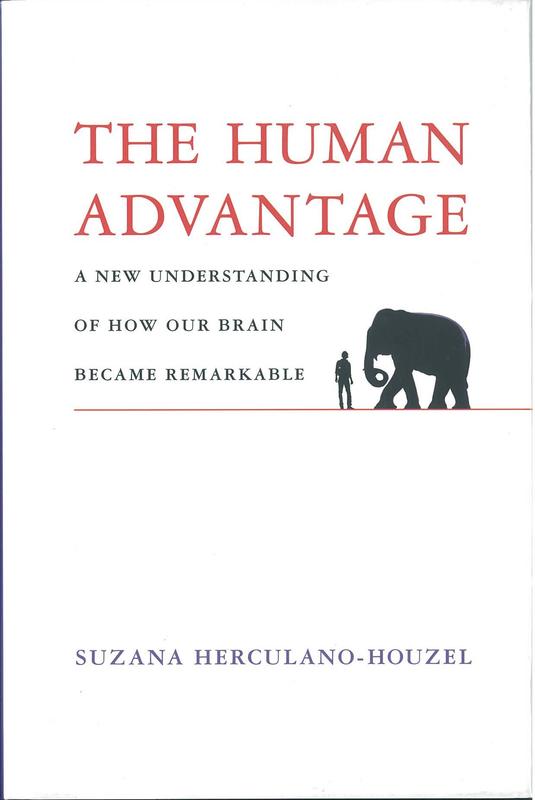
The human advantage : a new understanding of how our brain became remarkable / Susan Herculano-Houzel
Diagnose this book
Open in Vernon Browser

The human advantage : a new understanding of how our brain became remarkable / Susan Herculano-Houzel

by Suzana Herculano-Houzel

This work explores human brain evolution, analysing how superior cognitive abilities result from a high density of neurons enabled by the advent of cooking. It examines how efficient calorie intake supported the development of the cerebral cortex compared to other primates.

Accession 11677 ISBN 9780262034258 Publisher MIT Press
Book Images
Reference and live side by side Hover to see live images

Reference
The human advantage : a new understanding of how our brain became remarkable / Susan Herculano-Houzel spine
The human advantage : a new understanding of how our brain became remarkable / Susan Herculano-Houzel cover
Live
The human advantage : a new understanding of how our brain became remarkable / Susan Herculano-Houzel live spine
No live
The human advantage : a new understanding of how our brain became remarkable / Susan Herculano-Houzel spine The human advantage : a new understanding of how our brain became remarkable / Susan Herculano-Houzel live spine
The human advantage : a new understanding of how our brain became remarkable / Susan Herculano-Houzel cover
No live
TAGS
Curated Derived
Biology Culture Evolution Human Evolution Humans Life Sciences Psychology Science Social Sciences The Brain
CONNECTIONS
No connections
State
on_shelf
True
position_updated_at
never
orientation
unknown
Details

Physical

binding_type
Hard Back
dimensions
229.00 (H) × 152.00 (W) × 17.00 (T) mm
spine_text
none captured
LOCATION HISTORY
G:W1:5 4 Current vertical
4 days, 3 hours ago
1 week, 2 days ago
1 week, 2 days ago
1 week, 5 days ago
Unknown location vertical
2 weeks ago
Vernon snapshot
View live

Frozen copy of Vernon's record from the last sync. Fields tagged flow back into the Pulse record.

Last synced 2026-05-21 00:55 (4 days, 12 hours ago)

Identity

name→ title
The human advantage : a new understanding of how our brain became remarkable / Susan Herculano-Houzel
vernon_id
15954
accession_no→ accession_number
11677
vernon_slug
the-human-advantage-a-new-understanding-of-how-our-brain-became-remarkable-susan-herculano-houzel

Drives Pulse state

curr_loc_status→ on_shelf
On Shelf
location_name
Zone W1 (Live bays)/Level 1/Phrontisterion/MONA
location_reason
On Shelf
isbn_issn→ isbn (when valid)
9780262034258

Descriptive

production_date
2016
object_type
Books/Document genres/Information forms/Visual and Verbal Communication
object_status
Accessioned
brief_description
Herculano-Houzel shows that it is not the size of our brain that matters but the fact that we have more neurons in the cerebral cortex than any other animal, thanks to our ancestors invention, some 1.5 million years ago, of a more efficient way to obtain calories: cooking.Because we are primates, ingesting more calories in less time made possible the rapid acquisition of a huge number of neurons in the still fairly small cerebral cortex -- the part of the brain responsible for finding patterns, reasoning, developing technology, and passing it on through culture. Herculano-Houzel shows us how she came to these conclusions -- making brain soup to determine the number of neurons in the brain, for example, and bringing animal brains in a suitcase through customs.

Subjects & people

authors→ author (initial fill only)
Suzana Herculano-Houzel
tags→ tags
Science, Psychology, Life sciences, Culture, Evolution (Biology), Biology, Brain, Central nervous system, Nervous system, Organs (Anatomy), Anatomy, Cognition, Human evolution, Neurophysiology, Neurobiology, Neurosciences, Medical sciences, Evolutionary psychology, Behaviour evolution, Social evolution, Human behaviour -- Evolution, Brain -- Evolution, Cognitive neuroscience, Neuropsychology, Nervous system -- Evolution, Brain -- Research
subject_people
subject_objects

Cover image

vernon_cover_image_id→ cover_image
19233

Raw Vernon JSON

click to inspect

The source payload behind the snapshot above.

Use ⌘F to search once expanded.
{7 keys}
"slug": "the-human-advantage-a-new-understanding-of-how-our-brain-became-remarkable-susan-herculano-houzel"
"opacObjectId": "15954"
"opacCollection": {1 keys}
"opacCollectionId": "1"
"imagesCollection": {2 keys}
"images": [1 items]
"[0]": {5 keys}
"imageId": "19233"
"cssColors": [4 items]
"[0]": {9 keys}
"hex": "f5f5f5"
"hue": 0
"rank": 1
"presence": 93.36
"colorName": "whitesmoke"
"lightness": 96
"colorGroup": "white"
"saturation": 0
"formattedColorName": "white smoke"
"[1]": {9 keys}
"hex": "708090"
"hue": 210
"rank": 2
"presence": 2.91
"colorName": "slategray"
"lightness": 50
"colorGroup": "gray"
"saturation": 13
"formattedColorName": "slate gray"
"[2]": {9 keys}
"hex": "bc8f8f"
"hue": 0
"rank": 3
"presence": 1.49
"colorName": "rosybrown"
"lightness": 65
"colorGroup": "brown"
"saturation": 25
"formattedColorName": "rosy brown"
"[3]": {9 keys}
"hex": "778899"
"hue": 210
"rank": 4
"presence": 0.96
"colorName": "lightslategray"
"lightness": 53
"colorGroup": "gray"
"saturation": 14
"formattedColorName": "light slate gray"
"rawColors": [7 items]
"[0]": {6 keys}
"hex": "fbfafa"
"hue": 0
"rank": 1
"presence": 93.36
"lightness": 98
"saturation": 11
"[1]": {6 keys}
"hex": "474d51"
"hue": 204
"rank": 2
"presence": 2.91
"lightness": 29
"saturation": 6
"[2]": {6 keys}
"hex": "b5676c"
"hue": 356
"rank": 3
"presence": 1.49
"lightness": 55
"saturation": 34
"[3]": {6 keys}
"hex": "a2a1a6"
"hue": 252
"rank": 4
"presence": 0.96
"lightness": 64
"saturation": 2
"[4]": {6 keys}
"hex": "d3a9ad"
"hue": 354
"rank": 5
"presence": 1.11
"lightness": 74
"saturation": 32
"[5]": {6 keys}
"hex": "a8828f"
"hue": 339
"rank": 6
"presence": 0.12
"lightness": 58
"saturation": 17
"[6]": {6 keys}
"hex": "e0c4ba"
"hue": 15
"rank": 7
"presence": 0.05
"lightness": 80
"saturation": 37
"imageLabels": [10 items]
"[0]": {5 keys}
"count": 27
"score": 90.71
"status": "auto_verified"
"imageLabel": "Elephant"
"imageLabelId": 527
"[1]": {5 keys}
"count": 495
"score": 82.94
"status": "auto_verified"
"imageLabel": "Working animal"
"imageLabelId": 247
"[2]": {5 keys}
"count": 19411
"score": 80.41
"status": "auto_verified"
"imageLabel": "Font"
"imageLabelId": 12
"[3]": {5 keys}
"count": 506
"score": 76.97
"status": "auto_verified"
"imageLabel": "Terrestrial animal"
"imageLabelId": 244
"[4]": {5 keys}
"count": 10019
"score": 76.64
"status": "auto_verified"
"imageLabel": "Rectangle"
"imageLabelId": 11
"[5]": {5 keys}
"count": 190
"score": 73.48
"status": "auto_verified"
"imageLabel": "Snout"
"imageLabelId": 530
"[6]": {5 keys}
"count": 11
"score": 65.63
"status": "auto_verified"
"imageLabel": "Elephants and Mammoths"
"imageLabelId": 528
"[7]": {5 keys}
"count": 88
"score": 58.12
"status": "auto_verified"
"imageLabel": "Wildlife"
"imageLabelId": 531
"[8]": {5 keys}
"count": 2193
"score": 54.66
"status": "auto_verified"
"imageLabel": "Magenta"
"imageLabelId": 30
"[9]": {5 keys}
"count": 11
"score": 54.07
"status": "auto_verified"
"imageLabel": "Indian elephant"
"imageLabelId": 771
"imageDerivatives": [6 items]
"[0]": {4 keys}
"url": "https://browser.mona.net.au/records/images/large/4712/023c3b7eb65c5d03a371dfc3407dd7dc5b859868.jpg"
"width": "535"
"height": "800"
"identifier": "LARGE"
"[1]": {4 keys}
"url": "https://browser.mona.net.au/records/images/medium/4712/023c3b7eb65c5d03a371dfc3407dd7dc5b859868.jpg"
"width": "267"
"height": "400"
"identifier": "MEDIUM"
"[2]": {4 keys}
"url": "https://browser.mona.net.au/records/images/nano/4712/023c3b7eb65c5d03a371dfc3407dd7dc5b859868.jpg"
"width": "23"
"height": "35"
"identifier": "NANO"
"[3]": {4 keys}
"url": "https://browser.mona.net.au/records/images/small/4712/023c3b7eb65c5d03a371dfc3407dd7dc5b859868.jpg"
"width": "100"
"height": "150"
"identifier": "SMALL"
"[4]": {4 keys}
"url": "https://browser.mona.net.au/records/images/tiny/4712/023c3b7eb65c5d03a371dfc3407dd7dc5b859868.jpg"
"width": "50"
"height": "75"
"identifier": "TINY"
"[5]": {4 keys}
"url": "https://browser.mona.net.au/records/images/xlarge/4712/023c3b7eb65c5d03a371dfc3407dd7dc5b859868.jpg"
"width": "802"
"height": "1200"
"identifier": "XLARGE"
"totalImages": 1
"objectSearchScore": 0.3118719
"opacObjectFieldSets": [40 items]
"[0]": {2 keys}
"identifier": "accession_no"
"opacObjectFields": [1 items]
"[0]": {1 keys}
"value": "11677"
"[1]": {2 keys}
"identifier": "name"
"opacObjectFields": [1 items]
"[0]": {2 keys}
"value": "The human advantage : a new understanding of how our brain became remarkable / Susan Herculano-Houzel"
"opacObjectFieldAttributes": [1 items]
"[0]": {2 keys}
"key": "title"
"value": "The human advantage : a new understanding of how our brain became remarkable / Susan Herculano-Houzel"
"[2]": {2 keys}
"identifier": "other_name"
"opacObjectFields": [1 items]
"[0]": {1 keys}
"value": ""
"[3]": {2 keys}
"identifier": "artist_last_first"
"opacObjectFields": [1 items]
"[0]": {1 keys}
"value": "Herculano-Houzel, Suzana"
"[4]": {2 keys}
"identifier": "prod_pri_date"
"opacObjectFields": [1 items]
"[0]": {2 keys}
"value": "2016"
"opacObjectFieldAttributes": [2 items]
"[0]": {2 keys}
"key": "earliest_date"
"value": "2016-01-01Z"
"[1]": {2 keys}
"key": "latest_date"
"value": "2016-12-31Z"
"[5]": {2 keys}
"identifier": "prod_pri_date_notes"
"opacObjectFields": [1 items]
"[0]": {1 keys}
"value": ""
"[6]": {2 keys}
"identifier": "edition"
"opacObjectFields": [1 items]
"[0]": {1 keys}
"value": ""
"[7]": {2 keys}
"identifier": "brief_desc"
"opacObjectFields": [1 items]
"[0]": {1 keys}
"value": " Herculano-Houzel shows that it is not the size of our brain that matters but the fact that we have more neurons in the cerebral cortex than any other animal, thanks to our ancestors invention, some 1.5 million years ago, of a more efficient way to obtain calories: cooking.Because we are primates, ingesting more calories in less time made possible the rapid acquisition of a huge number of neurons in the still fairly small cerebral cortex -- the part of the brain responsible for finding patterns, reasoning, developing technology, and passing it on through culture. Herculano-Houzel shows us how she came to these conclusions -- making brain soup to determine the number of neurons in the brain, for example, and bringing animal brains in a suitcase through customs."
"[8]": {2 keys}
"identifier": "measure_desc"
"opacObjectFields": [1 items]
"[0]": {1 keys}
"value": ""
"[9]": {2 keys}
"identifier": "credit_line"
"opacObjectFields": [1 items]
"[0]": {1 keys}
"value": ""
"[10]": {2 keys}
"identifier": "curr_loc_status"
"opacObjectFields": [1 items]
"[0]": {2 keys}
"value": "On Shelf"
"opacObjectFieldAttributes": [1 items]
"[0]": {2 keys}
"key": "search"
"value": "curr_loc_status:"On Shelf""
"[11]": {2 keys}
"identifier": "ob_status"
"opacObjectFields": [1 items]
"[0]": {1 keys}
"value": "Accessioned"
"[12]": {2 keys}
"identifier": "lender"
"opacObjectFields": [1 items]
"[0]": {1 keys}
"value": ""
"[13]": {2 keys}
"identifier": "copyright_owner"
"opacObjectFields": [1 items]
"[0]": {1 keys}
"value": ""
"[14]": {2 keys}
"identifier": "copyright_type"
"opacObjectFields": [1 items]
"[0]": {1 keys}
"value": ""
"[15]": {2 keys}
"identifier": "copyright_start"
"opacObjectFields": [0 items]
"[16]": {2 keys}
"identifier": "copyright_expiry"
"opacObjectFields": [0 items]
"[17]": {2 keys}
"identifier": "copyright_notes"
"opacObjectFields": [1 items]
"[0]": {1 keys}
"value": ""
"[18]": {2 keys}
"identifier": "curr_loc"
"opacObjectFields": [1 items]
"[0]": {1 keys}
"value": "Zone W1 (Live bays)/Level 1/Phrontisterion/MONA"
"[19]": {2 keys}
"identifier": "object_type"
"opacObjectFields": [1 items]
"[0]": {2 keys}
"value": "Books/Document genres/Information forms/Visual and Verbal Communication"
"opacObjectFieldAttributes": [1 items]
"[0]": {2 keys}
"key": "search"
"value": "object_type:"Books/Document genres/Information forms/Visual and Verbal Communication""
"[20]": {2 keys}
"identifier": "collection"
"opacObjectFields": [1 items]
"[0]": {2 keys}
"value": "Main Collection/Library"
"opacObjectFieldAttributes": [1 items]
"[0]": {2 keys}
"key": "search"
"value": "collection:"Main Collection/Library""
"[21]": {2 keys}
"identifier": "prod_pri_place"
"opacObjectFields": [1 items]
"[0]": {1 keys}
"value": "Cambridge/Massachusetts/United States of America"
"[22]": {2 keys}
"identifier": "prod_pri_publisher"
"opacObjectFields": [1 items]
"[0]": {1 keys}
"value": "MIT Press"
"[23]": {2 keys}
"identifier": "physical_notes"
"opacObjectFields": [2 items]
"[0]": {1 keys}
"value": "xiii, 256 pages : illustrations ; 24 cm."
"[1]": {1 keys}
"value": "Includes bibliographical references and index."
"[24]": {2 keys}
"identifier": "language"
"opacObjectFields": [1 items]
"[0]": {1 keys}
"value": "English"
"[25]": {2 keys}
"identifier": "isbn_issn"
"opacObjectFields": [1 items]
"[0]": {1 keys}
"value": "9780262034258"
"[26]": {2 keys}
"identifier": "user_sym_1"
"opacObjectFields": [1 items]
"[0]": {1 keys}
"value": "612.82 HER"
"[27]": {2 keys}
"identifier": "usual_loc_being"
"opacObjectFields": [1 items]
"[0]": {1 keys}
"value": "Zone W1 (Live bays)/Level 1/Phrontisterion/MONA"
"[28]": {2 keys}
"identifier": "subject_class"
"opacObjectFields": [11 items]
"[0]": {2 keys}
"value": "Behaviour evolution/Evolutionary psychology/Psychology"
"opacObjectFieldAttributes": [1 items]
"[0]": {2 keys}
"key": "search"
"value": "subject_class:"Behaviour evolution/Evolutionary psychology/Psychology""
"[1]": {2 keys}
"value": "Brain -- Evolution/Central nervous system/Nervous system/Organs (Anatomy)/Anatomy/Biology/Life sciences/Science"
"opacObjectFieldAttributes": [1 items]
"[0]": {2 keys}
"key": "search"
"value": "subject_class:"Brain -- Evolution/Central nervous system/Nervous system/Organs (Anatomy)/Anatomy/Biology/Life sciences/Science""
"[2]": {2 keys}
"value": "Brain -- Research/Central nervous system/Nervous system/Organs (Anatomy)/Anatomy/Biology/Life sciences/Science"
"opacObjectFieldAttributes": [1 items]
"[0]": {2 keys}
"key": "search"
"value": "subject_class:"Brain -- Research/Central nervous system/Nervous system/Organs (Anatomy)/Anatomy/Biology/Life sciences/Science""
"[3]": {2 keys}
"value": "Brain/Central nervous system/Nervous system/Organs (Anatomy)/Anatomy/Biology/Life sciences/Science"
"opacObjectFieldAttributes": [1 items]
"[0]": {2 keys}
"key": "search"
"value": "subject_class:"Brain/Central nervous system/Nervous system/Organs (Anatomy)/Anatomy/Biology/Life sciences/Science""
"[4]": {2 keys}
"value": "Cognition/Psychology"
"opacObjectFieldAttributes": [1 items]
"[0]": {2 keys}
"key": "search"
"value": "subject_class:"Cognition/Psychology""
"[5]": {2 keys}
"value": "Cognitive neuroscience/Neuropsychology/Neurophysiology/Neurobiology/Neurosciences/Medical sciences/Life sciences/Science"
"opacObjectFieldAttributes": [1 items]
"[0]": {2 keys}
"key": "search"
"value": "subject_class:"Cognitive neuroscience/Neuropsychology/Neurophysiology/Neurobiology/Neurosciences/Medical sciences/Life sciences/Science""
"[6]": {2 keys}
"value": "Human behaviour -- Evolution/Behaviour evolution/Evolutionary psychology/Psychology"
"opacObjectFieldAttributes": [1 items]
"[0]": {2 keys}
"key": "search"
"value": "subject_class:"Human behaviour -- Evolution/Behaviour evolution/Evolutionary psychology/Psychology""
"[7]": {2 keys}
"value": "Nervous system -- Evolution/Organs (Anatomy)/Anatomy/Biology/Life sciences/Science"
"opacObjectFieldAttributes": [1 items]
"[0]": {2 keys}
"key": "search"
"value": "subject_class:"Nervous system -- Evolution/Organs (Anatomy)/Anatomy/Biology/Life sciences/Science""
"[8]": {2 keys}
"value": "Human evolution/Evolution (Biology)/Biology/Life sciences/Science"
"opacObjectFieldAttributes": [1 items]
"[0]": {2 keys}
"key": "search"
"value": "subject_class:"Human evolution/Evolution (Biology)/Biology/Life sciences/Science""
"[9]": {2 keys}
"value": "Neurophysiology/Neurobiology/Neurosciences/Medical sciences/Life sciences/Science"
"opacObjectFieldAttributes": [1 items]
"[0]": {2 keys}
"key": "search"
"value": "subject_class:"Neurophysiology/Neurobiology/Neurosciences/Medical sciences/Life sciences/Science""
"[10]": {2 keys}
"value": "Social evolution/Culture"
"opacObjectFieldAttributes": [1 items]
"[0]": {2 keys}
"key": "search"
"value": "subject_class:"Social evolution/Culture""
"[29]": {2 keys}
"identifier": "subject_date"
"opacObjectFields": [0 items]
"[30]": {2 keys}
"identifier": "subject_event"
"opacObjectFields": [1 items]
"[0]": {1 keys}
"value": ""
"[31]": {2 keys}
"identifier": "subject_period"
"opacObjectFields": [1 items]
"[0]": {1 keys}
"value": ""
"[32]": {2 keys}
"identifier": "subject_object"
"opacObjectFields": [1 items]
"[0]": {1 keys}
"value": ""
"[33]": {2 keys}
"identifier": "subject_person"
"opacObjectFields": [1 items]
"[0]": {1 keys}
"value": ""
"[34]": {2 keys}
"identifier": "subject_place"
"opacObjectFields": [1 items]
"[0]": {1 keys}
"value": ""
"[35]": {2 keys}
"identifier": "assoc_person"
"opacObjectFields": [1 items]
"[0]": {1 keys}
"value": ""
"[36]": {2 keys}
"identifier": "assoc_place"
"opacObjectFields": [1 items]
"[0]": {1 keys}
"value": ""
"[37]": {2 keys}
"identifier": "assoc_event"
"opacObjectFields": [1 items]
"[0]": {1 keys}
"value": ""
"[38]": {2 keys}
"identifier": "assoc_object"
"opacObjectFields": [1 items]
"[0]": {1 keys}
"value": ""
"[39]": {2 keys}
"identifier": "user_sym_9"
"opacObjectFields": [1 items]
"[0]": {1 keys}
"value": ""
"relationshipsCollection": {2 keys}
"relationships": [1 items]
"[0]": {4 keys}
"relatedRecords": [1 items]
"[0]": {3 keys}
"slug": "suzana-herculano-houzel"
"title": "Suzana Herculano-Houzel"
"relatedRecordId": "24058"
"relationshipId": "object_prod_pri_person"
"relatedRecordType": "person"
"totalRelatedRecords": 1
"totalRelationships": 1
