M:S3:15 4
Edit position
Edit position

Last set 1 day, 23 hours ago. Manual moves override automatic placement until the next shelfie/spine match.

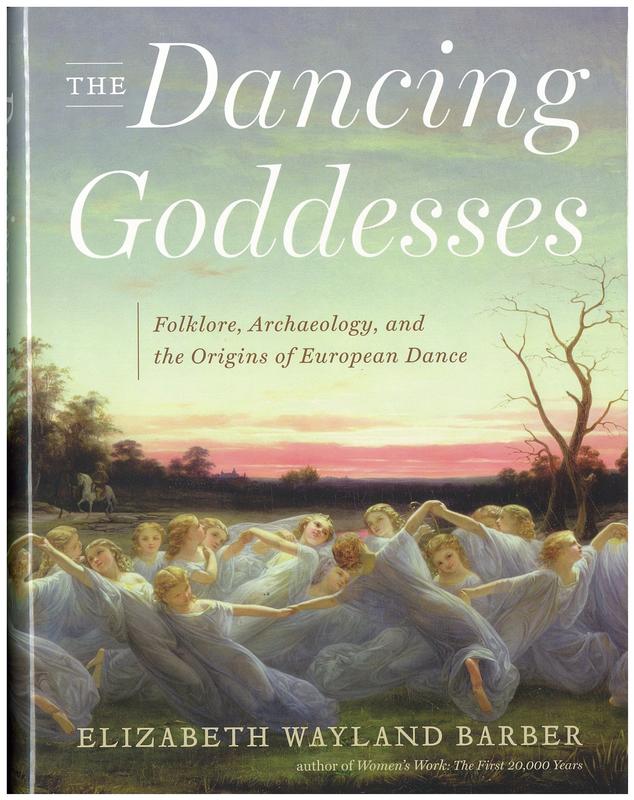
The dancing goddesses : folklore, archaeology, and the origins of European dance
Diagnose this book
Open in Vernon Browser

The dancing goddesses : folklore, archaeology, and the origins of European dance

by Elizabeth Wayland Barber

This study explores the ancient European belief in female fertility spirits and their connection to the evolution of dance and agrarian rituals. Drawing on archaeological and ethnographic evidence, it also examines the origins of customs like colouring Easter eggs.

Accession 12577 ISBN 9780393065367 Publisher W. W. Norton & Co.
Book Images
Reference and live side by side Hover to see live images

Reference
The dancing goddesses : folklore, archaeology, and the origins of European dance spine
The dancing goddesses : folklore, archaeology, and the origins of European dance cover
Live
The dancing goddesses : folklore, archaeology, and the origins of European dance live spine
No live
The dancing goddesses : folklore, archaeology, and the origins of European dance spine The dancing goddesses : folklore, archaeology, and the origins of European dance live spine
The dancing goddesses : folklore, archaeology, and the origins of European dance cover
No live
TAGS
Curated Derived
Archaeology Art Culture Entertainment Folklore History Music Mythology Religion
CONNECTIONS
No connections
State
on_shelf
True
position_updated_at
2026-06-04 14:45
orientation
vertical
Details

Physical

binding_type
Hard Back
dimensions
none captured
spine_text
none captured

Metadata

Book form
LOCATION HISTORY
M:S3:15 4 Current vertical
1 day, 23 hours ago
3 weeks ago
Book Location
Updated 1 day, 23 hours ago
Vernon snapshot
View live

Frozen copy of Vernon's record from the last sync. Fields tagged flow back into the Pulse record.

Last synced 2026-05-21 00:57 (2 weeks, 2 days ago)

Identity

name→ title
The dancing goddesses : folklore, archaeology, and the origins of European dance
vernon_id
19717
accession_no→ accession_number
12577
vernon_slug
the-dancing-goddesses-folklore-archaeology-and-the-origins-of-european-dance-elizabeth-wayland-barber

Drives Pulse state

curr_loc_status→ on_shelf
On Shelf
location_name
Zone S3/Level 2 (Mezzanine)/Phrontisterion/MONA
location_reason
On Shelf
isbn_issn→ isbn (when valid)
9780393065367

Descriptive

production_date
2013
object_type
Books/Document genres/Information forms/Visual and Verbal Communication
object_status
Accessioned
brief_description
Archaeologist and linguist by profession, folk dancer by avocation, Elizabeth Wayland Barber has sleuthed through ethnographic lore and archaeological reports of east and southeast Europe, translating enchanting folktales about these “dancing goddesses” as well as eyewitness accounts of traditional rituals―texts that offer new perspectives on dance in agrarian society. She then traces these goddesses and their dances back through the Romans and Greeks to the first farmers of Europe. Along the way, she locates the origins of many customs, including coloring Easter eggs and throwing rice at the bride. The result is a detective story like no other and a joyful reminder of the human need to dance.

Subjects & people

authors→ author (initial fill only)
Elizabeth Wayland Barber
tags→ tags
Arts, History, Performing arts, Civilisation, Manners and customs, Mythology, Classical, Folklore, Agriculture -- History, Neolithic period, Stone age, Goddesses, Archaeology -- Methodology, Europe -- History, Mother goddesses, Social archaeology, Dance, Nymphs (Greek deities), Goddesses, Greek
subject_people
subject_objects

Cover image

vernon_cover_image_id→ cover_image
19903

Raw Vernon JSON

click to inspect

The source payload behind the snapshot above.

Use ⌘F to search once expanded.
{7 keys}
"slug": "the-dancing-goddesses-folklore-archaeology-and-the-origins-of-european-dance-elizabeth-wayland-barber"
"opacObjectId": "19717"
"opacCollection": {1 keys}
"opacCollectionId": "1"
"imagesCollection": {2 keys}
"images": [1 items]
"[0]": {5 keys}
"imageId": "19903"
"cssColors": [3 items]
"[0]": {9 keys}
"hex": "c0c0c0"
"hue": 0
"rank": 1
"presence": 60.6
"colorName": "silver"
"lightness": 75
"colorGroup": "gray"
"saturation": 0
"formattedColorName": "silver"
"[1]": {9 keys}
"hex": "696969"
"hue": 0
"rank": 2
"presence": 13.51
"colorName": "dimgray"
"lightness": 41
"colorGroup": "gray"
"saturation": 0
"formattedColorName": "dim gray"
"[2]": {9 keys}
"hex": "daa520"
"hue": 43
"rank": 3
"presence": 4.4
"colorName": "goldenrod"
"lightness": 49
"colorGroup": "brown"
"saturation": 74
"formattedColorName": "goldenrod"
"rawColors": [7 items]
"[0]": {6 keys}
"hex": "c5cab5"
"hue": 74
"rank": 1
"presence": 60.6
"lightness": 75
"saturation": 16
"[1]": {6 keys}
"hex": "3c3930"
"hue": 45
"rank": 2
"presence": 13.51
"lightness": 21
"saturation": 11
"[2]": {6 keys}
"hex": "5a4f43"
"hue": 31
"rank": 3
"presence": 5.71
"lightness": 30
"saturation": 14
"[3]": {6 keys}
"hex": "6c6a64"
"hue": 45
"rank": 4
"presence": 9.0
"lightness": 40
"saturation": 3
"[4]": {6 keys}
"hex": "756841"
"hue": 45
"rank": 5
"presence": 4.4
"lightness": 35
"saturation": 28
"[5]": {6 keys}
"hex": "9a8865"
"hue": 39
"rank": 6
"presence": 4.95
"lightness": 50
"saturation": 20
"[6]": {6 keys}
"hex": "9f8887"
"hue": 2
"rank": 7
"presence": 1.85
"lightness": 57
"saturation": 11
"imageLabels": [10 items]
"[0]": {5 keys}
"count": 19018
"score": 88.44
"status": "auto_verified"
"imageLabel": "Publication"
"imageLabelId": 23
"[1]": {5 keys}
"count": 874
"score": 87.54
"status": "auto_verified"
"imageLabel": "Natural landscape"
"imageLabelId": 102
"[2]": {5 keys}
"count": 15171
"score": 86.66
"status": "auto_verified"
"imageLabel": "Book"
"imageLabelId": 67
"[3]": {5 keys}
"count": 1972
"score": 86.35
"status": "auto_verified"
"imageLabel": "Plant"
"imageLabelId": 165
"[4]": {5 keys}
"count": 11006
"score": 83.41
"status": "auto_verified"
"imageLabel": "Art"
"imageLabelId": 4
"[5]": {5 keys}
"count": 1236
"score": 79.61
"status": "auto_verified"
"imageLabel": "Landscape"
"imageLabelId": 120
"[6]": {5 keys}
"count": 956
"score": 77.29
"status": "auto_verified"
"imageLabel": "Sky"
"imageLabelId": 100
"[7]": {5 keys}
"count": 19411
"score": 77.08
"status": "auto_verified"
"imageLabel": "Font"
"imageLabelId": 12
"[8]": {5 keys}
"count": 2685
"score": 73.02
"status": "auto_verified"
"imageLabel": "Painting"
"imageLabelId": 36
"[9]": {5 keys}
"count": 12694
"score": 72.46
"status": "auto_verified"
"imageLabel": "Book cover"
"imageLabelId": 90
"imageDerivatives": [6 items]
"[0]": {4 keys}
"url": "https://browser.mona.net.au/records/images/large/6257/43c2537a709b5914493ec0945e6c1ef671a21694.jpg"
"width": "634"
"height": "800"
"identifier": "LARGE"
"[1]": {4 keys}
"url": "https://browser.mona.net.au/records/images/medium/6257/43c2537a709b5914493ec0945e6c1ef671a21694.jpg"
"width": "317"
"height": "400"
"identifier": "MEDIUM"
"[2]": {4 keys}
"url": "https://browser.mona.net.au/records/images/nano/6257/43c2537a709b5914493ec0945e6c1ef671a21694.jpg"
"width": "28"
"height": "35"
"identifier": "NANO"
"[3]": {4 keys}
"url": "https://browser.mona.net.au/records/images/small/6257/43c2537a709b5914493ec0945e6c1ef671a21694.jpg"
"width": "119"
"height": "150"
"identifier": "SMALL"
"[4]": {4 keys}
"url": "https://browser.mona.net.au/records/images/tiny/6257/43c2537a709b5914493ec0945e6c1ef671a21694.jpg"
"width": "59"
"height": "75"
"identifier": "TINY"
"[5]": {4 keys}
"url": "https://browser.mona.net.au/records/images/xlarge/6257/43c2537a709b5914493ec0945e6c1ef671a21694.jpg"
"width": "951"
"height": "1200"
"identifier": "XLARGE"
"totalImages": 1
"objectSearchScore": 0.3118719
"opacObjectFieldSets": [40 items]
"[0]": {2 keys}
"identifier": "accession_no"
"opacObjectFields": [1 items]
"[0]": {1 keys}
"value": "12577"
"[1]": {2 keys}
"identifier": "name"
"opacObjectFields": [1 items]
"[0]": {2 keys}
"value": "The dancing goddesses : folklore, archaeology, and the origins of European dance / Elizabeth Wayland Barber"
"opacObjectFieldAttributes": [1 items]
"[0]": {2 keys}
"key": "title"
"value": "The dancing goddesses : folklore, archaeology, and the origins of European dance / Elizabeth Wayland Barber"
"[2]": {2 keys}
"identifier": "other_name"
"opacObjectFields": [1 items]
"[0]": {1 keys}
"value": ""
"[3]": {2 keys}
"identifier": "artist_last_first"
"opacObjectFields": [1 items]
"[0]": {1 keys}
"value": "Barber, Elizabeth Wayland"
"[4]": {2 keys}
"identifier": "prod_pri_date"
"opacObjectFields": [1 items]
"[0]": {2 keys}
"value": "2013"
"opacObjectFieldAttributes": [2 items]
"[0]": {2 keys}
"key": "earliest_date"
"value": "2013-01-01Z"
"[1]": {2 keys}
"key": "latest_date"
"value": "2013-12-31Z"
"[5]": {2 keys}
"identifier": "prod_pri_date_notes"
"opacObjectFields": [1 items]
"[0]": {1 keys}
"value": ""
"[6]": {2 keys}
"identifier": "edition"
"opacObjectFields": [1 items]
"[0]": {1 keys}
"value": "First Edition"
"[7]": {2 keys}
"identifier": "brief_desc"
"opacObjectFields": [1 items]
"[0]": {1 keys}
"value": "Archaeologist and linguist by profession, folk dancer by avocation, Elizabeth Wayland Barber has sleuthed through ethnographic lore and archaeological reports of east and southeast Europe, translating enchanting folktales about these “dancing goddesses” as well as eyewitness accounts of traditional rituals―texts that offer new perspectives on dance in agrarian society. She then traces these goddesses and their dances back through the Romans and Greeks to the first farmers of Europe. Along the way, she locates the origins of many customs, including coloring Easter eggs and throwing rice at the bride. The result is a detective story like no other and a joyful reminder of the human need to dance."
"[8]": {2 keys}
"identifier": "measure_desc"
"opacObjectFields": [1 items]
"[0]": {1 keys}
"value": ""
"[9]": {2 keys}
"identifier": "credit_line"
"opacObjectFields": [1 items]
"[0]": {1 keys}
"value": ""
"[10]": {2 keys}
"identifier": "curr_loc_status"
"opacObjectFields": [1 items]
"[0]": {2 keys}
"value": "On Shelf"
"opacObjectFieldAttributes": [1 items]
"[0]": {2 keys}
"key": "search"
"value": "curr_loc_status:"On Shelf""
"[11]": {2 keys}
"identifier": "ob_status"
"opacObjectFields": [1 items]
"[0]": {1 keys}
"value": "Accessioned"
"[12]": {2 keys}
"identifier": "lender"
"opacObjectFields": [1 items]
"[0]": {1 keys}
"value": ""
"[13]": {2 keys}
"identifier": "copyright_owner"
"opacObjectFields": [1 items]
"[0]": {1 keys}
"value": ""
"[14]": {2 keys}
"identifier": "copyright_type"
"opacObjectFields": [1 items]
"[0]": {1 keys}
"value": ""
"[15]": {2 keys}
"identifier": "copyright_start"
"opacObjectFields": [0 items]
"[16]": {2 keys}
"identifier": "copyright_expiry"
"opacObjectFields": [0 items]
"[17]": {2 keys}
"identifier": "copyright_notes"
"opacObjectFields": [1 items]
"[0]": {1 keys}
"value": ""
"[18]": {2 keys}
"identifier": "curr_loc"
"opacObjectFields": [1 items]
"[0]": {1 keys}
"value": "Zone S3/Level 2 (Mezzanine)/Phrontisterion/MONA"
"[19]": {2 keys}
"identifier": "object_type"
"opacObjectFields": [1 items]
"[0]": {2 keys}
"value": "Books/Document genres/Information forms/Visual and Verbal Communication"
"opacObjectFieldAttributes": [1 items]
"[0]": {2 keys}
"key": "search"
"value": "object_type:"Books/Document genres/Information forms/Visual and Verbal Communication""
"[20]": {2 keys}
"identifier": "collection"
"opacObjectFields": [1 items]
"[0]": {2 keys}
"value": "Main Collection/Library"
"opacObjectFieldAttributes": [1 items]
"[0]": {2 keys}
"key": "search"
"value": "collection:"Main Collection/Library""
"[21]": {2 keys}
"identifier": "prod_pri_place"
"opacObjectFields": [1 items]
"[0]": {1 keys}
"value": "New York City/New York/United States of America"
"[22]": {2 keys}
"identifier": "prod_pri_publisher"
"opacObjectFields": [1 items]
"[0]": {1 keys}
"value": "W. W. Norton & Co."
"[23]": {2 keys}
"identifier": "physical_notes"
"opacObjectFields": [2 items]
"[0]": {1 keys}
"value": "xiii, 429 pages : illustrated ; 25 cm."
"[1]": {1 keys}
"value": "Includes bibliographical references and index."
"[24]": {2 keys}
"identifier": "language"
"opacObjectFields": [1 items]
"[0]": {1 keys}
"value": "English"
"[25]": {2 keys}
"identifier": "isbn_issn"
"opacObjectFields": [1 items]
"[0]": {1 keys}
"value": "9780393065367"
"[26]": {2 keys}
"identifier": "user_sym_1"
"opacObjectFields": [1 items]
"[0]": {1 keys}
"value": "398.209496 BAR"
"[27]": {2 keys}
"identifier": "usual_loc_being"
"opacObjectFields": [1 items]
"[0]": {1 keys}
"value": "Zone S3/Level 2 (Mezzanine)/Phrontisterion/MONA"
"[28]": {2 keys}
"identifier": "subject_class"
"opacObjectFields": [10 items]
"[0]": {2 keys}
"value": "Agriculture -- History"
"opacObjectFieldAttributes": [1 items]
"[0]": {2 keys}
"key": "search"
"value": "subject_class:"Agriculture -- History""
"[1]": {2 keys}
"value": "Archaeology -- Methodology/History"
"opacObjectFieldAttributes": [1 items]
"[0]": {2 keys}
"key": "search"
"value": "subject_class:"Archaeology -- Methodology/History""
"[2]": {2 keys}
"value": "Dance/Performing arts/Arts"
"opacObjectFieldAttributes": [1 items]
"[0]": {2 keys}
"key": "search"
"value": "subject_class:"Dance/Performing arts/Arts""
"[3]": {2 keys}
"value": "Europe -- History"
"opacObjectFieldAttributes": [1 items]
"[0]": {2 keys}
"key": "search"
"value": "subject_class:"Europe -- History""
"[4]": {2 keys}
"value": "Folklore/Manners and customs/Civilisation"
"opacObjectFieldAttributes": [1 items]
"[0]": {2 keys}
"key": "search"
"value": "subject_class:"Folklore/Manners and customs/Civilisation""
"[5]": {2 keys}
"value": "History"
"opacObjectFieldAttributes": [1 items]
"[0]": {2 keys}
"key": "search"
"value": "subject_class:"History""
"[6]": {2 keys}
"value": "Mother goddesses/Goddesses/Mythology, Classical"
"opacObjectFieldAttributes": [1 items]
"[0]": {2 keys}
"key": "search"
"value": "subject_class:"Mother goddesses/Goddesses/Mythology, Classical""
"[7]": {2 keys}
"value": "Neolithic period/Stone age/Civilisation"
"opacObjectFieldAttributes": [1 items]
"[0]": {2 keys}
"key": "search"
"value": "subject_class:"Neolithic period/Stone age/Civilisation""
"[8]": {2 keys}
"value": "Nymphs (Greek deities)/Goddesses, Greek/Mythology, Classical"
"opacObjectFieldAttributes": [1 items]
"[0]": {2 keys}
"key": "search"
"value": "subject_class:"Nymphs (Greek deities)/Goddesses, Greek/Mythology, Classical""
"[9]": {2 keys}
"value": "Social archaeology/Archaeology -- Methodology/History"
"opacObjectFieldAttributes": [1 items]
"[0]": {2 keys}
"key": "search"
"value": "subject_class:"Social archaeology/Archaeology -- Methodology/History""
"[29]": {2 keys}
"identifier": "subject_date"
"opacObjectFields": [0 items]
"[30]": {2 keys}
"identifier": "subject_event"
"opacObjectFields": [1 items]
"[0]": {1 keys}
"value": ""
"[31]": {2 keys}
"identifier": "subject_period"
"opacObjectFields": [1 items]
"[0]": {1 keys}
"value": ""
"[32]": {2 keys}
"identifier": "subject_object"
"opacObjectFields": [1 items]
"[0]": {1 keys}
"value": ""
"[33]": {2 keys}
"identifier": "subject_person"
"opacObjectFields": [1 items]
"[0]": {1 keys}
"value": ""
"[34]": {2 keys}
"identifier": "subject_place"
"opacObjectFields": [1 items]
"[0]": {2 keys}
"value": "Europe"
"opacObjectFieldAttributes": [1 items]
"[0]": {2 keys}
"key": "search"
"value": "subject_place:"Europe""
"[35]": {2 keys}
"identifier": "assoc_person"
"opacObjectFields": [1 items]
"[0]": {1 keys}
"value": ""
"[36]": {2 keys}
"identifier": "assoc_place"
"opacObjectFields": [1 items]
"[0]": {1 keys}
"value": ""
"[37]": {2 keys}
"identifier": "assoc_event"
"opacObjectFields": [1 items]
"[0]": {1 keys}
"value": ""
"[38]": {2 keys}
"identifier": "assoc_object"
"opacObjectFields": [1 items]
"[0]": {1 keys}
"value": ""
"[39]": {2 keys}
"identifier": "user_sym_9"
"opacObjectFields": [1 items]
"[0]": {1 keys}
"value": ""
"relationshipsCollection": {2 keys}
"relationships": [1 items]
"[0]": {4 keys}
"relatedRecords": [1 items]
"[0]": {3 keys}
"slug": "elizabeth-wayland-barber"
"title": "Elizabeth Wayland Barber"
"relatedRecordId": "8836"
"relationshipId": "object_prod_pri_person"
"relatedRecordType": "person"
"totalRelatedRecords": 1
"totalRelationships": 1
Topics and Themes
