Unpositioned
Something is wrong
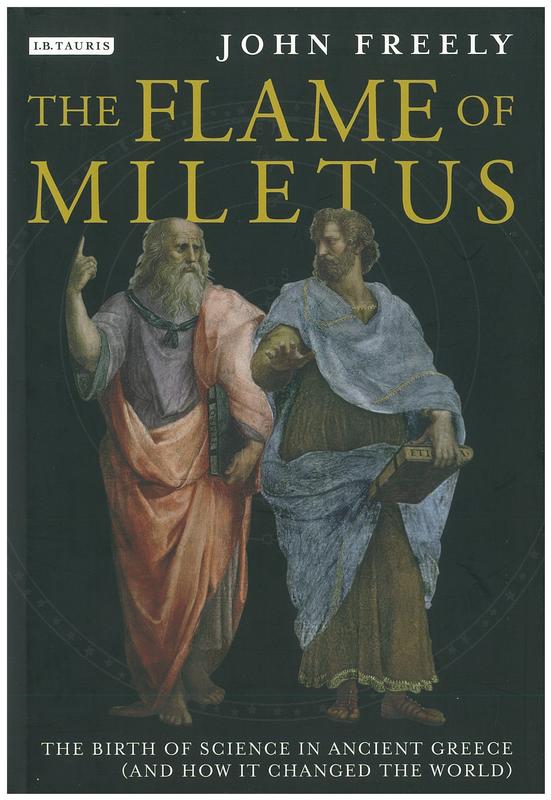
The flame of Miletus : the birth of science in ancient Greece (and how it changed the world) / John Freely
This history traces the development of Greek science and philosophy from its origins in 6th-century BC Miletus through its transmission to the Islamic world and Byzantium. It examines the preservation of classical knowledge and its influence on the European Renaissance.
CONNECTIONS
No connections
LOCATION HISTORY
No location history available for this book.
FULL RECORD
Accession Number: 14048
Site: Vernon O Content
Collection: N/A
Location: N/A
Binding Type: Hard Back
Book Images
Hover to see live images
No live
No live
Vernon Fields
View in Vernon Browser| vernon_accession | 14048 |
| vernon_id | 22273 |
| vernon_slug | the-flame-of-miletus-the-birth-of-science-in-ancient-greece-and-how-it-changed-the-world-john-freely |
| vernon_authors | John Freely |
| vernon_tags | Science, History, Research, Greece -- History, History, Ancient, World history, Science -- History, Natural history, Science -- Philosophy, Discoveries in science, Science -- Study and teaching, Philosophy -- History |
| vernon_production_date | 2012 |
| vernon_brief_description | Miletus: one of the wealthiest and most important towns in ancient Greece. It was here, on the Aegean coast of Asia Minor, in the 6th century BC, that the great traditions of Greek science and philosophy sparked into life, setting in motion a chain of knowledge that would change the world, forever. --blurb |
| vernon_object_type | Books/Document genres/Information forms/Visual and Verbal Communication |
| vernon_locations | Transit |
| vernon_ob_status | Accessioned |
| vernon_isbn_issn | 9781780760513 |
| vernon_subject_people | Aristotle (Greek, b.384 BCE, d.322 BCE), Heraclitus (Greek), Ptolemy (Greek, b.Circa 100 CE, d.Circa 170 CE), Zeno of Citium (b.334 BCE, d.262 BCE) |
| vernon_subject_objects | — |
| vernon_subject_classes | — |
| vernon_last_sync_timestamp | 2026-05-08 09:20 |
| vernon_cover_image_id | 22879 |