Unpositioned
Something is wrong
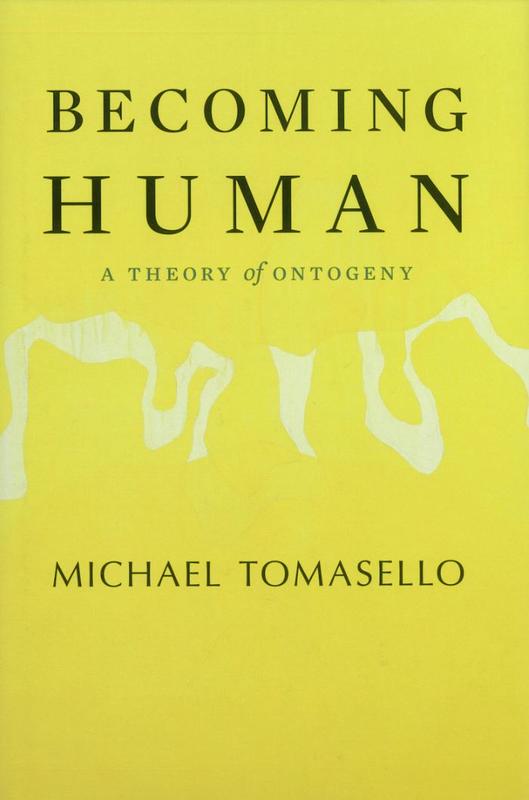
Becoming human : a theory of ontogeny / Michael Tomasello
This study examines the ontogenetic processes between birth and age seven that distinguish human cognition from other great apes. It analyses how shared intentionality transforms rudimentary abilities into uniquely human social cognition, cooperation, and cultural behaviours.
CONNECTIONS
No connections
LOCATION HISTORY
No location history available for this book.
FULL RECORD
Accession Number: 14695
Site: Vernon O Content
Collection: N/A
Location: N/A
Binding Type: Hard Back
Book Images
Hover to see live images
No live
No live
Vernon Fields
View in Vernon Browser| vernon_accession | 14695 |
| vernon_id | 23342 |
| vernon_slug | becoming-human-a-theory-of-ontogeny-michael-tomasello |
| vernon_authors | Michael Tomasello |
| vernon_tags | Science, Social psychology, Psychology, Life sciences, History, Ethics, Philosophy, Social sciences, Civilisation, Sociology, Communication, Culture, Economics, Evolution (Biology), Biology, Education, Life, Learning, Vertebrates, Chordata, Animals, Human evolution, Economic development, Economic policy, Human beings, Hominids, Primates, Mammals, Human behaviour, Mind and body, Philosophical anthropology, Big history, Death -- Social aspects, Social interaction, Social evolution, Developmental psychology, Human beings -- Origin, Social learning, Cooperation, Cooperativeness, Ontogeny |
| vernon_production_date | 2019 |
| vernon_brief_description | Tomasello assembles nearly three decades of experimental work with chimpanzees, bonobos, and human children to propose a new framework for psychological growth between birth and seven years of age. He identifies eight pathways that starkly differentiate humans from their closest primate relatives: social cognition, communication, cultural learning, cooperative thinking, collaboration, prosociality, social norms, and moral identity. In each of these, great apes possess rudimentary abilities. But then, Tomasello argues, the maturation of humans’ evolved capacities for shared intentionality transform these abilities―through the new forms of sociocultural interaction they enable―into uniquely human cognition and sociality. -- blurb |
| vernon_object_type | Books/Document genres/Information forms/Visual and Verbal Communication |
| vernon_locations | Storage |
| vernon_ob_status | Accessioned |
| vernon_isbn_issn | 9780674980853 |
| vernon_subject_people | — |
| vernon_subject_objects | — |
| vernon_subject_classes | — |
| vernon_last_sync_timestamp | 2026-04-26 10:30 |
| vernon_cover_image_id | 25407 |