Unpositioned
Edit position
Edit position

No position recorded yet. Picking a shelf here sets the manual override.

The world in six songs : how the musical brain created human nature / Daniel J. Levitin
Diagnose this book
Open in Vernon Browser

The world in six songs : how the musical brain created human nature / Daniel J. Levitin

by Daniel J. Levitin

This text explores how six musical forms—knowledge, friendship, religion, joy, comfort, and love—shaped the evolution of human culture. It analyses the neurological and social links between music and dance throughout history.

Accession 15338 ISBN 9780525950738 Publisher Dutton (Publishing firm)
Book Images
Reference and live side by side Hover to see live images

Reference
The world in six songs : how the musical brain created human nature / Daniel J. Levitin spine
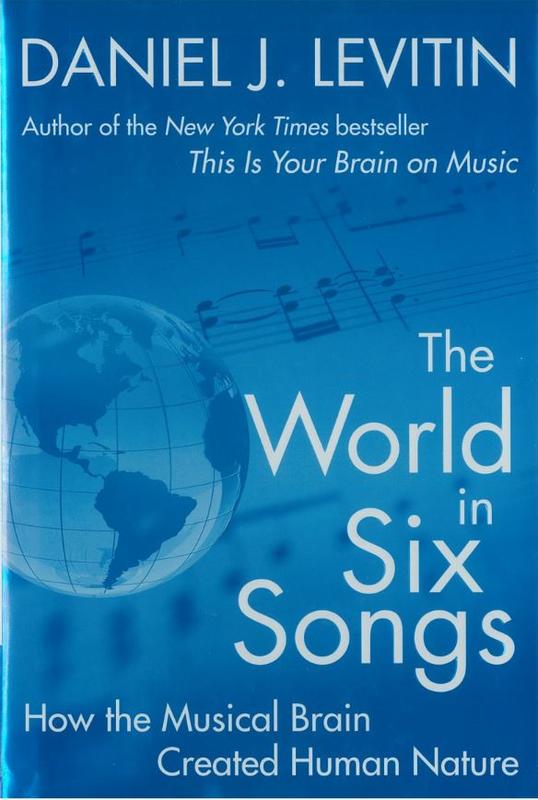
The world in six songs : how the musical brain created human nature / Daniel J. Levitin cover
Live
No live
No live
The world in six songs : how the musical brain created human nature / Daniel J. Levitin spine
No live
The world in six songs : how the musical brain created human nature / Daniel J. Levitin cover
No live
TAGS
Curated Derived
Art Biology Culture Entertainment Human Evolution Life Sciences Music Philosophy Psychology Science Social Sciences
CONNECTIONS
No connections
State
on_shelf
True
position_updated_at
never
orientation
unknown
Details

Physical

binding_type
Hard Back
dimensions
none captured
spine_text
none captured
LOCATION HISTORY
No location history available for this book.
Vernon snapshot
View live

Frozen copy of Vernon's record from the last sync. Fields tagged flow back into the Pulse record.

Last synced 2026-05-21 14:10 (3 days, 14 hours ago)

Identity

name→ title
The world in six songs : how the musical brain created human nature / Daniel J. Levitin
vernon_id
24197
accession_no→ accession_number
15338
vernon_slug
the-world-in-six-songs-how-the-musical-brain-created-human-nature-daniel-j-levitin

Drives Pulse state

curr_loc_status→ on_shelf
On Shelf
location_name
Zone W2/Level 1/Phrontisterion/MONA
location_reason
On Shelf
isbn_issn→ isbn (when valid)
9780525950738

Descriptive

production_date
2008
object_type
Books/Document genres/Information forms/Visual and Verbal Communication
object_status
Accessioned
brief_description
Levitin argues that the human brain evolved to play and listen to music in six fundamental forms--for knowledge, friendship, religion, joy, comfort, and love. He shows how music and dance enabled the social bonding and friendship necessary for human culture and society to evolve.

Subjects & people

authors→ author (initial fill only)
Daniel J. Levitin
tags→ tags
Arts, Science, Life sciences, Performing arts, Philosophy, Social sciences, Civilisation, Music, Evolution (Biology), Biology, Central nervous system, Nervous system, Organs (Anatomy), Anatomy, Human evolution, Aesthetics, Human behaviour, Music -- Philosophy and aesthetics, Brain -- Evolution, Dance, Music theory
subject_people
David Byrne (American, b.1952), Sting (English, b.1951), Paul Simon (American, b.1941)
subject_objects

Cover image

vernon_cover_image_id→ cover_image
27505

Raw Vernon JSON

click to inspect

The source payload behind the snapshot above.

Use ⌘F to search once expanded.
{7 keys}
"slug": "the-world-in-six-songs-how-the-musical-brain-created-human-nature-daniel-j-levitin"
"opacObjectId": "24197"
"opacCollection": {1 keys}
"opacCollectionId": "1"
"imagesCollection": {2 keys}
"images": [1 items]
"[0]": {5 keys}
"imageId": "27505"
"cssColors": [4 items]
"[0]": {9 keys}
"hex": "00bfff"
"hue": 195
"rank": 1
"presence": 82.07
"colorName": "deepskyblue"
"lightness": 50
"colorGroup": "blue"
"saturation": 100
"formattedColorName": "deep sky blue"
"[1]": {9 keys}
"hex": "add8e6"
"hue": 195
"rank": 2
"presence": 7.39
"colorName": "lightblue"
"lightness": 79
"colorGroup": "blue"
"saturation": 53
"formattedColorName": "light blue"
"[2]": {9 keys}
"hex": "4682b4"
"hue": 207
"rank": 3
"presence": 7.01
"colorName": "steelblue"
"lightness": 49
"colorGroup": "blue"
"saturation": 44
"formattedColorName": "steel blue"
"[3]": {9 keys}
"hex": "87ceeb"
"hue": 197
"rank": 4
"presence": 1.01
"colorName": "skyblue"
"lightness": 73
"colorGroup": "blue"
"saturation": 71
"formattedColorName": "sky blue"
"rawColors": [7 items]
"[0]": {6 keys}
"hex": "0864a0"
"hue": 203
"rank": 1
"presence": 82.07
"lightness": 32
"saturation": 90
"[1]": {6 keys}
"hex": "a5d1ea"
"hue": 201
"rank": 2
"presence": 7.39
"lightness": 78
"saturation": 62
"[2]": {6 keys}
"hex": "3a93be"
"hue": 199
"rank": 3
"presence": 7.01
"lightness": 48
"saturation": 53
"[3]": {6 keys}
"hex": "56caeb"
"hue": 193
"rank": 4
"presence": 1.01
"lightness": 62
"saturation": 78
"[4]": {6 keys}
"hex": "0c4570"
"hue": 205
"rank": 5
"presence": 1.3
"lightness": 24
"saturation": 80
"[5]": {6 keys}
"hex": "55a6d7"
"hue": 202
"rank": 6
"presence": 0.74
"lightness": 58
"saturation": 61
"[6]": {6 keys}
"hex": "497fa6"
"hue": 205
"rank": 7
"presence": 0.48
"lightness": 46
"saturation": 38
"imageLabels": [10 items]
"[0]": {5 keys}
"count": 400
"score": 89.61
"status": "auto_verified"
"imageLabel": "Azure"
"imageLabelId": 111
"[1]": {5 keys}
"count": 1140
"score": 88.7
"status": "auto_verified"
"imageLabel": "World"
"imageLabelId": 89
"[2]": {5 keys}
"count": 19019
"score": 84.5
"status": "auto_verified"
"imageLabel": "Publication"
"imageLabelId": 23
"[3]": {5 keys}
"count": 19411
"score": 84.0
"status": "auto_verified"
"imageLabel": "Font"
"imageLabelId": 12
"[4]": {5 keys}
"count": 3985
"score": 76.32
"status": "auto_verified"
"imageLabel": "Electric blue"
"imageLabelId": 49
"[5]": {5 keys}
"count": 5351
"score": 71.89
"status": "auto_verified"
"imageLabel": "Advertising"
"imageLabelId": 71
"[6]": {5 keys}
"count": 12695
"score": 71.38
"status": "auto_verified"
"imageLabel": "Book cover"
"imageLabelId": 90
"[7]": {5 keys}
"count": 15172
"score": 70.1
"status": "auto_verified"
"imageLabel": "Book"
"imageLabelId": 67
"[8]": {5 keys}
"count": 11760
"score": 69.15
"status": "auto_verified"
"imageLabel": "Poster"
"imageLabelId": 21
"[9]": {5 keys}
"count": 4955
"score": 67.78
"status": "auto_verified"
"imageLabel": "Science"
"imageLabelId": 180
"imageDerivatives": [6 items]
"[0]": {4 keys}
"url": "https://browser.mona.net.au/records/images/large/9654/0ba694ca4d5c771a2bb1efe2d929c4ea2d58e54d.jpg"
"width": "538"
"height": "800"
"identifier": "LARGE"
"[1]": {4 keys}
"url": "https://browser.mona.net.au/records/images/medium/9654/0ba694ca4d5c771a2bb1efe2d929c4ea2d58e54d.jpg"
"width": "269"
"height": "400"
"identifier": "MEDIUM"
"[2]": {4 keys}
"url": "https://browser.mona.net.au/records/images/nano/9654/0ba694ca4d5c771a2bb1efe2d929c4ea2d58e54d.jpg"
"width": "24"
"height": "35"
"identifier": "NANO"
"[3]": {4 keys}
"url": "https://browser.mona.net.au/records/images/small/9654/0ba694ca4d5c771a2bb1efe2d929c4ea2d58e54d.jpg"
"width": "101"
"height": "150"
"identifier": "SMALL"
"[4]": {4 keys}
"url": "https://browser.mona.net.au/records/images/tiny/9654/0ba694ca4d5c771a2bb1efe2d929c4ea2d58e54d.jpg"
"width": "50"
"height": "75"
"identifier": "TINY"
"[5]": {4 keys}
"url": "https://browser.mona.net.au/records/images/xlarge/9654/0ba694ca4d5c771a2bb1efe2d929c4ea2d58e54d.jpg"
"width": "584"
"height": "869"
"identifier": "XLARGE"
"totalImages": 1
"objectSearchScore": 1.3129492
"opacObjectFieldSets": [40 items]
"[0]": {2 keys}
"identifier": "accession_no"
"opacObjectFields": [1 items]
"[0]": {1 keys}
"value": "15338"
"[1]": {2 keys}
"identifier": "name"
"opacObjectFields": [1 items]
"[0]": {2 keys}
"value": "The world in six songs : how the musical brain created human nature / Daniel J. Levitin"
"opacObjectFieldAttributes": [1 items]
"[0]": {2 keys}
"key": "title"
"value": "The world in six songs : how the musical brain created human nature / Daniel J. Levitin"
"[2]": {2 keys}
"identifier": "other_name"
"opacObjectFields": [1 items]
"[0]": {1 keys}
"value": ""
"[3]": {2 keys}
"identifier": "artist_last_first"
"opacObjectFields": [1 items]
"[0]": {1 keys}
"value": "Levitin, Daniel J."
"[4]": {2 keys}
"identifier": "prod_pri_date"
"opacObjectFields": [1 items]
"[0]": {2 keys}
"value": "2008"
"opacObjectFieldAttributes": [2 items]
"[0]": {2 keys}
"key": "earliest_date"
"value": "2008-01-01Z"
"[1]": {2 keys}
"key": "latest_date"
"value": "2008-12-31Z"
"[5]": {2 keys}
"identifier": "prod_pri_date_notes"
"opacObjectFields": [1 items]
"[0]": {1 keys}
"value": ""
"[6]": {2 keys}
"identifier": "edition"
"opacObjectFields": [1 items]
"[0]": {1 keys}
"value": ""
"[7]": {2 keys}
"identifier": "brief_desc"
"opacObjectFields": [1 items]
"[0]": {1 keys}
"value": "Levitin argues that the human brain evolved to play and listen to music in six fundamental forms--for knowledge, friendship, religion, joy, comfort, and love. He shows how music and dance enabled the social bonding and friendship necessary for human culture and society to evolve."
"[8]": {2 keys}
"identifier": "measure_desc"
"opacObjectFields": [1 items]
"[0]": {1 keys}
"value": ""
"[9]": {2 keys}
"identifier": "credit_line"
"opacObjectFields": [1 items]
"[0]": {1 keys}
"value": ""
"[10]": {2 keys}
"identifier": "curr_loc_status"
"opacObjectFields": [1 items]
"[0]": {2 keys}
"value": "On Shelf"
"opacObjectFieldAttributes": [1 items]
"[0]": {2 keys}
"key": "search"
"value": "curr_loc_status:"On Shelf""
"[11]": {2 keys}
"identifier": "ob_status"
"opacObjectFields": [1 items]
"[0]": {1 keys}
"value": "Accessioned"
"[12]": {2 keys}
"identifier": "lender"
"opacObjectFields": [1 items]
"[0]": {1 keys}
"value": ""
"[13]": {2 keys}
"identifier": "copyright_owner"
"opacObjectFields": [1 items]
"[0]": {1 keys}
"value": ""
"[14]": {2 keys}
"identifier": "copyright_type"
"opacObjectFields": [1 items]
"[0]": {1 keys}
"value": ""
"[15]": {2 keys}
"identifier": "copyright_start"
"opacObjectFields": [0 items]
"[16]": {2 keys}
"identifier": "copyright_expiry"
"opacObjectFields": [0 items]
"[17]": {2 keys}
"identifier": "copyright_notes"
"opacObjectFields": [1 items]
"[0]": {1 keys}
"value": ""
"[18]": {2 keys}
"identifier": "curr_loc"
"opacObjectFields": [1 items]
"[0]": {1 keys}
"value": "Zone W2/Level 1/Phrontisterion/MONA"
"[19]": {2 keys}
"identifier": "object_type"
"opacObjectFields": [1 items]
"[0]": {2 keys}
"value": "Books/Document genres/Information forms/Visual and Verbal Communication"
"opacObjectFieldAttributes": [1 items]
"[0]": {2 keys}
"key": "search"
"value": "object_type:"Books/Document genres/Information forms/Visual and Verbal Communication""
"[20]": {2 keys}
"identifier": "collection"
"opacObjectFields": [1 items]
"[0]": {2 keys}
"value": "Main Collection/Library"
"opacObjectFieldAttributes": [1 items]
"[0]": {2 keys}
"key": "search"
"value": "collection:"Main Collection/Library""
"[21]": {2 keys}
"identifier": "prod_pri_place"
"opacObjectFields": [1 items]
"[0]": {1 keys}
"value": "New York City/New York/United States of America"
"[22]": {2 keys}
"identifier": "prod_pri_publisher"
"opacObjectFields": [1 items]
"[0]": {1 keys}
"value": "Dutton (Publishing firm)"
"[23]": {2 keys}
"identifier": "physical_notes"
"opacObjectFields": [2 items]
"[0]": {1 keys}
"value": "354 pages ; 24 cm."
"[1]": {1 keys}
"value": "Includes bibliographical references and index."
"[24]": {2 keys}
"identifier": "language"
"opacObjectFields": [1 items]
"[0]": {1 keys}
"value": "English"
"[25]": {2 keys}
"identifier": "isbn_issn"
"opacObjectFields": [1 items]
"[0]": {1 keys}
"value": "9780525950738"
"[26]": {2 keys}
"identifier": "user_sym_1"
"opacObjectFields": [1 items]
"[0]": {1 keys}
"value": "781.1 LEV"
"[27]": {2 keys}
"identifier": "usual_loc_being"
"opacObjectFields": [1 items]
"[0]": {1 keys}
"value": "Zone W2/Level 1/Phrontisterion/MONA"
"[28]": {2 keys}
"identifier": "subject_class"
"opacObjectFields": [7 items]
"[0]": {2 keys}
"value": "Brain -- Evolution/Central nervous system/Nervous system/Organs (Anatomy)/Anatomy/Biology/Life sciences/Science"
"opacObjectFieldAttributes": [1 items]
"[0]": {2 keys}
"key": "search"
"value": "subject_class:"Brain -- Evolution/Central nervous system/Nervous system/Organs (Anatomy)/Anatomy/Biology/Life sciences/Science""
"[1]": {2 keys}
"value": "Dance/Performing arts/Arts"
"opacObjectFieldAttributes": [1 items]
"[0]": {2 keys}
"key": "search"
"value": "subject_class:"Dance/Performing arts/Arts""
"[2]": {2 keys}
"value": "Human behaviour/Social sciences/Civilisation"
"opacObjectFieldAttributes": [1 items]
"[0]": {2 keys}
"key": "search"
"value": "subject_class:"Human behaviour/Social sciences/Civilisation""
"[3]": {2 keys}
"value": "Human evolution/Evolution (Biology)/Biology/Life sciences/Science"
"opacObjectFieldAttributes": [1 items]
"[0]": {2 keys}
"key": "search"
"value": "subject_class:"Human evolution/Evolution (Biology)/Biology/Life sciences/Science""
"[4]": {2 keys}
"value": "Music"
"opacObjectFieldAttributes": [1 items]
"[0]": {2 keys}
"key": "search"
"value": "subject_class:"Music""
"[5]": {2 keys}
"value": "Music -- Philosophy and aesthetics/Aesthetics/Philosophy"
"opacObjectFieldAttributes": [1 items]
"[0]": {2 keys}
"key": "search"
"value": "subject_class:"Music -- Philosophy and aesthetics/Aesthetics/Philosophy""
"[6]": {2 keys}
"value": "Music theory"
"opacObjectFieldAttributes": [1 items]
"[0]": {2 keys}
"key": "search"
"value": "subject_class:"Music theory""
"[29]": {2 keys}
"identifier": "subject_date"
"opacObjectFields": [0 items]
"[30]": {2 keys}
"identifier": "subject_event"
"opacObjectFields": [1 items]
"[0]": {1 keys}
"value": ""
"[31]": {2 keys}
"identifier": "subject_period"
"opacObjectFields": [1 items]
"[0]": {1 keys}
"value": ""
"[32]": {2 keys}
"identifier": "subject_object"
"opacObjectFields": [1 items]
"[0]": {1 keys}
"value": ""
"[33]": {2 keys}
"identifier": "subject_person"
"opacObjectFields": [3 items]
"[0]": {2 keys}
"value": "David Byrne (American, b.1952)"
"opacObjectFieldAttributes": [1 items]
"[0]": {2 keys}
"key": "search"
"value": "subject_person:"David Byrne (American, b.1952)""
"[1]": {2 keys}
"value": "Sting (English, b.1951)"
"opacObjectFieldAttributes": [1 items]
"[0]": {2 keys}
"key": "search"
"value": "subject_person:"Sting (English, b.1951)""
"[2]": {2 keys}
"value": "Paul Simon (American, b.1941)"
"opacObjectFieldAttributes": [1 items]
"[0]": {2 keys}
"key": "search"
"value": "subject_person:"Paul Simon (American, b.1941)""
"[34]": {2 keys}
"identifier": "subject_place"
"opacObjectFields": [1 items]
"[0]": {1 keys}
"value": ""
"[35]": {2 keys}
"identifier": "assoc_person"
"opacObjectFields": [1 items]
"[0]": {1 keys}
"value": ""
"[36]": {2 keys}
"identifier": "assoc_place"
"opacObjectFields": [1 items]
"[0]": {1 keys}
"value": ""
"[37]": {2 keys}
"identifier": "assoc_event"
"opacObjectFields": [1 items]
"[0]": {1 keys}
"value": ""
"[38]": {2 keys}
"identifier": "assoc_object"
"opacObjectFields": [1 items]
"[0]": {1 keys}
"value": ""
"[39]": {2 keys}
"identifier": "user_sym_9"
"opacObjectFields": [1 items]
"[0]": {1 keys}
"value": ""
"relationshipsCollection": {2 keys}
"relationships": [1 items]
"[0]": {4 keys}
"relatedRecords": [1 items]
"[0]": {3 keys}
"slug": "daniel-j-levitin"
"title": "Daniel J. Levitin"
"relatedRecordId": "13190"
"relationshipId": "object_prod_pri_person"
"relatedRecordType": "person"
"totalRelatedRecords": 1
"totalRelationships": 1