M:N3:29 3
Edit position
Edit position

Last set 4 days, 20 hours ago. Manual moves override automatic placement until the next shelfie/spine match.

The ideological brain : a radical science of susceptible minds
Diagnose this book
Open in Vernon Browser

The ideological brain : a radical science of susceptible minds

by Leor Zmigrod

This work examines the neuroscience of radicalisation and the relationship between cognitive rigidity and ideological dogmatism. It explores how political beliefs influence neural architecture and discusses methods for fostering mental flexibility in polarised societies.

Accession 28689 ISBN 9780241741214 Publisher Viking Penguin
Book Images
Reference and live side by side Hover to see live images

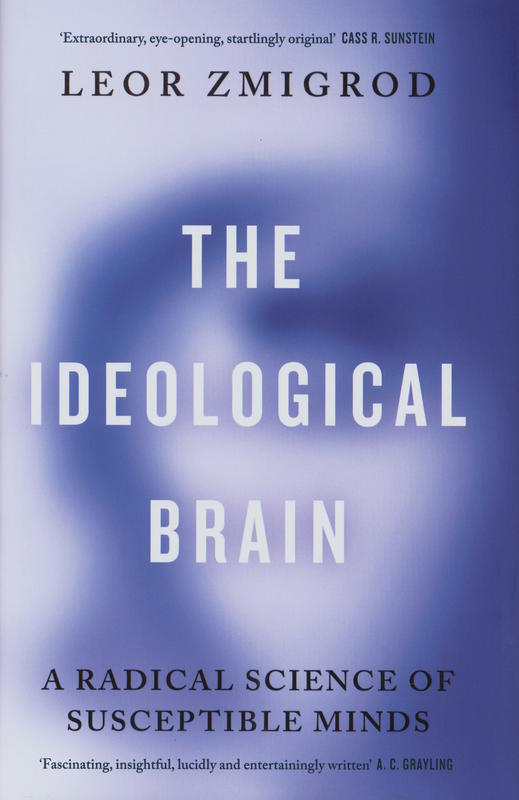
Reference
The ideological brain : a radical science of susceptible minds spine
The ideological brain : a radical science of susceptible minds cover
Live
The ideological brain : a radical science of susceptible minds live spine
No live
The ideological brain : a radical science of susceptible minds spine The ideological brain : a radical science of susceptible minds live spine
The ideological brain : a radical science of susceptible minds cover
No live
TAGS
Curated Derived
Belief Culture Life Sciences Philosophy Political Science Politics Psychology Science Social Sciences The Brain
CONNECTIONS
No connections
State
on_shelf
True
position_updated_at
2026-06-01 16:43
orientation
vertical
Details

Physical

binding_type
Hard Back
dimensions
none captured
spine_text
none captured

Metadata

Book form
LOCATION HISTORY
M:N3:29 3 Current vertical
1 week, 3 days ago
Book Location
Updated 4 days, 20 hours ago
Vernon snapshot
View live

Frozen copy of Vernon's record from the last sync. Fields tagged flow back into the Pulse record.

Last synced 2026-05-21 12:20 (2 weeks, 2 days ago)

Identity

name→ title
The ideological brain : a radical science of susceptible minds
vernon_id
40745
accession_no→ accession_number
28689
vernon_slug
the-ideological-brain-a-radical-science-of-susceptible-minds-leor-zmigrod

Drives Pulse state

curr_loc_status→ on_shelf
On Shelf
location_name
Zone N3/Level 2 (Mezzanine)/Phrontisterion/MONA
location_reason
On Shelf
isbn_issn→ isbn (when valid)
9780241741214

Descriptive

production_date
2025
object_type
Books/Document genres/Information forms/Visual and Verbal Communication
object_status
Accessioned
brief_description
Discover the hidden forces shaping our beliefs, behaviours - and even changing our brains. Why do some people become radicalized? Who is most susceptible to ideological thinking? Can we unchain our minds from toxic dogmas? Drawing on her groundbreaking research, Dr Leor Zmigrod uncovers the hidden mechanisms driving our beliefs and behaviours. She uses the powerful tools of neuroscience to show that our political beliefs are not transient thoughts in our minds, divorced from our bodies - ideologies actually change our neural architecture, our cells. -- Trove

Subjects & people

authors→ author (initial fill only)
Leor Zmigrod
tags→ tags
Science, Psychology, Life sciences, Philosophy, Political science, Social sciences, Civilisation, Cognition, Cognitive science, Neurophysiology, Neurobiology, Neurosciences, Medical sciences, Ideology, Neuropsychology, Cognition and culture, Political psychology
subject_people
subject_objects

Cover image

vernon_cover_image_id→ cover_image
52584

Raw Vernon JSON

click to inspect

The source payload behind the snapshot above.

Use ⌘F to search once expanded.
{7 keys}
"slug": "the-ideological-brain-a-radical-science-of-susceptible-minds-leor-zmigrod"
"opacObjectId": "40745"
"opacCollection": {1 keys}
"opacCollectionId": "1"
"imagesCollection": {2 keys}
"images": [1 items]
"[0]": {5 keys}
"imageId": "52584"
"cssColors": [3 items]
"[0]": {9 keys}
"hex": "4169e1"
"hue": 225
"rank": 1
"presence": 65.34
"colorName": "royalblue"
"lightness": 57
"colorGroup": "blue"
"saturation": 73
"formattedColorName": "royal blue"
"[1]": {9 keys}
"hex": "e6e6fa"
"hue": 240
"rank": 2
"presence": 16.91
"colorName": "lavender"
"lightness": 94
"colorGroup": "purple"
"saturation": 67
"formattedColorName": "lavender"
"[2]": {9 keys}
"hex": "483d8b"
"hue": 248
"rank": 3
"presence": 4.23
"colorName": "darkslateblue"
"lightness": 39
"colorGroup": "purple"
"saturation": 39
"formattedColorName": "dark slate blue"
"rawColors": [7 items]
"[0]": {6 keys}
"hex": "7c82b7"
"hue": 233
"rank": 1
"presence": 65.34
"lightness": 60
"saturation": 29
"[1]": {6 keys}
"hex": "d1d4e5"
"hue": 231
"rank": 2
"presence": 16.91
"lightness": 85
"saturation": 27
"[2]": {6 keys}
"hex": "444383"
"hue": 240
"rank": 3
"presence": 4.23
"lightness": 38
"saturation": 32
"[3]": {6 keys}
"hex": "3a407c"
"hue": 234
"rank": 4
"presence": 3.45
"lightness": 35
"saturation": 36
"[4]": {6 keys}
"hex": "c3c5e0"
"hue": 235
"rank": 5
"presence": 6.8
"lightness": 82
"saturation": 31
"[5]": {6 keys}
"hex": "26283f"
"hue": 235
"rank": 6
"presence": 1.21
"lightness": 19
"saturation": 24
"[6]": {6 keys}
"hex": "4c527f"
"hue": 232
"rank": 7
"presence": 2.06
"lightness": 39
"saturation": 25
"imageLabels": [4 items]
"[0]": {5 keys}
"count": 19018
"score": 71.42
"status": "auto_verified"
"imageLabel": "Publication"
"imageLabelId": 23
"[1]": {5 keys}
"count": 4954
"score": 63.61
"status": "auto_verified"
"imageLabel": "Science"
"imageLabelId": 180
"[2]": {5 keys}
"count": 12694
"score": 61.67
"status": "auto_verified"
"imageLabel": "Book cover"
"imageLabelId": 90
"[3]": {5 keys}
"count": 15171
"score": 50.17
"status": "auto_verified"
"imageLabel": "Book"
"imageLabelId": 67
"imageDerivatives": [6 items]
"[0]": {4 keys}
"url": "https://browser.mona.net.au/records/images/large/36043/7059c99f7ac84f5cbbf83b09327fbad5ab943b8d.jpg"
"width": "519"
"height": "800"
"identifier": "LARGE"
"[1]": {4 keys}
"url": "https://browser.mona.net.au/records/images/medium/36043/7059c99f7ac84f5cbbf83b09327fbad5ab943b8d.jpg"
"width": "259"
"height": "400"
"identifier": "MEDIUM"
"[2]": {4 keys}
"url": "https://browser.mona.net.au/records/images/nano/36043/7059c99f7ac84f5cbbf83b09327fbad5ab943b8d.jpg"
"width": "23"
"height": "35"
"identifier": "NANO"
"[3]": {4 keys}
"url": "https://browser.mona.net.au/records/images/small/36043/7059c99f7ac84f5cbbf83b09327fbad5ab943b8d.jpg"
"width": "97"
"height": "150"
"identifier": "SMALL"
"[4]": {4 keys}
"url": "https://browser.mona.net.au/records/images/tiny/36043/7059c99f7ac84f5cbbf83b09327fbad5ab943b8d.jpg"
"width": "49"
"height": "75"
"identifier": "TINY"
"[5]": {4 keys}
"url": "https://browser.mona.net.au/records/images/xlarge/36043/7059c99f7ac84f5cbbf83b09327fbad5ab943b8d.jpg"
"width": "778"
"height": "1200"
"identifier": "XLARGE"
"totalImages": 1
"objectSearchScore": 1.3126701
"opacObjectFieldSets": [40 items]
"[0]": {2 keys}
"identifier": "accession_no"
"opacObjectFields": [1 items]
"[0]": {1 keys}
"value": "28689"
"[1]": {2 keys}
"identifier": "name"
"opacObjectFields": [1 items]
"[0]": {2 keys}
"value": "The ideological brain : a radical science of susceptible minds / Leor Zmigrod"
"opacObjectFieldAttributes": [1 items]
"[0]": {2 keys}
"key": "title"
"value": "The ideological brain : a radical science of susceptible minds / Leor Zmigrod"
"[2]": {2 keys}
"identifier": "other_name"
"opacObjectFields": [1 items]
"[0]": {1 keys}
"value": ""
"[3]": {2 keys}
"identifier": "artist_last_first"
"opacObjectFields": [1 items]
"[0]": {1 keys}
"value": "Zmigrod, Leor"
"[4]": {2 keys}
"identifier": "prod_pri_date"
"opacObjectFields": [1 items]
"[0]": {2 keys}
"value": "2025"
"opacObjectFieldAttributes": [2 items]
"[0]": {2 keys}
"key": "earliest_date"
"value": "2025-01-01Z"
"[1]": {2 keys}
"key": "latest_date"
"value": "2025-12-31Z"
"[5]": {2 keys}
"identifier": "prod_pri_date_notes"
"opacObjectFields": [1 items]
"[0]": {1 keys}
"value": ""
"[6]": {2 keys}
"identifier": "edition"
"opacObjectFields": [1 items]
"[0]": {1 keys}
"value": ""
"[7]": {2 keys}
"identifier": "brief_desc"
"opacObjectFields": [1 items]
"[0]": {1 keys}
"value": "Discover the hidden forces shaping our beliefs, behaviours - and even changing our brains. Why do some people become radicalized? Who is most susceptible to ideological thinking? Can we unchain our minds from toxic dogmas? Drawing on her groundbreaking research, Dr Leor Zmigrod uncovers the hidden mechanisms driving our beliefs and behaviours. She uses the powerful tools of neuroscience to show that our political beliefs are not transient thoughts in our minds, divorced from our bodies - ideologies actually change our neural architecture, our cells. -- Trove"
"[8]": {2 keys}
"identifier": "measure_desc"
"opacObjectFields": [1 items]
"[0]": {1 keys}
"value": ""
"[9]": {2 keys}
"identifier": "credit_line"
"opacObjectFields": [1 items]
"[0]": {1 keys}
"value": ""
"[10]": {2 keys}
"identifier": "curr_loc_status"
"opacObjectFields": [1 items]
"[0]": {2 keys}
"value": "On Shelf"
"opacObjectFieldAttributes": [1 items]
"[0]": {2 keys}
"key": "search"
"value": "curr_loc_status:"On Shelf""
"[11]": {2 keys}
"identifier": "ob_status"
"opacObjectFields": [1 items]
"[0]": {1 keys}
"value": "Accessioned"
"[12]": {2 keys}
"identifier": "lender"
"opacObjectFields": [1 items]
"[0]": {1 keys}
"value": ""
"[13]": {2 keys}
"identifier": "copyright_owner"
"opacObjectFields": [1 items]
"[0]": {1 keys}
"value": ""
"[14]": {2 keys}
"identifier": "copyright_type"
"opacObjectFields": [1 items]
"[0]": {1 keys}
"value": ""
"[15]": {2 keys}
"identifier": "copyright_start"
"opacObjectFields": [0 items]
"[16]": {2 keys}
"identifier": "copyright_expiry"
"opacObjectFields": [0 items]
"[17]": {2 keys}
"identifier": "copyright_notes"
"opacObjectFields": [1 items]
"[0]": {1 keys}
"value": ""
"[18]": {2 keys}
"identifier": "curr_loc"
"opacObjectFields": [1 items]
"[0]": {1 keys}
"value": "Zone N3/Level 2 (Mezzanine)/Phrontisterion/MONA"
"[19]": {2 keys}
"identifier": "object_type"
"opacObjectFields": [1 items]
"[0]": {2 keys}
"value": "Books/Document genres/Information forms/Visual and Verbal Communication"
"opacObjectFieldAttributes": [1 items]
"[0]": {2 keys}
"key": "search"
"value": "object_type:"Books/Document genres/Information forms/Visual and Verbal Communication""
"[20]": {2 keys}
"identifier": "collection"
"opacObjectFields": [1 items]
"[0]": {2 keys}
"value": "Main Collection/Library"
"opacObjectFieldAttributes": [1 items]
"[0]": {2 keys}
"key": "search"
"value": "collection:"Main Collection/Library""
"[21]": {2 keys}
"identifier": "prod_pri_place"
"opacObjectFields": [1 items]
"[0]": {1 keys}
"value": "London/England"
"[22]": {2 keys}
"identifier": "prod_pri_publisher"
"opacObjectFields": [1 items]
"[0]": {1 keys}
"value": "Viking Penguin"
"[23]": {2 keys}
"identifier": "physical_notes"
"opacObjectFields": [1 items]
"[0]": {1 keys}
"value": ""
"[24]": {2 keys}
"identifier": "language"
"opacObjectFields": [1 items]
"[0]": {1 keys}
"value": "English"
"[25]": {2 keys}
"identifier": "isbn_issn"
"opacObjectFields": [1 items]
"[0]": {1 keys}
"value": "9780241741214"
"[26]": {2 keys}
"identifier": "user_sym_1"
"opacObjectFields": [1 items]
"[0]": {1 keys}
"value": "320.019 ZMI"
"[27]": {2 keys}
"identifier": "usual_loc_being"
"opacObjectFields": [1 items]
"[0]": {1 keys}
"value": "Zone N3/Level 2 (Mezzanine)/Phrontisterion/MONA"
"[28]": {2 keys}
"identifier": "subject_class"
"opacObjectFields": [6 items]
"[0]": {2 keys}
"value": "Cognition and culture/Cognition/Psychology"
"opacObjectFieldAttributes": [1 items]
"[0]": {2 keys}
"key": "search"
"value": "subject_class:"Cognition and culture/Cognition/Psychology""
"[1]": {2 keys}
"value": "Cognitive science/Science"
"opacObjectFieldAttributes": [1 items]
"[0]": {2 keys}
"key": "search"
"value": "subject_class:"Cognitive science/Science""
"[2]": {2 keys}
"value": "Ideology/Philosophy"
"opacObjectFieldAttributes": [1 items]
"[0]": {2 keys}
"key": "search"
"value": "subject_class:"Ideology/Philosophy""
"[3]": {2 keys}
"value": "Neuropsychology/Neurophysiology/Neurobiology/Neurosciences/Medical sciences/Life sciences/Science"
"opacObjectFieldAttributes": [1 items]
"[0]": {2 keys}
"key": "search"
"value": "subject_class:"Neuropsychology/Neurophysiology/Neurobiology/Neurosciences/Medical sciences/Life sciences/Science""
"[4]": {2 keys}
"value": "Neurosciences/Medical sciences/Life sciences/Science"
"opacObjectFieldAttributes": [1 items]
"[0]": {2 keys}
"key": "search"
"value": "subject_class:"Neurosciences/Medical sciences/Life sciences/Science""
"[5]": {2 keys}
"value": "Political psychology/Political science/Social sciences/Civilisation"
"opacObjectFieldAttributes": [1 items]
"[0]": {2 keys}
"key": "search"
"value": "subject_class:"Political psychology/Political science/Social sciences/Civilisation""
"[29]": {2 keys}
"identifier": "subject_date"
"opacObjectFields": [0 items]
"[30]": {2 keys}
"identifier": "subject_event"
"opacObjectFields": [1 items]
"[0]": {1 keys}
"value": ""
"[31]": {2 keys}
"identifier": "subject_period"
"opacObjectFields": [1 items]
"[0]": {1 keys}
"value": ""
"[32]": {2 keys}
"identifier": "subject_object"
"opacObjectFields": [1 items]
"[0]": {1 keys}
"value": ""
"[33]": {2 keys}
"identifier": "subject_person"
"opacObjectFields": [1 items]
"[0]": {1 keys}
"value": ""
"[34]": {2 keys}
"identifier": "subject_place"
"opacObjectFields": [1 items]
"[0]": {1 keys}
"value": ""
"[35]": {2 keys}
"identifier": "assoc_person"
"opacObjectFields": [1 items]
"[0]": {1 keys}
"value": ""
"[36]": {2 keys}
"identifier": "assoc_place"
"opacObjectFields": [1 items]
"[0]": {1 keys}
"value": ""
"[37]": {2 keys}
"identifier": "assoc_event"
"opacObjectFields": [1 items]
"[0]": {1 keys}
"value": ""
"[38]": {2 keys}
"identifier": "assoc_object"
"opacObjectFields": [1 items]
"[0]": {1 keys}
"value": ""
"[39]": {2 keys}
"identifier": "user_sym_9"
"opacObjectFields": [1 items]
"[0]": {1 keys}
"value": ""
"relationshipsCollection": {2 keys}
"relationships": [1 items]
"[0]": {4 keys}
"relatedRecords": [1 items]
"[0]": {3 keys}
"slug": "leor-zmigrod"
"title": "Leor Zmigrod"
"relatedRecordId": "41778"
"relationshipId": "object_prod_pri_person"
"relatedRecordType": "person"
"totalRelatedRecords": 1
"totalRelationships": 1
Topics and Themes
