M:N3:11 2
Edit position
Edit position

Last set 5 days, 6 hours ago. Manual moves override automatic placement until the next shelfie/spine match.

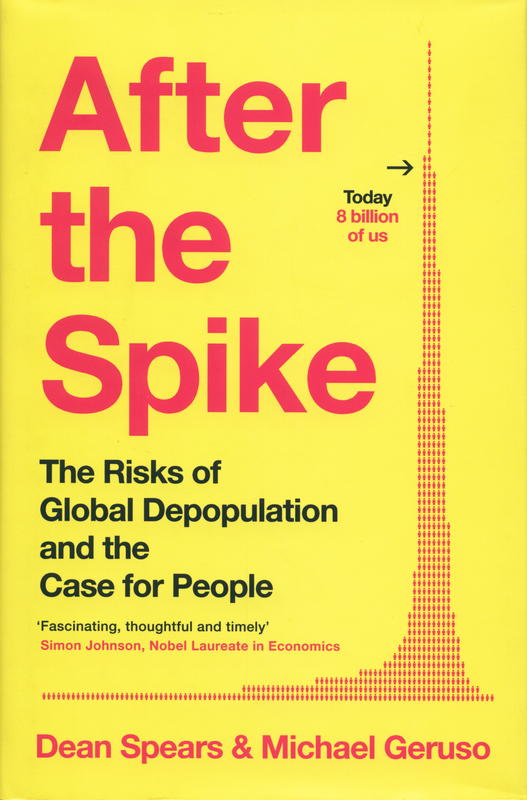
After the spike : the risks of global depopulation and the case for people
Diagnose this book
Open in Vernon Browser

After the spike : the risks of global depopulation and the case for people

by Dean Spears, Michael Geruso

An analysis of the projected peak and decline of the global human population, arguing that depopulation will threaten living standards. It suggests that stabilising the population requires protecting reproductive rights and supporting parents and carers.

Accession 28734 ISBN 9781847928351 Publisher Witness Books
Book Images
Reference and live side by side Hover to see live images

Reference
After the spike : the risks of global depopulation and the case for people spine
After the spike : the risks of global depopulation and the case for people cover
Live
After the spike : the risks of global depopulation and the case for people live spine
No live
After the spike : the risks of global depopulation and the case for people spine After the spike : the risks of global depopulation and the case for people live spine
After the spike : the risks of global depopulation and the case for people cover
No live
TAGS
Curated Derived
Economics Humanity Progress Science The Future
CONNECTIONS
No connections
State
on_shelf
True
position_updated_at
2026-06-01 16:35
orientation
vertical
Details

Physical

binding_type
Hard Back
dimensions
none captured
spine_text
none captured

Metadata

Book form
LOCATION HISTORY
M:N3:11 2 Current vertical
1 week, 3 days ago
Book Location
Updated 5 days, 6 hours ago
Vernon snapshot
View live

Frozen copy of Vernon's record from the last sync. Fields tagged flow back into the Pulse record.

Last synced 2026-05-21 01:58 (2 weeks, 2 days ago)

Identity

name→ title
After the spike : the risks of global depopulation and the case for people
vernon_id
40794
accession_no→ accession_number
28734
vernon_slug
after-the-spike-the-risks-of-global-depopulation-and-the-case-for-people-dean-spears-and-michael-geruso

Drives Pulse state

curr_loc_status→ on_shelf
On Shelf
location_name
Zone N3/Level 2 (Mezzanine)/Phrontisterion/MONA
location_reason
On Shelf
isbn_issn→ isbn (when valid)
9781847928351

Descriptive

production_date
2025
object_type
Books/Document genres/Information forms/Visual and Verbal Communication
object_status
Accessioned
brief_description
If we continue as we are, with birth rates falling globally, the world’s human population will peak in the next few decades – and then begin a sudden and rapid decline. It would be easy to think that fewer people would be better: better for the planet, better for the people who remain. In After the Spike, two leading population economists ask us to think again. Carefully weighing the evidence and the many claims that surround this controversial subject, Dean Spears and Mike Geruso explain why depopulation is not the solution we urgently need for the climate crisis, nor will it improve lives. Far more likely is that the progress which has raised living standards so dramatically over the last two centuries will slow or even reverse. -- dustjacket

Subjects & people

authors→ author (initial fill only)
Dean Spears, Michael Geruso
tags→ tags
Human ecology, Ecology, Environmental sciences, Science, Population
subject_people
subject_objects

Cover image

vernon_cover_image_id→ cover_image
52734

Raw Vernon JSON

click to inspect

The source payload behind the snapshot above.

Use ⌘F to search once expanded.
{7 keys}
"slug": "after-the-spike-the-risks-of-global-depopulation-and-the-case-for-people-dean-spears-and-michael-geruso"
"opacObjectId": "40794"
"opacCollection": {1 keys}
"opacCollectionId": "1"
"imagesCollection": {2 keys}
"images": [1 items]
"[0]": {5 keys}
"imageId": "52734"
"cssColors": [5 items]
"[0]": {9 keys}
"hex": "ffd700"
"hue": 51
"rank": 1
"presence": 83.01
"colorName": "gold"
"lightness": 50
"colorGroup": "yellow"
"saturation": 100
"formattedColorName": "gold"
"[1]": {9 keys}
"hex": "f08080"
"hue": 0
"rank": 2
"presence": 10.12
"colorName": "lightcoral"
"lightness": 72
"colorGroup": "red"
"saturation": 79
"formattedColorName": "light coral"
"[2]": {9 keys}
"hex": "000000"
"hue": 0
"rank": 3
"presence": 2.01
"colorName": "black"
"lightness": 0
"colorGroup": "gray"
"saturation": 0
"formattedColorName": "black"
"[3]": {9 keys}
"hex": "f4a460"
"hue": 28
"rank": 4
"presence": 3.57
"colorName": "sandybrown"
"lightness": 67
"colorGroup": "brown"
"saturation": 87
"formattedColorName": "sandy brown"
"[4]": {9 keys}
"hex": "bdb76b"
"hue": 56
"rank": 5
"presence": 0.79
"colorName": "darkkhaki"
"lightness": 58
"colorGroup": "yellow"
"saturation": 38
"formattedColorName": "dark khaki"
"rawColors": [7 items]
"[0]": {6 keys}
"hex": "f9ee57"
"hue": 55
"rank": 1
"presence": 83.01
"lightness": 65
"saturation": 93
"[1]": {6 keys}
"hex": "e9454e"
"hue": 356
"rank": 2
"presence": 10.12
"lightness": 59
"saturation": 78
"[2]": {6 keys}
"hex": "3e4017"
"hue": 62
"rank": 3
"presence": 2.01
"lightness": 17
"saturation": 47
"[3]": {6 keys}
"hex": "ee9552"
"hue": 25
"rank": 4
"presence": 3.57
"lightness": 62
"saturation": 82
"[4]": {6 keys}
"hex": "9a9c4c"
"hue": 61
"rank": 5
"presence": 0.79
"lightness": 45
"saturation": 34
"[5]": {6 keys}
"hex": "eedb9a"
"hue": 46
"rank": 6
"presence": 0.22
"lightness": 76
"saturation": 71
"[6]": {6 keys}
"hex": "aa901d"
"hue": 48
"rank": 7
"presence": 0.28
"lightness": 39
"saturation": 70
"imageLabels": [5 items]
"[0]": {5 keys}
"count": 19411
"score": 90.81
"status": "auto_verified"
"imageLabel": "Font"
"imageLabelId": 12
"[1]": {5 keys}
"count": 639
"score": 90.34
"status": "auto_verified"
"imageLabel": "Orange"
"imageLabelId": 64
"[2]": {5 keys}
"count": 11760
"score": 66.17
"status": "auto_verified"
"imageLabel": "Poster"
"imageLabelId": 21
"[3]": {5 keys}
"count": 5750
"score": 62.96
"status": "auto_verified"
"imageLabel": "Graphic design"
"imageLabelId": 17
"[4]": {5 keys}
"count": 19018
"score": 56.92
"status": "auto_verified"
"imageLabel": "Publication"
"imageLabelId": 23
"imageDerivatives": [6 items]
"[0]": {4 keys}
"url": "https://browser.mona.net.au/records/images/large/36117/b351da80edf8b36ef9ef3603cba11bd534341b2d.jpg"
"width": "527"
"height": "800"
"identifier": "LARGE"
"[1]": {4 keys}
"url": "https://browser.mona.net.au/records/images/medium/36117/b351da80edf8b36ef9ef3603cba11bd534341b2d.jpg"
"width": "264"
"height": "400"
"identifier": "MEDIUM"
"[2]": {4 keys}
"url": "https://browser.mona.net.au/records/images/nano/36117/b351da80edf8b36ef9ef3603cba11bd534341b2d.jpg"
"width": "23"
"height": "35"
"identifier": "NANO"
"[3]": {4 keys}
"url": "https://browser.mona.net.au/records/images/small/36117/b351da80edf8b36ef9ef3603cba11bd534341b2d.jpg"
"width": "99"
"height": "150"
"identifier": "SMALL"
"[4]": {4 keys}
"url": "https://browser.mona.net.au/records/images/tiny/36117/b351da80edf8b36ef9ef3603cba11bd534341b2d.jpg"
"width": "49"
"height": "75"
"identifier": "TINY"
"[5]": {4 keys}
"url": "https://browser.mona.net.au/records/images/xlarge/36117/b351da80edf8b36ef9ef3603cba11bd534341b2d.jpg"
"width": "791"
"height": "1200"
"identifier": "XLARGE"
"totalImages": 1
"objectSearchScore": 0.31199765
"opacObjectFieldSets": [40 items]
"[0]": {2 keys}
"identifier": "accession_no"
"opacObjectFields": [1 items]
"[0]": {1 keys}
"value": "28734"
"[1]": {2 keys}
"identifier": "name"
"opacObjectFields": [1 items]
"[0]": {2 keys}
"value": "After the spike : the risks of global depopulation and the case for people / Dean Spears and Michael Geruso"
"opacObjectFieldAttributes": [1 items]
"[0]": {2 keys}
"key": "title"
"value": "After the spike : the risks of global depopulation and the case for people / Dean Spears and Michael Geruso"
"[2]": {2 keys}
"identifier": "other_name"
"opacObjectFields": [1 items]
"[0]": {1 keys}
"value": ""
"[3]": {2 keys}
"identifier": "artist_last_first"
"opacObjectFields": [2 items]
"[0]": {1 keys}
"value": "Spears, Dean"
"[1]": {1 keys}
"value": "Geruso, Michael"
"[4]": {2 keys}
"identifier": "prod_pri_date"
"opacObjectFields": [1 items]
"[0]": {2 keys}
"value": "2025"
"opacObjectFieldAttributes": [2 items]
"[0]": {2 keys}
"key": "earliest_date"
"value": "2025-01-01Z"
"[1]": {2 keys}
"key": "latest_date"
"value": "2025-12-31Z"
"[5]": {2 keys}
"identifier": "prod_pri_date_notes"
"opacObjectFields": [1 items]
"[0]": {1 keys}
"value": ""
"[6]": {2 keys}
"identifier": "edition"
"opacObjectFields": [1 items]
"[0]": {1 keys}
"value": ""
"[7]": {2 keys}
"identifier": "brief_desc"
"opacObjectFields": [1 items]
"[0]": {1 keys}
"value": "If we continue as we are, with birth rates falling globally, the world’s human population will peak in the next few decades – and then begin a sudden and rapid decline. It would be easy to think that fewer people would be better: better for the planet, better for the people who remain. In After the Spike, two leading population economists ask us to think again. Carefully weighing the evidence and the many claims that surround this controversial subject, Dean Spears and Mike Geruso explain why depopulation is not the solution we urgently need for the climate crisis, nor will it improve lives. Far more likely is that the progress which has raised living standards so dramatically over the last two centuries will slow or even reverse. -- dustjacket"
"[8]": {2 keys}
"identifier": "measure_desc"
"opacObjectFields": [1 items]
"[0]": {1 keys}
"value": ""
"[9]": {2 keys}
"identifier": "credit_line"
"opacObjectFields": [1 items]
"[0]": {1 keys}
"value": ""
"[10]": {2 keys}
"identifier": "curr_loc_status"
"opacObjectFields": [1 items]
"[0]": {2 keys}
"value": "On Shelf"
"opacObjectFieldAttributes": [1 items]
"[0]": {2 keys}
"key": "search"
"value": "curr_loc_status:"On Shelf""
"[11]": {2 keys}
"identifier": "ob_status"
"opacObjectFields": [1 items]
"[0]": {1 keys}
"value": "Accessioned"
"[12]": {2 keys}
"identifier": "lender"
"opacObjectFields": [1 items]
"[0]": {1 keys}
"value": ""
"[13]": {2 keys}
"identifier": "copyright_owner"
"opacObjectFields": [1 items]
"[0]": {1 keys}
"value": ""
"[14]": {2 keys}
"identifier": "copyright_type"
"opacObjectFields": [1 items]
"[0]": {1 keys}
"value": ""
"[15]": {2 keys}
"identifier": "copyright_start"
"opacObjectFields": [0 items]
"[16]": {2 keys}
"identifier": "copyright_expiry"
"opacObjectFields": [0 items]
"[17]": {2 keys}
"identifier": "copyright_notes"
"opacObjectFields": [1 items]
"[0]": {1 keys}
"value": ""
"[18]": {2 keys}
"identifier": "curr_loc"
"opacObjectFields": [1 items]
"[0]": {1 keys}
"value": "Zone N3/Level 2 (Mezzanine)/Phrontisterion/MONA"
"[19]": {2 keys}
"identifier": "object_type"
"opacObjectFields": [1 items]
"[0]": {2 keys}
"value": "Books/Document genres/Information forms/Visual and Verbal Communication"
"opacObjectFieldAttributes": [1 items]
"[0]": {2 keys}
"key": "search"
"value": "object_type:"Books/Document genres/Information forms/Visual and Verbal Communication""
"[20]": {2 keys}
"identifier": "collection"
"opacObjectFields": [1 items]
"[0]": {2 keys}
"value": "Main Collection/Library"
"opacObjectFieldAttributes": [1 items]
"[0]": {2 keys}
"key": "search"
"value": "collection:"Main Collection/Library""
"[21]": {2 keys}
"identifier": "prod_pri_place"
"opacObjectFields": [1 items]
"[0]": {1 keys}
"value": "London/England"
"[22]": {2 keys}
"identifier": "prod_pri_publisher"
"opacObjectFields": [1 items]
"[0]": {1 keys}
"value": "Witness Books"
"[23]": {2 keys}
"identifier": "physical_notes"
"opacObjectFields": [1 items]
"[0]": {1 keys}
"value": ""
"[24]": {2 keys}
"identifier": "language"
"opacObjectFields": [1 items]
"[0]": {1 keys}
"value": "English"
"[25]": {2 keys}
"identifier": "isbn_issn"
"opacObjectFields": [1 items]
"[0]": {1 keys}
"value": "9781847928351"
"[26]": {2 keys}
"identifier": "user_sym_1"
"opacObjectFields": [1 items]
"[0]": {1 keys}
"value": "304.6 SPE"
"[27]": {2 keys}
"identifier": "usual_loc_being"
"opacObjectFields": [1 items]
"[0]": {1 keys}
"value": "Zone N3/Level 2 (Mezzanine)/Phrontisterion/MONA"
"[28]": {2 keys}
"identifier": "subject_class"
"opacObjectFields": [1 items]
"[0]": {2 keys}
"value": "Population/Human ecology/Ecology/Environmental sciences/Science"
"opacObjectFieldAttributes": [1 items]
"[0]": {2 keys}
"key": "search"
"value": "subject_class:"Population/Human ecology/Ecology/Environmental sciences/Science""
"[29]": {2 keys}
"identifier": "subject_date"
"opacObjectFields": [0 items]
"[30]": {2 keys}
"identifier": "subject_event"
"opacObjectFields": [1 items]
"[0]": {1 keys}
"value": ""
"[31]": {2 keys}
"identifier": "subject_period"
"opacObjectFields": [1 items]
"[0]": {1 keys}
"value": ""
"[32]": {2 keys}
"identifier": "subject_object"
"opacObjectFields": [1 items]
"[0]": {1 keys}
"value": ""
"[33]": {2 keys}
"identifier": "subject_person"
"opacObjectFields": [1 items]
"[0]": {1 keys}
"value": ""
"[34]": {2 keys}
"identifier": "subject_place"
"opacObjectFields": [1 items]
"[0]": {1 keys}
"value": ""
"[35]": {2 keys}
"identifier": "assoc_person"
"opacObjectFields": [1 items]
"[0]": {1 keys}
"value": ""
"[36]": {2 keys}
"identifier": "assoc_place"
"opacObjectFields": [1 items]
"[0]": {1 keys}
"value": ""
"[37]": {2 keys}
"identifier": "assoc_event"
"opacObjectFields": [1 items]
"[0]": {1 keys}
"value": ""
"[38]": {2 keys}
"identifier": "assoc_object"
"opacObjectFields": [1 items]
"[0]": {1 keys}
"value": ""
"[39]": {2 keys}
"identifier": "user_sym_9"
"opacObjectFields": [1 items]
"[0]": {1 keys}
"value": ""
"relationshipsCollection": {2 keys}
"relationships": [1 items]
"[0]": {4 keys}
"relatedRecords": [2 items]
"[0]": {3 keys}
"slug": "dean-spears"
"title": "Dean Spears"
"relatedRecordId": "41833"
"[1]": {3 keys}
"slug": "michael-geruso"
"title": "Michael Geruso"
"relatedRecordId": "41834"
"relationshipId": "object_prod_pri_person"
"relatedRecordType": "person"
"totalRelatedRecords": 2
"totalRelationships": 1
Topics and Themes
