M:N3:15 2
Edit position
Edit position

Last set 2 days, 1 hour ago. Manual moves override automatic placement until the next shelfie/spine match.

Our moon : a human history
Diagnose this book
Open in Vernon Browser

Our moon : a human history

by Rebecca Boyle

This history explores the Moon's profound influence on Earth, tracing its impact on biological evolution, human culture, and scientific discovery, as well as the future of lunar exploration.

Accession 28736 ISBN 9781529342789 Publisher Sceptre
Book Images
Reference and live side by side Hover to see live images

Reference
Our moon : a human history spine
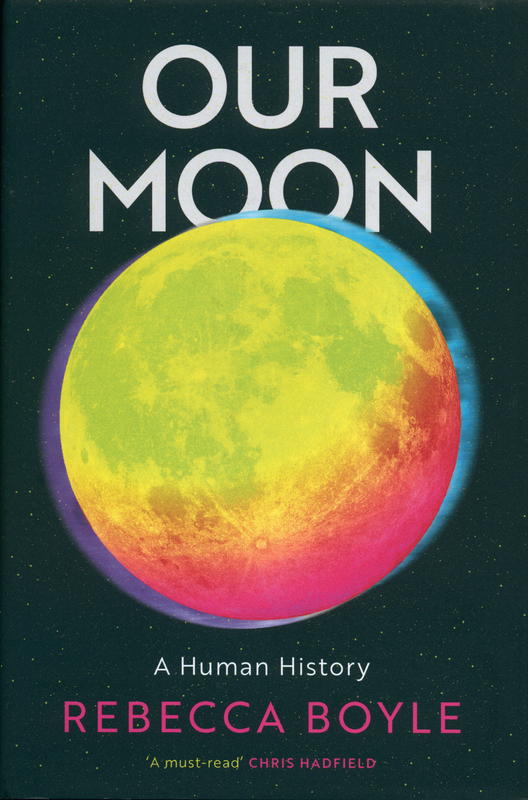
Our moon : a human history cover
Live
Our moon : a human history live spine
No live
Our moon : a human history spine Our moon : a human history live spine
Our moon : a human history cover
No live
TAGS
Curated Derived
Astronomy Discovery History Humanity Science Transportation
CONNECTIONS
No connections
State
on_shelf
True
position_updated_at
2026-06-04 12:51
orientation
vertical
Details

Physical

binding_type
Hard Back
dimensions
none captured
spine_text
none captured

Metadata

Book form
LOCATION HISTORY
M:N3:15 2 Current vertical
1 week, 3 days ago
Book Location
Updated 2 days, 1 hour ago
Vernon snapshot
View live

Frozen copy of Vernon's record from the last sync. Fields tagged flow back into the Pulse record.

Last synced 2026-05-21 01:58 (2 weeks, 2 days ago)

Identity

name→ title
Our moon : a human history
vernon_id
40796
accession_no→ accession_number
28736
vernon_slug
our-moon-a-human-history-rebecca-boyle

Drives Pulse state

curr_loc_status→ on_shelf
On Shelf
location_name
Zone N3/Level 2 (Mezzanine)/Phrontisterion/MONA
location_reason
On Shelf
isbn_issn→ isbn (when valid)
9781529342789

Descriptive

production_date
2024
object_type
Books/Document genres/Information forms/Visual and Verbal Communication
object_status
Accessioned
brief_description
Far from being a lifeless ornament in the sky, the Moon holds the answers to some of science's central questions. Silent, dry, and barren, Earth's 4.34-billion-year-old companion is essential to life on earth. Its gravity stabilized the Earth's orbit, and, as it once guided evolution, its tide stirring up nutrients that fostered complex life, it now influences everything from animal migrations and reproduction to the movements of plants' leaves. More than 30,000 years before humans invented writing, they used the Moon's waxing and waning to track the passage of time, and, in a tectonic shift for human consciousness, used it to plan for the future. Unsurprisingly, the Moon was a primary feature of the first religions, written language, and philosophy. Our Moon tells the dazzling story of how the Moon has shaped life as we know it, fuelled dramatic change across the globe and could be the key to humanity's future. -- Trove

Subjects & people

authors→ author (initial fill only)
Rebecca Boyle
tags→ tags
Science, Astronomy, Physical sciences, Solar system, Moon, Satellites
subject_people
subject_objects

Cover image

vernon_cover_image_id→ cover_image
52736

Raw Vernon JSON

click to inspect

The source payload behind the snapshot above.

Use ⌘F to search once expanded.
{7 keys}
"slug": "our-moon-a-human-history-rebecca-boyle"
"opacObjectId": "40796"
"opacCollection": {1 keys}
"opacCollectionId": "1"
"imagesCollection": {2 keys}
"images": [1 items]
"[0]": {5 keys}
"imageId": "52736"
"cssColors": [5 items]
"[0]": {9 keys}
"hex": "bdb76b"
"hue": 56
"rank": 1
"presence": 29.38
"colorName": "darkkhaki"
"lightness": 58
"colorGroup": "yellow"
"saturation": 38
"formattedColorName": "dark khaki"
"[1]": {9 keys}
"hex": "000000"
"hue": 0
"rank": 2
"presence": 60.58
"colorName": "black"
"lightness": 0
"colorGroup": "gray"
"saturation": 0
"formattedColorName": "black"
"[2]": {9 keys}
"hex": "db7093"
"hue": 340
"rank": 3
"presence": 5.67
"colorName": "palevioletred"
"lightness": 65
"colorGroup": "pink"
"saturation": 60
"formattedColorName": "pale violet red"
"[3]": {9 keys}
"hex": "4682b4"
"hue": 207
"rank": 4
"presence": 0.76
"colorName": "steelblue"
"lightness": 49
"colorGroup": "blue"
"saturation": 44
"formattedColorName": "steel blue"
"[4]": {9 keys}
"hex": "708090"
"hue": 210
"rank": 5
"presence": 1.42
"colorName": "slategray"
"lightness": 50
"colorGroup": "gray"
"saturation": 13
"formattedColorName": "slate gray"
"rawColors": [7 items]
"[0]": {6 keys}
"hex": "d1c65c"
"hue": 54
"rank": 1
"presence": 29.38
"lightness": 59
"saturation": 55
"[1]": {6 keys}
"hex": "172d2d"
"hue": 180
"rank": 2
"presence": 60.58
"lightness": 13
"saturation": 32
"[2]": {6 keys}
"hex": "d54563"
"hue": 347
"rank": 3
"presence": 5.67
"lightness": 55
"saturation": 63
"[3]": {6 keys}
"hex": "53adca"
"hue": 194
"rank": 4
"presence": 0.76
"lightness": 55
"saturation": 52
"[4]": {6 keys}
"hex": "58757b"
"hue": 190
"rank": 5
"presence": 1.42
"lightness": 41
"saturation": 16
"[5]": {6 keys}
"hex": "594d77"
"hue": 257
"rank": 6
"presence": 1.66
"lightness": 38
"saturation": 21
"[6]": {6 keys}
"hex": "4d80a7"
"hue": 206
"rank": 7
"presence": 0.54
"lightness": 47
"saturation": 36
"imageLabels": [10 items]
"[0]": {5 keys}
"count": 15171
"score": 95.5
"status": "auto_verified"
"imageLabel": "Book"
"imageLabelId": 67
"[1]": {5 keys}
"count": 19018
"score": 93.61
"status": "auto_verified"
"imageLabel": "Publication"
"imageLabelId": 23
"[2]": {5 keys}
"count": 792
"score": 92.08
"status": "auto_verified"
"imageLabel": "Astronomical object"
"imageLabelId": 5
"[3]": {5 keys}
"count": 12694
"score": 89.19
"status": "auto_verified"
"imageLabel": "Book cover"
"imageLabelId": 90
"[4]": {5 keys}
"count": 11760
"score": 76.06
"status": "auto_verified"
"imageLabel": "Poster"
"imageLabelId": 21
"[5]": {5 keys}
"count": 63
"score": 74.36
"status": "auto_verified"
"imageLabel": "Moon"
"imageLabelId": 729
"[6]": {5 keys}
"count": 562
"score": 73.78
"status": "auto_verified"
"imageLabel": "Astronomy"
"imageLabelId": 116
"[7]": {5 keys}
"count": 3121
"score": 64.49
"status": "auto_verified"
"imageLabel": "Novel"
"imageLabelId": 2008
"[8]": {5 keys}
"count": 4954
"score": 63.23
"status": "auto_verified"
"imageLabel": "Science"
"imageLabelId": 180
"[9]": {5 keys}
"count": 5750
"score": 60.19
"status": "auto_verified"
"imageLabel": "Graphic design"
"imageLabelId": 17
"imageDerivatives": [6 items]
"[0]": {4 keys}
"url": "https://browser.mona.net.au/records/images/large/36119/7c82d36ed196e678926fb4cd4466bf0da0c3cf76.jpg"
"width": "528"
"height": "800"
"identifier": "LARGE"
"[1]": {4 keys}
"url": "https://browser.mona.net.au/records/images/medium/36119/7c82d36ed196e678926fb4cd4466bf0da0c3cf76.jpg"
"width": "264"
"height": "400"
"identifier": "MEDIUM"
"[2]": {4 keys}
"url": "https://browser.mona.net.au/records/images/nano/36119/7c82d36ed196e678926fb4cd4466bf0da0c3cf76.jpg"
"width": "23"
"height": "35"
"identifier": "NANO"
"[3]": {4 keys}
"url": "https://browser.mona.net.au/records/images/small/36119/7c82d36ed196e678926fb4cd4466bf0da0c3cf76.jpg"
"width": "99"
"height": "150"
"identifier": "SMALL"
"[4]": {4 keys}
"url": "https://browser.mona.net.au/records/images/tiny/36119/7c82d36ed196e678926fb4cd4466bf0da0c3cf76.jpg"
"width": "50"
"height": "75"
"identifier": "TINY"
"[5]": {4 keys}
"url": "https://browser.mona.net.au/records/images/xlarge/36119/7c82d36ed196e678926fb4cd4466bf0da0c3cf76.jpg"
"width": "793"
"height": "1200"
"identifier": "XLARGE"
"totalImages": 1
"objectSearchScore": 0.31199765
"opacObjectFieldSets": [40 items]
"[0]": {2 keys}
"identifier": "accession_no"
"opacObjectFields": [1 items]
"[0]": {1 keys}
"value": "28736"
"[1]": {2 keys}
"identifier": "name"
"opacObjectFields": [1 items]
"[0]": {2 keys}
"value": "Our moon : a human history / Rebecca Boyle"
"opacObjectFieldAttributes": [1 items]
"[0]": {2 keys}
"key": "title"
"value": "Our moon : a human history / Rebecca Boyle"
"[2]": {2 keys}
"identifier": "other_name"
"opacObjectFields": [1 items]
"[0]": {1 keys}
"value": ""
"[3]": {2 keys}
"identifier": "artist_last_first"
"opacObjectFields": [1 items]
"[0]": {1 keys}
"value": "Boyle, Rebecca"
"[4]": {2 keys}
"identifier": "prod_pri_date"
"opacObjectFields": [1 items]
"[0]": {2 keys}
"value": "2024"
"opacObjectFieldAttributes": [2 items]
"[0]": {2 keys}
"key": "earliest_date"
"value": "2024-01-01Z"
"[1]": {2 keys}
"key": "latest_date"
"value": "2024-12-31Z"
"[5]": {2 keys}
"identifier": "prod_pri_date_notes"
"opacObjectFields": [1 items]
"[0]": {1 keys}
"value": ""
"[6]": {2 keys}
"identifier": "edition"
"opacObjectFields": [1 items]
"[0]": {1 keys}
"value": ""
"[7]": {2 keys}
"identifier": "brief_desc"
"opacObjectFields": [1 items]
"[0]": {1 keys}
"value": "Far from being a lifeless ornament in the sky, the Moon holds the answers to some of science's central questions. Silent, dry, and barren, Earth's 4.34-billion-year-old companion is essential to life on earth. Its gravity stabilized the Earth's orbit, and, as it once guided evolution, its tide stirring up nutrients that fostered complex life, it now influences everything from animal migrations and reproduction to the movements of plants' leaves. More than 30,000 years before humans invented writing, they used the Moon's waxing and waning to track the passage of time, and, in a tectonic shift for human consciousness, used it to plan for the future. Unsurprisingly, the Moon was a primary feature of the first religions, written language, and philosophy. Our Moon tells the dazzling story of how the Moon has shaped life as we know it, fuelled dramatic change across the globe and could be the key to humanity's future. -- Trove"
"[8]": {2 keys}
"identifier": "measure_desc"
"opacObjectFields": [1 items]
"[0]": {1 keys}
"value": ""
"[9]": {2 keys}
"identifier": "credit_line"
"opacObjectFields": [1 items]
"[0]": {1 keys}
"value": ""
"[10]": {2 keys}
"identifier": "curr_loc_status"
"opacObjectFields": [1 items]
"[0]": {2 keys}
"value": "On Shelf"
"opacObjectFieldAttributes": [1 items]
"[0]": {2 keys}
"key": "search"
"value": "curr_loc_status:"On Shelf""
"[11]": {2 keys}
"identifier": "ob_status"
"opacObjectFields": [1 items]
"[0]": {1 keys}
"value": "Accessioned"
"[12]": {2 keys}
"identifier": "lender"
"opacObjectFields": [1 items]
"[0]": {1 keys}
"value": ""
"[13]": {2 keys}
"identifier": "copyright_owner"
"opacObjectFields": [1 items]
"[0]": {1 keys}
"value": ""
"[14]": {2 keys}
"identifier": "copyright_type"
"opacObjectFields": [1 items]
"[0]": {1 keys}
"value": ""
"[15]": {2 keys}
"identifier": "copyright_start"
"opacObjectFields": [0 items]
"[16]": {2 keys}
"identifier": "copyright_expiry"
"opacObjectFields": [0 items]
"[17]": {2 keys}
"identifier": "copyright_notes"
"opacObjectFields": [1 items]
"[0]": {1 keys}
"value": ""
"[18]": {2 keys}
"identifier": "curr_loc"
"opacObjectFields": [1 items]
"[0]": {1 keys}
"value": "Zone N3/Level 2 (Mezzanine)/Phrontisterion/MONA"
"[19]": {2 keys}
"identifier": "object_type"
"opacObjectFields": [1 items]
"[0]": {2 keys}
"value": "Books/Document genres/Information forms/Visual and Verbal Communication"
"opacObjectFieldAttributes": [1 items]
"[0]": {2 keys}
"key": "search"
"value": "object_type:"Books/Document genres/Information forms/Visual and Verbal Communication""
"[20]": {2 keys}
"identifier": "collection"
"opacObjectFields": [1 items]
"[0]": {2 keys}
"value": "Main Collection/Library"
"opacObjectFieldAttributes": [1 items]
"[0]": {2 keys}
"key": "search"
"value": "collection:"Main Collection/Library""
"[21]": {2 keys}
"identifier": "prod_pri_place"
"opacObjectFields": [1 items]
"[0]": {1 keys}
"value": "London/England"
"[22]": {2 keys}
"identifier": "prod_pri_publisher"
"opacObjectFields": [1 items]
"[0]": {1 keys}
"value": "Sceptre"
"[23]": {2 keys}
"identifier": "physical_notes"
"opacObjectFields": [1 items]
"[0]": {1 keys}
"value": ""
"[24]": {2 keys}
"identifier": "language"
"opacObjectFields": [1 items]
"[0]": {1 keys}
"value": "English"
"[25]": {2 keys}
"identifier": "isbn_issn"
"opacObjectFields": [1 items]
"[0]": {1 keys}
"value": "9781529342789"
"[26]": {2 keys}
"identifier": "user_sym_1"
"opacObjectFields": [1 items]
"[0]": {1 keys}
"value": "523.3 BOY"
"[27]": {2 keys}
"identifier": "usual_loc_being"
"opacObjectFields": [1 items]
"[0]": {1 keys}
"value": "Zone N3/Level 2 (Mezzanine)/Phrontisterion/MONA"
"[28]": {2 keys}
"identifier": "subject_class"
"opacObjectFields": [2 items]
"[0]": {2 keys}
"value": "Astronomy/Physical sciences/Science"
"opacObjectFieldAttributes": [1 items]
"[0]": {2 keys}
"key": "search"
"value": "subject_class:"Astronomy/Physical sciences/Science""
"[1]": {2 keys}
"value": "Moon/Satellites/Solar system"
"opacObjectFieldAttributes": [1 items]
"[0]": {2 keys}
"key": "search"
"value": "subject_class:"Moon/Satellites/Solar system""
"[29]": {2 keys}
"identifier": "subject_date"
"opacObjectFields": [0 items]
"[30]": {2 keys}
"identifier": "subject_event"
"opacObjectFields": [1 items]
"[0]": {1 keys}
"value": ""
"[31]": {2 keys}
"identifier": "subject_period"
"opacObjectFields": [1 items]
"[0]": {1 keys}
"value": ""
"[32]": {2 keys}
"identifier": "subject_object"
"opacObjectFields": [1 items]
"[0]": {1 keys}
"value": ""
"[33]": {2 keys}
"identifier": "subject_person"
"opacObjectFields": [1 items]
"[0]": {1 keys}
"value": ""
"[34]": {2 keys}
"identifier": "subject_place"
"opacObjectFields": [1 items]
"[0]": {1 keys}
"value": ""
"[35]": {2 keys}
"identifier": "assoc_person"
"opacObjectFields": [1 items]
"[0]": {1 keys}
"value": ""
"[36]": {2 keys}
"identifier": "assoc_place"
"opacObjectFields": [1 items]
"[0]": {1 keys}
"value": ""
"[37]": {2 keys}
"identifier": "assoc_event"
"opacObjectFields": [1 items]
"[0]": {1 keys}
"value": ""
"[38]": {2 keys}
"identifier": "assoc_object"
"opacObjectFields": [1 items]
"[0]": {1 keys}
"value": ""
"[39]": {2 keys}
"identifier": "user_sym_9"
"opacObjectFields": [1 items]
"[0]": {1 keys}
"value": ""
"relationshipsCollection": {2 keys}
"relationships": [1 items]
"[0]": {4 keys}
"relatedRecords": [1 items]
"[0]": {3 keys}
"slug": "rebecca-boyle"
"title": "Rebecca Boyle"
"relatedRecordId": "41836"
"relationshipId": "object_prod_pri_person"
"relatedRecordType": "person"
"totalRelatedRecords": 1
"totalRelationships": 1
Topics and Themes
