G:W2:6 4
Edit position
Edit position

Last set 3 days, 15 hours ago. Manual moves override automatic placement until the next shelfie/spine match.

The music instinct : how music works and why we can't do without it
Diagnose this book
Open in Vernon Browser

The music instinct : how music works and why we can't do without it

by Philip Ball

This study examines the role of music in human culture and the neurological processes behind musical perception. It draws on history, mathematics, and philosophy to explain why music remains an indispensable part of the human experience.

Accession 4105 ISBN 9780199754274 Publisher Oxford University Press
Book Images
Reference and live side by side Hover to see live images
Reference
The music instinct : how music works and why we can't do without it spine
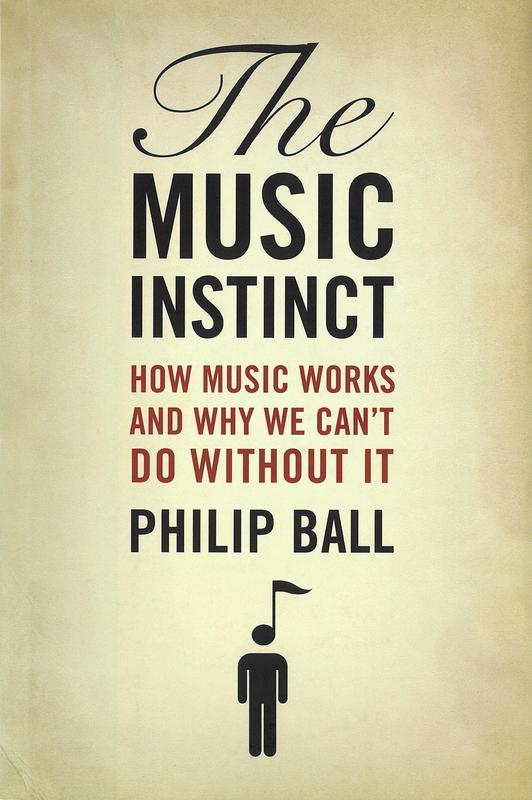
The music instinct : how music works and why we can't do without it cover
Live
The music instinct : how music works and why we can't do without it live spine
No live
The music instinct : how music works and why we can't do without it spine The music instinct : how music works and why we can't do without it live spine
The music instinct : how music works and why we can't do without it cover
No live
TAGS
Curated Derived
Life Sciences Music Psychology Science Social Sciences Writing
CONNECTIONS
No connections
State
on_shelf
True
position_updated_at
2026-06-02 20:17
orientation
vertical
Details

Physical

binding_type
Hard Back
dimensions
none captured
spine_text
none captured

Metadata

Book form
LOCATION HISTORY
G:W2:6 4 Current vertical
3 days, 15 hours ago
1 week, 1 day ago
Book Location
Updated 3 days, 15 hours ago
Vernon snapshot
View live

Frozen copy of Vernon's record from the last sync. Fields tagged flow back into the Pulse record.

Last synced 2026-05-25 20:40 (1 week, 4 days ago)

Identity

name→ title
The music instinct : how music works and why we can't do without it
vernon_id
7922
accession_no→ accession_number
4105
vernon_slug
the-music-instinct-how-music-works-and-why-we-cant-do-without-it-philip-ball

Drives Pulse state

curr_loc_status→ on_shelf
On Shelf
location_name
Zone W2/Level 1/Phrontisterion/MONA
location_reason
On Shelf
isbn_issn→ isbn (when valid)
9780199754274

Descriptive

production_date
2010
object_type
Books/Document genres/Information forms/Visual and Verbal Communication
object_status
Accessioned
brief_description
From Bach fugues to Indonesian gamelan, from nursery rhymes to rock, music has cast its light onto every corner of human culture. But why music excites such deep passions, and how we make sense of musical sound at all have, until recently, remained mysterious. Now in The Music Instinct, award-winning writer Philip Ball provides the first comprehensive, accessible survey of what is known--and still unknown--about how music works its magic, and why, as much as eating and sleeping, it seems indispensable to humanity. Deftly weaving together the latest findings in brain science with history, mathematics, and philosophy, The Music Instinct not only deepens our appreciation of the music we love, but shows that we would not be ourselves without it. --Publisher

Subjects & people

authors→ author (initial fill only)
Philip Ball
tags→ tags
Science, Psychology, Medicine, Life sciences, Music, Rhetoric, Authorship, Neurology, Neurosciences, Medical sciences, Criticism, Music -- History and criticism, Music appreciation, Music -- Instruction and study, Music and science
subject_people
subject_objects

Cover image

vernon_cover_image_id→ cover_image
29763

Raw Vernon JSON

click to inspect

The source payload behind the snapshot above.

Use ⌘F to search once expanded.
{7 keys}
"slug": "the-music-instinct-how-music-works-and-why-we-cant-do-without-it-philip-ball"
"opacObjectId": "7922"
"opacCollection": {1 keys}
"opacCollectionId": "1"
"imagesCollection": {2 keys}
"images": [1 items]
"[0]": {5 keys}
"imageId": "29763"
"cssColors": [4 items]
"[0]": {9 keys}
"hex": "eee8aa"
"hue": 55
"rank": 1
"presence": 88.04
"colorName": "palegoldenrod"
"lightness": 80
"colorGroup": "yellow"
"saturation": 67
"formattedColorName": "pale goldenrod"
"[1]": {9 keys}
"hex": "000000"
"hue": 0
"rank": 2
"presence": 7.69
"colorName": "black"
"lightness": 0
"colorGroup": "gray"
"saturation": 0
"formattedColorName": "black"
"[2]": {9 keys}
"hex": "a0522d"
"hue": 19
"rank": 3
"presence": 1.71
"colorName": "sienna"
"lightness": 40
"colorGroup": "brown"
"saturation": 56
"formattedColorName": "sienna"
"[3]": {9 keys}
"hex": "d2b48c"
"hue": 34
"rank": 4
"presence": 2.09
"colorName": "tan"
"lightness": 69
"colorGroup": "brown"
"saturation": 44
"formattedColorName": "tan"
"rawColors": [7 items]
"[0]": {6 keys}
"hex": "dfdbb4"
"hue": 54
"rank": 1
"presence": 88.04
"lightness": 79
"saturation": 40
"[1]": {6 keys}
"hex": "2c2a23"
"hue": 46
"rank": 2
"presence": 7.69
"lightness": 15
"saturation": 11
"[2]": {6 keys}
"hex": "824534"
"hue": 13
"rank": 3
"presence": 1.71
"lightness": 35
"saturation": 42
"[3]": {6 keys}
"hex": "a79673"
"hue": 40
"rank": 4
"presence": 2.09
"lightness": 55
"saturation": 22
"[4]": {6 keys}
"hex": "969689"
"hue": 60
"rank": 5
"presence": 0.24
"lightness": 56
"saturation": 5
"[5]": {6 keys}
"hex": "846d52"
"hue": 32
"rank": 6
"presence": 0.11
"lightness": 41
"saturation": 23
"[6]": {6 keys}
"hex": "c59a88"
"hue": 17
"rank": 7
"presence": 0.12
"lightness": 65
"saturation": 34
"imageLabels": [10 items]
"[0]": {5 keys}
"count": 19411
"score": 82.5
"status": "auto_verified"
"imageLabel": "Font"
"imageLabelId": 12
"[1]": {5 keys}
"count": 913
"score": 74.79
"status": "auto_verified"
"imageLabel": "Happy"
"imageLabelId": 66
"[2]": {5 keys}
"count": 19019
"score": 71.25
"status": "auto_verified"
"imageLabel": "Publication"
"imageLabelId": 23
"[3]": {5 keys}
"count": 15172
"score": 70.03
"status": "auto_verified"
"imageLabel": "Book"
"imageLabelId": 67
"[4]": {5 keys}
"count": 11006
"score": 69.1
"status": "auto_verified"
"imageLabel": "Art"
"imageLabelId": 4
"[5]": {5 keys}
"count": 656
"score": 67.97
"status": "auto_verified"
"imageLabel": "Symbol"
"imageLabelId": 83
"[6]": {5 keys}
"count": 3194
"score": 66.27
"status": "auto_verified"
"imageLabel": "Graphics"
"imageLabelId": 16
"[7]": {5 keys}
"count": 2009
"score": 66.17
"status": "auto_verified"
"imageLabel": "Brand"
"imageLabelId": 15
"[8]": {5 keys}
"count": 5750
"score": 58.65
"status": "auto_verified"
"imageLabel": "Graphic design"
"imageLabelId": 17
"[9]": {5 keys}
"count": 1637
"score": 58.28
"status": "auto_verified"
"imageLabel": "Logo"
"imageLabelId": 19
"imageDerivatives": [6 items]
"[0]": {4 keys}
"url": "https://browser.mona.net.au/records/images/large/30199/20d939060c72996cae4194fa5d1523a4d56f3d83.jpg"
"width": "532"
"height": "800"
"identifier": "LARGE"
"[1]": {4 keys}
"url": "https://browser.mona.net.au/records/images/medium/30199/20d939060c72996cae4194fa5d1523a4d56f3d83.jpg"
"width": "266"
"height": "400"
"identifier": "MEDIUM"
"[2]": {4 keys}
"url": "https://browser.mona.net.au/records/images/nano/30199/20d939060c72996cae4194fa5d1523a4d56f3d83.jpg"
"width": "23"
"height": "35"
"identifier": "NANO"
"[3]": {4 keys}
"url": "https://browser.mona.net.au/records/images/small/30199/20d939060c72996cae4194fa5d1523a4d56f3d83.jpg"
"width": "100"
"height": "150"
"identifier": "SMALL"
"[4]": {4 keys}
"url": "https://browser.mona.net.au/records/images/tiny/30199/20d939060c72996cae4194fa5d1523a4d56f3d83.jpg"
"width": "50"
"height": "75"
"identifier": "TINY"
"[5]": {4 keys}
"url": "https://browser.mona.net.au/records/images/xlarge/30199/20d939060c72996cae4194fa5d1523a4d56f3d83.jpg"
"width": "798"
"height": "1200"
"identifier": "XLARGE"
"totalImages": 1
"objectSearchScore": 1.3120136
"opacObjectFieldSets": [40 items]
"[0]": {2 keys}
"identifier": "accession_no"
"opacObjectFields": [1 items]
"[0]": {1 keys}
"value": "4105"
"[1]": {2 keys}
"identifier": "name"
"opacObjectFields": [1 items]
"[0]": {2 keys}
"value": "The music instinct : how music works and why we can't do without it / Philip Ball"
"opacObjectFieldAttributes": [1 items]
"[0]": {2 keys}
"key": "title"
"value": "The music instinct : how music works and why we can't do without it / Philip Ball"
"[2]": {2 keys}
"identifier": "other_name"
"opacObjectFields": [1 items]
"[0]": {1 keys}
"value": ""
"[3]": {2 keys}
"identifier": "artist_last_first"
"opacObjectFields": [1 items]
"[0]": {1 keys}
"value": "Ball, Philip"
"[4]": {2 keys}
"identifier": "prod_pri_date"
"opacObjectFields": [1 items]
"[0]": {2 keys}
"value": "2010"
"opacObjectFieldAttributes": [2 items]
"[0]": {2 keys}
"key": "earliest_date"
"value": "2010-01-01Z"
"[1]": {2 keys}
"key": "latest_date"
"value": "2010-12-31Z"
"[5]": {2 keys}
"identifier": "prod_pri_date_notes"
"opacObjectFields": [1 items]
"[0]": {1 keys}
"value": ""
"[6]": {2 keys}
"identifier": "edition"
"opacObjectFields": [1 items]
"[0]": {1 keys}
"value": ""
"[7]": {2 keys}
"identifier": "brief_desc"
"opacObjectFields": [1 items]
"[0]": {1 keys}
"value": "From Bach fugues to Indonesian gamelan, from nursery rhymes to rock, music has cast its light onto every corner of human culture. But why music excites such deep passions, and how we make sense of musical sound at all have, until recently, remained mysterious. Now in The Music Instinct, award-winning writer Philip Ball provides the first comprehensive, accessible survey of what is known--and still unknown--about how music works its magic, and why, as much as eating and sleeping, it seems indispensable to humanity. Deftly weaving together the latest findings in brain science with history, mathematics, and philosophy, The Music Instinct not only deepens our appreciation of the music we love, but shows that we would not be ourselves without it. --Publisher"
"[8]": {2 keys}
"identifier": "measure_desc"
"opacObjectFields": [1 items]
"[0]": {1 keys}
"value": ""
"[9]": {2 keys}
"identifier": "credit_line"
"opacObjectFields": [1 items]
"[0]": {1 keys}
"value": ""
"[10]": {2 keys}
"identifier": "curr_loc_status"
"opacObjectFields": [1 items]
"[0]": {2 keys}
"value": "On Shelf"
"opacObjectFieldAttributes": [1 items]
"[0]": {2 keys}
"key": "search"
"value": "curr_loc_status:"On Shelf""
"[11]": {2 keys}
"identifier": "ob_status"
"opacObjectFields": [1 items]
"[0]": {1 keys}
"value": "Accessioned"
"[12]": {2 keys}
"identifier": "lender"
"opacObjectFields": [1 items]
"[0]": {1 keys}
"value": ""
"[13]": {2 keys}
"identifier": "copyright_owner"
"opacObjectFields": [1 items]
"[0]": {1 keys}
"value": ""
"[14]": {2 keys}
"identifier": "copyright_type"
"opacObjectFields": [1 items]
"[0]": {1 keys}
"value": ""
"[15]": {2 keys}
"identifier": "copyright_start"
"opacObjectFields": [0 items]
"[16]": {2 keys}
"identifier": "copyright_expiry"
"opacObjectFields": [0 items]
"[17]": {2 keys}
"identifier": "copyright_notes"
"opacObjectFields": [1 items]
"[0]": {1 keys}
"value": ""
"[18]": {2 keys}
"identifier": "curr_loc"
"opacObjectFields": [1 items]
"[0]": {1 keys}
"value": "Zone W2/Level 1/Phrontisterion/MONA"
"[19]": {2 keys}
"identifier": "object_type"
"opacObjectFields": [1 items]
"[0]": {2 keys}
"value": "Books/Document genres/Information forms/Visual and Verbal Communication"
"opacObjectFieldAttributes": [1 items]
"[0]": {2 keys}
"key": "search"
"value": "object_type:"Books/Document genres/Information forms/Visual and Verbal Communication""
"[20]": {2 keys}
"identifier": "collection"
"opacObjectFields": [1 items]
"[0]": {2 keys}
"value": "Main Collection/Library"
"opacObjectFieldAttributes": [1 items]
"[0]": {2 keys}
"key": "search"
"value": "collection:"Main Collection/Library""
"[21]": {2 keys}
"identifier": "prod_pri_place"
"opacObjectFields": [1 items]
"[0]": {1 keys}
"value": "Oxford/England"
"[22]": {2 keys}
"identifier": "prod_pri_publisher"
"opacObjectFields": [1 items]
"[0]": {1 keys}
"value": "Oxford University Press"
"[23]": {2 keys}
"identifier": "physical_notes"
"opacObjectFields": [2 items]
"[0]": {1 keys}
"value": "452 pages : illustrations, graphs ; 24 cm."
"[1]": {1 keys}
"value": "Includes bibliographical references and index."
"[24]": {2 keys}
"identifier": "language"
"opacObjectFields": [1 items]
"[0]": {1 keys}
"value": "English"
"[25]": {2 keys}
"identifier": "isbn_issn"
"opacObjectFields": [1 items]
"[0]": {1 keys}
"value": "9780199754274"
"[26]": {2 keys}
"identifier": "user_sym_1"
"opacObjectFields": [1 items]
"[0]": {1 keys}
"value": "781.1 BAL"
"[27]": {2 keys}
"identifier": "usual_loc_being"
"opacObjectFields": [1 items]
"[0]": {1 keys}
"value": "Zone W2/Level 1/Phrontisterion/MONA"
"[28]": {2 keys}
"identifier": "subject_class"
"opacObjectFields": [8 items]
"[0]": {2 keys}
"value": "Music"
"opacObjectFieldAttributes": [1 items]
"[0]": {2 keys}
"key": "search"
"value": "subject_class:"Music""
"[1]": {2 keys}
"value": "Music -- History and criticism/Criticism/Rhetoric/Authorship"
"opacObjectFieldAttributes": [1 items]
"[0]": {2 keys}
"key": "search"
"value": "subject_class:"Music -- History and criticism/Criticism/Rhetoric/Authorship""
"[2]": {2 keys}
"value": "Music and science/Science"
"opacObjectFieldAttributes": [1 items]
"[0]": {2 keys}
"key": "search"
"value": "subject_class:"Music and science/Science""
"[3]": {2 keys}
"value": "Music appreciation/Music -- Instruction and study"
"opacObjectFieldAttributes": [1 items]
"[0]": {2 keys}
"key": "search"
"value": "subject_class:"Music appreciation/Music -- Instruction and study""
"[4]": {2 keys}
"value": "Neurology/Medicine/Life sciences/Science"
"opacObjectFieldAttributes": [1 items]
"[0]": {2 keys}
"key": "search"
"value": "subject_class:"Neurology/Medicine/Life sciences/Science""
"[5]": {2 keys}
"value": "Neurosciences/Medical sciences/Life sciences/Science"
"opacObjectFieldAttributes": [1 items]
"[0]": {2 keys}
"key": "search"
"value": "subject_class:"Neurosciences/Medical sciences/Life sciences/Science""
"[6]": {2 keys}
"value": "Psychology"
"opacObjectFieldAttributes": [1 items]
"[0]": {2 keys}
"key": "search"
"value": "subject_class:"Psychology""
"[7]": {2 keys}
"value": "Science"
"opacObjectFieldAttributes": [1 items]
"[0]": {2 keys}
"key": "search"
"value": "subject_class:"Science""
"[29]": {2 keys}
"identifier": "subject_date"
"opacObjectFields": [0 items]
"[30]": {2 keys}
"identifier": "subject_event"
"opacObjectFields": [1 items]
"[0]": {1 keys}
"value": ""
"[31]": {2 keys}
"identifier": "subject_period"
"opacObjectFields": [1 items]
"[0]": {1 keys}
"value": ""
"[32]": {2 keys}
"identifier": "subject_object"
"opacObjectFields": [1 items]
"[0]": {1 keys}
"value": ""
"[33]": {2 keys}
"identifier": "subject_person"
"opacObjectFields": [1 items]
"[0]": {1 keys}
"value": ""
"[34]": {2 keys}
"identifier": "subject_place"
"opacObjectFields": [1 items]
"[0]": {1 keys}
"value": ""
"[35]": {2 keys}
"identifier": "assoc_person"
"opacObjectFields": [1 items]
"[0]": {1 keys}
"value": ""
"[36]": {2 keys}
"identifier": "assoc_place"
"opacObjectFields": [1 items]
"[0]": {1 keys}
"value": ""
"[37]": {2 keys}
"identifier": "assoc_event"
"opacObjectFields": [1 items]
"[0]": {1 keys}
"value": ""
"[38]": {2 keys}
"identifier": "assoc_object"
"opacObjectFields": [1 items]
"[0]": {1 keys}
"value": ""
"[39]": {2 keys}
"identifier": "user_sym_9"
"opacObjectFields": [1 items]
"[0]": {1 keys}
"value": ""
"relationshipsCollection": {2 keys}
"relationships": [1 items]
"[0]": {4 keys}
"relatedRecords": [1 items]
"[0]": {3 keys}
"slug": "philip-ball"
"title": "Philip Ball"
"relatedRecordId": "11133"
"relationshipId": "object_prod_pri_person"
"relatedRecordType": "person"
"totalRelatedRecords": 1
"totalRelationships": 1
Topics and Themes